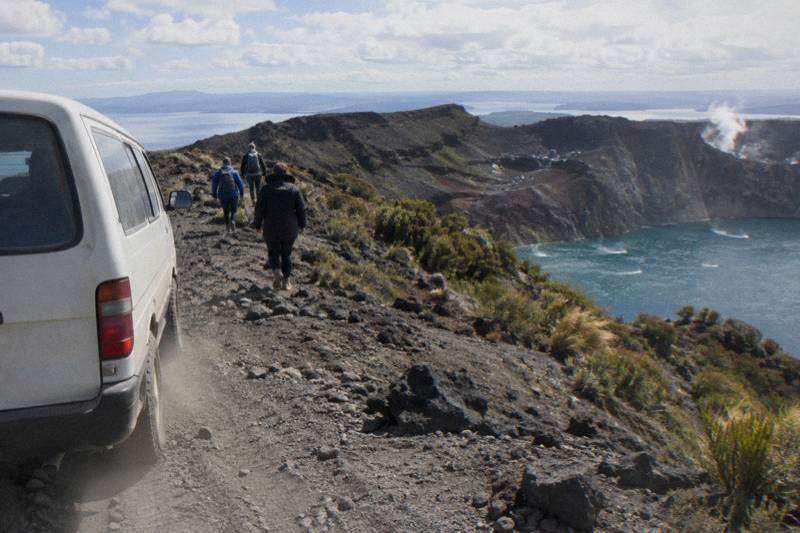
What Are Some Good Walks At Lake Tarawera Besides The Crater Walk
Lake Tarawera walking options beyond the crater walk: the DOC Tarawera Trail, Hot Water Beach, the Buried Village of Te Wairoa, and how the guided mountain walk fits alongside them.
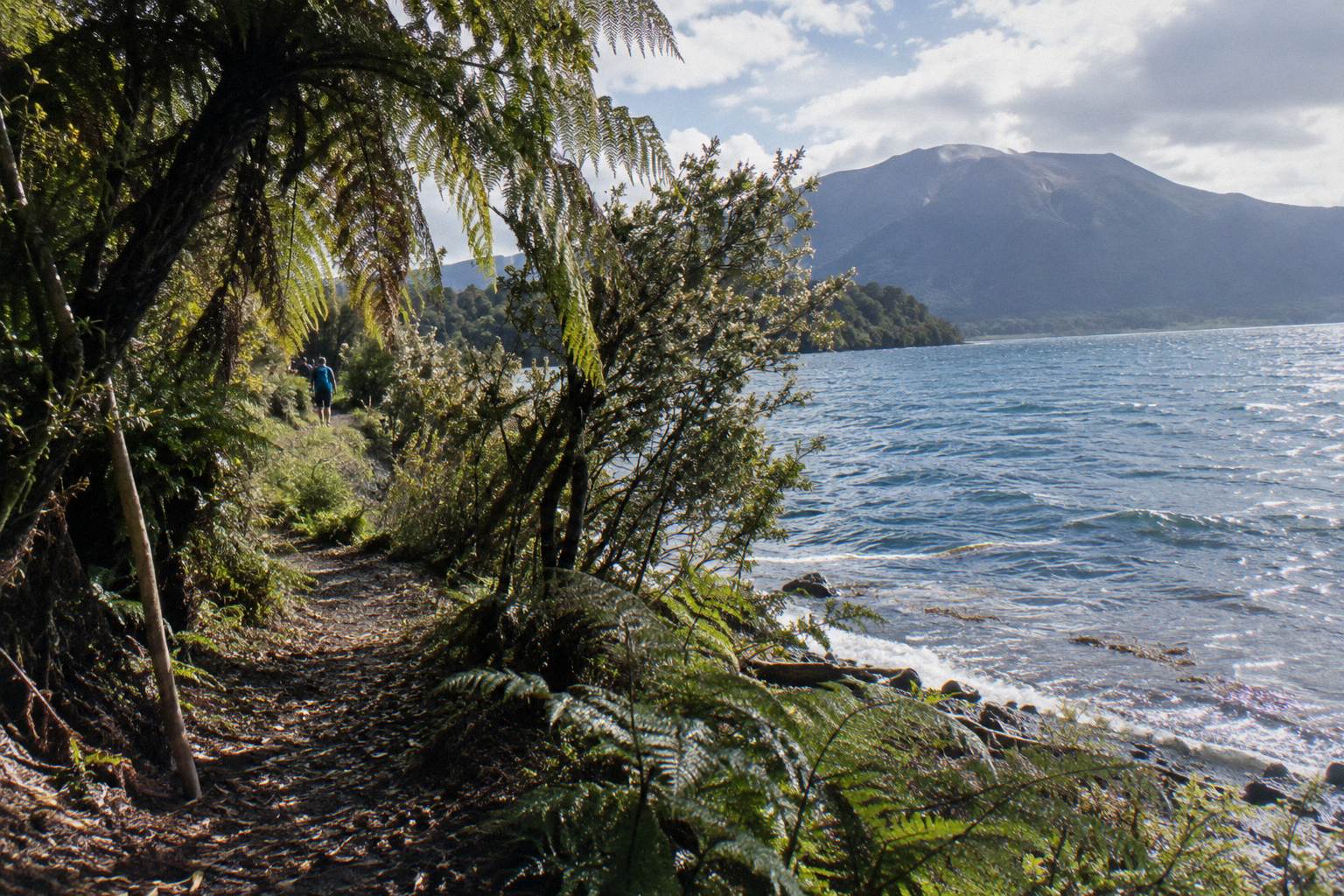
The strongest lake option is the Tarawera Trail, a 15 km DOC advanced tramping track from the Te Wairoa car park to the Hot Water Beach campsite via Te Rata Bay. Along the same road you can visit the Buried Village of Te Wairoa, open 10am to 4pm Wednesday to Sunday. The guided crater walk remains the only way covered here to stand on the summit of the 1,111 m mountain itself.
Most people arrive at Lake Tarawera with the mountain in mind and discover that the lake has its own walking life. The Department of Conservation manages the Tarawera Trail as a tramping track, not a stroll, and grades it advanced. It hugs the eastern shoreline through bush and over headlands, ending at a backcountry campsite where hot water rises through the sand. DOC asks walkers not to bring dogs, bikes or vehicles, and notes occasional rock falls along the route.
The lake and the mountain belong to the same story. On 10 June 1886 Tarawera erupted in what GNS Science describes as New Zealand's largest eruption during the last 500 years, killing more than 100 people in villages near the mountain and destroying the Pink and White Terraces. The sound was heard as far as Blenheim and ash fell as far as Christchurch. The Buried Village of Te Wairoa preserves part of that history at the lake's southern end, and the landscape you walk through on either the lake track or the summit track is the direct product of that night.
Walkers at the lake are one step from the mountain walk. Kaitiaki Adventures and Volcanic Air are the two operators whose summit trips are covered on Mt Tarawera Volcano Hike, and both describe themselves as concessionaires working alongside Ngati Rangitihi, whose Ruawahia 2B Trust governs the mountain and reinvests most tourism concession revenue in conservation, wilding pine removal first. So if a day of lake walking leaves you wanting the summit, the guided options slot around it.
Three formats can carry you onto or over the mountain, and comparing them on stated facts is easier than guessing. All amounts below are New Zealand dollars, and free cancellation up to 24 hours applies on the booking page for every trip shown.
How Hard Is The Tarawera Trail And Where Does It Start
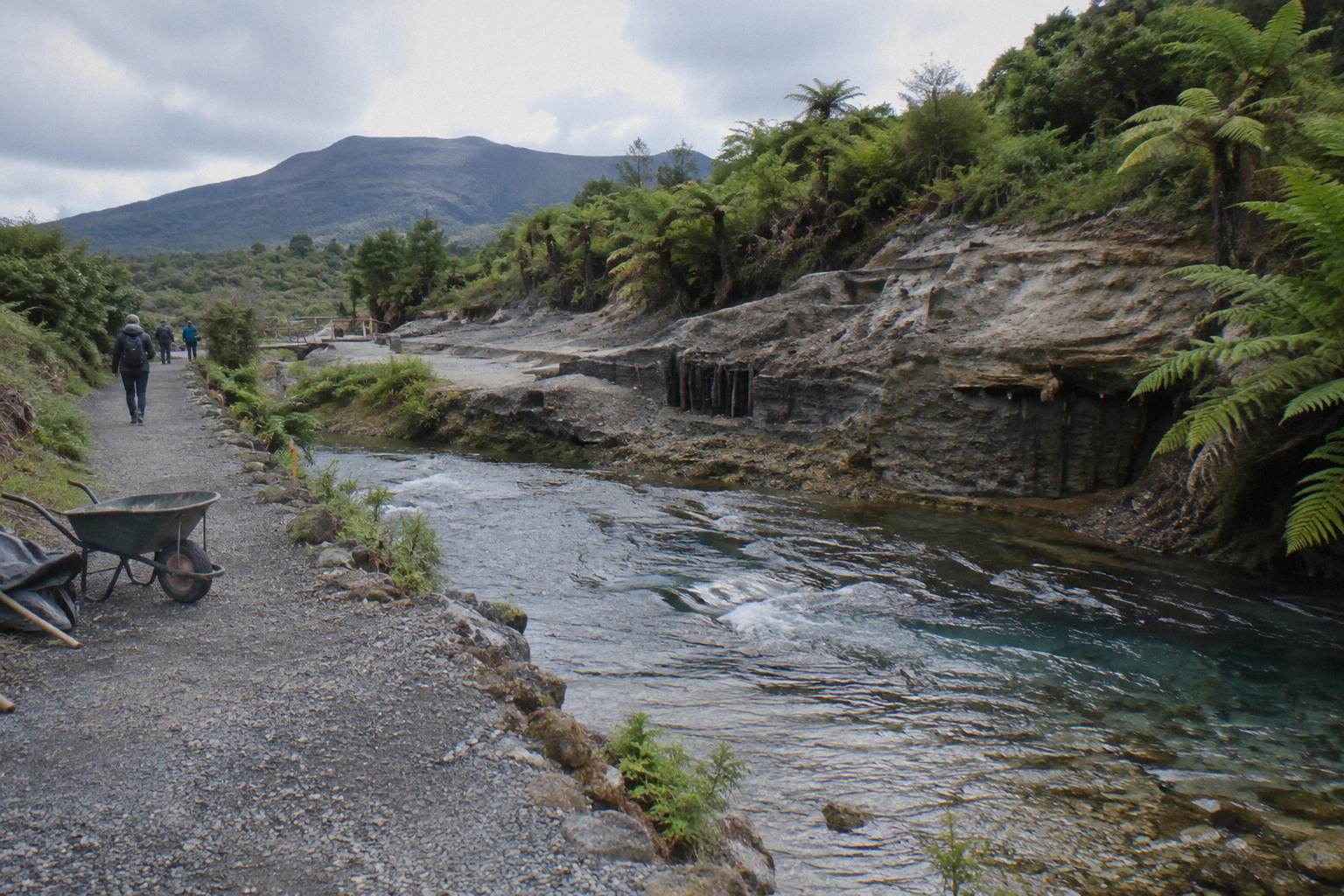
The Tarawera Trail is a 15 km advanced tramping track that starts at the Te Wairoa car park on Tarawera Road, about a 15-minute drive from Rotorua, and runs to the Hot Water Beach campsite via Te Rata Bay. DOC grades it advanced, bars dogs, bikes and vehicles, and suggests a water taxi or an overnight stay rather than walking both directions in one day.
The trailhead is the same road that serves the Buried Village, which makes the southern lake shore a natural base for a walking day. From the car park the track climbs away from the water and settles into a pattern of bush sections and headland views, dipping to the shore at Te Rata Bay before the final approach to Hot Water Beach. DOC's page for the trail is the reference for conditions on the day, and it is worth reading before you set out because the track carries occasional rock falls and the weather on the lake can turn quickly.
Fifteen kilometres of advanced tramping is a commitment. If you are planning it around a Rotorua holiday, treat it as the main event of the day rather than a warm-up, and take DOC's own suggestion seriously: a water taxi in one direction, or a night at the campsite, beats a 30 km out-and-back on tired legs. No water taxi operator, schedule or fare appears in the material gathered here, so ask locally when you plan the logistics.
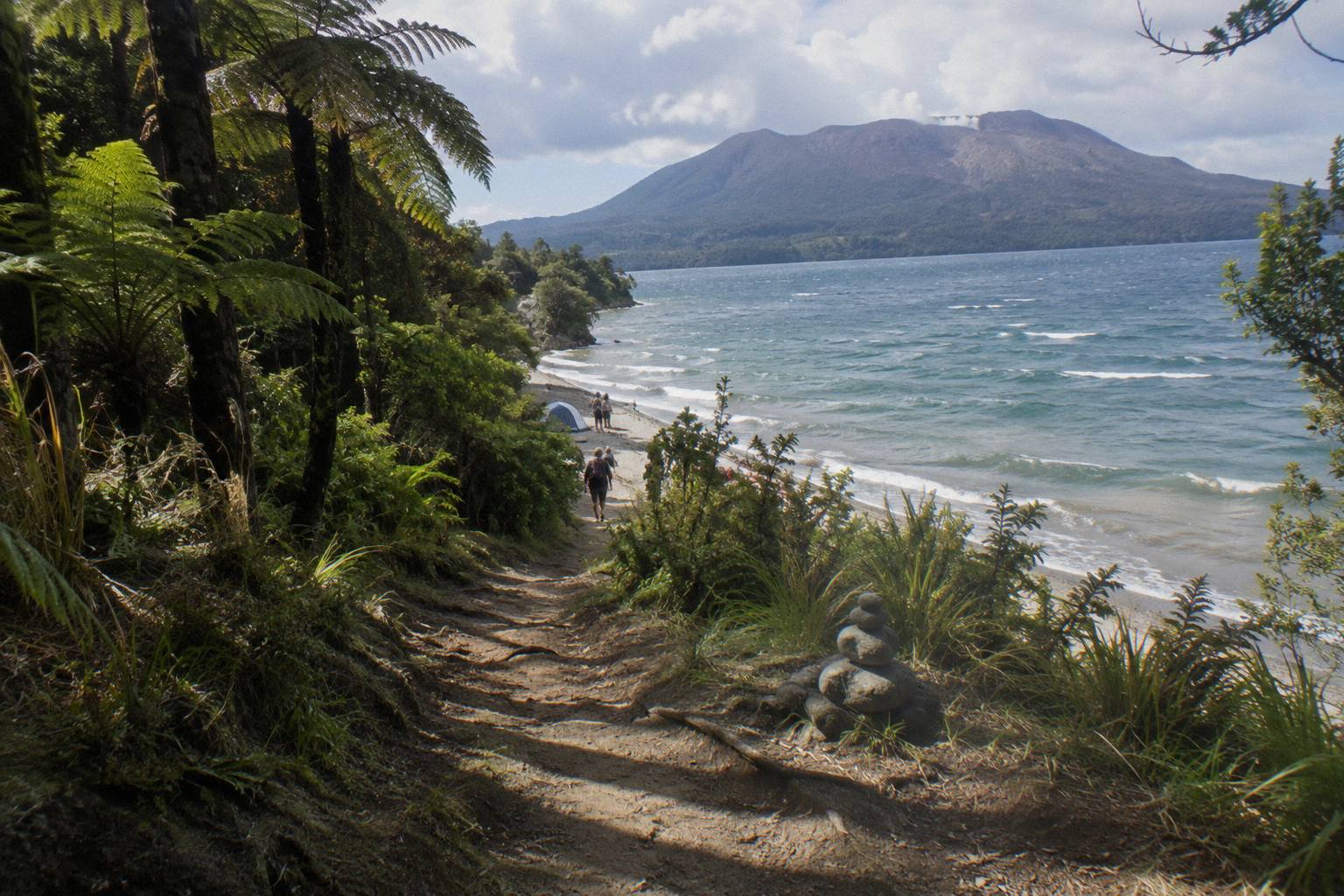
One point of confusion worth clearing up early: the Tarawera Trail is a lake track, not a route up the mountain. Its 15 km belongs to the shoreline, and no official page gathered here authorises unguided walking on the maunga itself. For the summit, the guided options are the ones covered on these pages, and they are described a few sections below.
If the shoreline has sharpened your appetite for the summit itself, the natural next question is which guided format fits your legs and your budget.
Should You Add The Guided Crater Walk To A Lake Day
The Kaitiaki Half-Day 4WD And Crater Walk runs 4 hours 30 minutes, is rated 4.9 across 359 reviews, and combines a 4x4 ride up the mountain with about 90 minutes of guided crater walking per the booking page. It needs moderate fitness, takes walkers from age 7 as the operator states, and ends back at the Main Carpark on Hemo Road in Rotorua, with free pickup offered from central Rotorua accommodation.
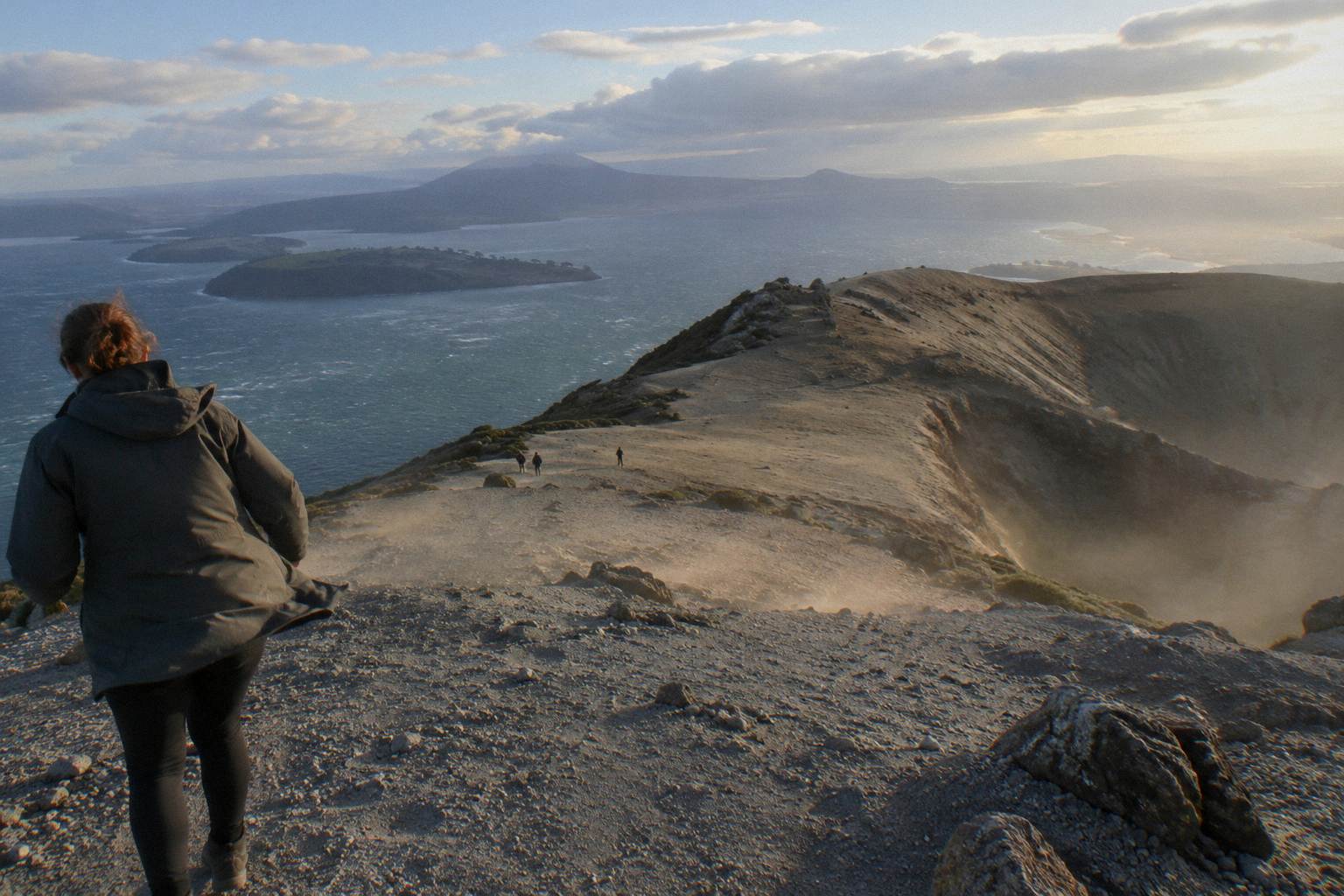
This is the trip that turns a lake holiday into a summit day without a full-day commitment. You meet in Rotorua, ride about 30 minutes to the base of the 4WD track, then cover roughly 8.2 km of off-road climbing before the walk begins, with a base camp stop offering a composting toilet and walking sticks. Benches line the summit track, and at the second bench the guide points out the summit trail. Kaitiaki's FAQ describes the scree as "a 45 degree slope approximately 400m deep" in its own words, and notes the volcanic scoria "can be slippery", with two sections of about 50 m needing four points of contact.
The operator says a medium to moderate fitness level is needed for the summit track, and guests may take lighter walking options instead of the summit, which matters if your legs already carry the Tarawera Trail. The booking page lists low fitness, back problems, heart problems and serious medical conditions as not suitable, and the trip is not wheelchair accessible. Kaitiaki provides no snacks, so bring water and food. No price appears here; the booking page shows the amount for your date.
For the details of that trip, including meeting points and pickup questions, see the Kaitiaki half-day crater walk page. Check availability once you have your lake day sketched out, since summer dates fill first.
Is the half-day crater walk the right length for you? It is the format most lake walkers choose, because it leaves room in the day for the shoreline, but the answer depends on how much walking you want in total.
What Is Hot Water Beach And Can You Camp There
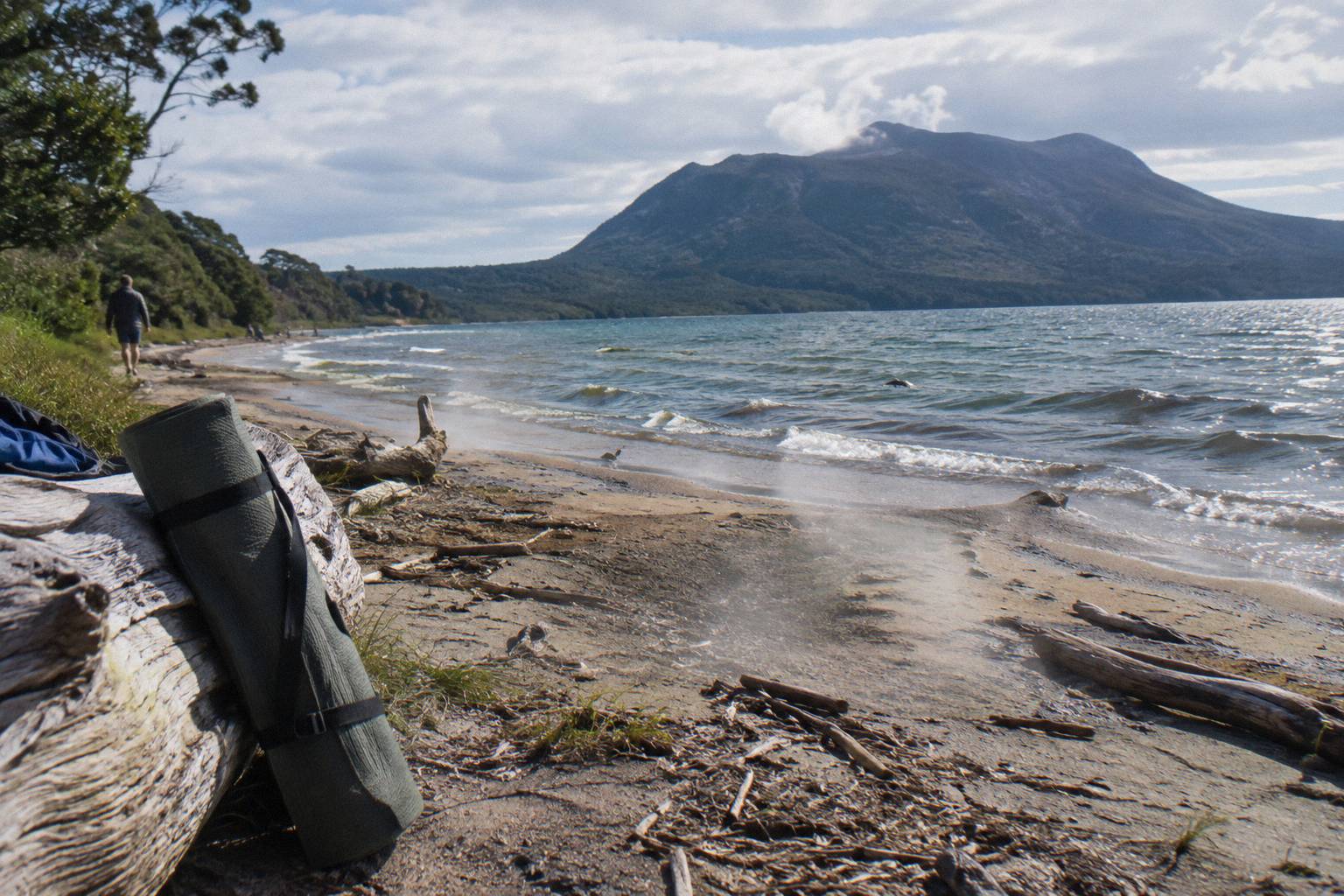
Hot Water Beach sits at the far end of the Tarawera Trail on the lake's shore, reachable on foot via Te Rata Bay, and DOC operates a campsite there. DOC warns that localised patches of sand are very hot. No temperature figure is published and no swim guidance is given, so treat the hot sand with respect and follow the signs on arrival.
The beach is the reward at the end of the 15 km track, a stretch of lake shore where geothermal water percolates through the sand, the same underground system that Waimangu Volcanic Valley, further around the lake edge, describes as formed as the result of the 1886 eruption. Camping here turns the advanced tramping track into an overnight journey rather than a race against the light, and it is DOC's own suggested alternative to doubling the track in a day.
Practical planning means booking the campsite through DOC and carrying what you need, because the beach is walk-in territory along the trail. The same rules that govern the track govern the approach: no dogs, no bikes, no vehicles. Rock falls are occasional on the track, so check DOC's conditions before you go, and remember that the town climate figures people quote for Rotorua, a mean daily maximum of 12.0 °C in July and 23.1 °C in February, apply to the town at about 280 m, not to a lakeshore camp in a southerly.
Families planning the trip should note the age split between the mountain options. The Kaitiaki half-day crater walk takes children from age 7 as the operator states, while the Kaituna Rafting And Tarawera Crater Walk Combo sets a minimum age of 13 and needs moderate fitness. The lake track and beach have no operator age rule at all, since they are public land, but 15 km of advanced tramping is its own filter.
Can You Combine The Buried Village With A Lake Walk
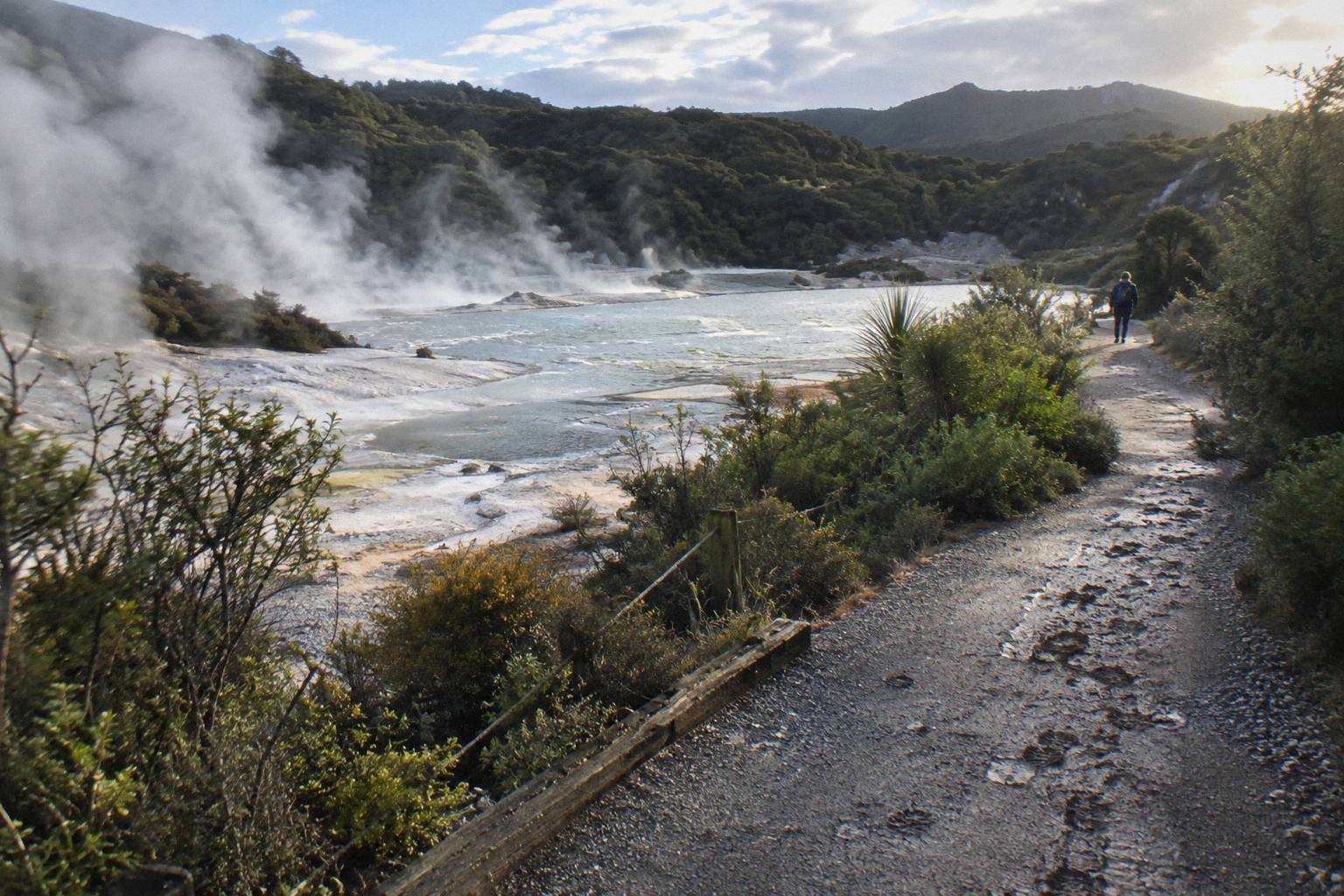
Yes, easily. The Buried Village of Te Wairoa sits at 1180 Tarawera Road, the same road as the Tarawera Trail car park, and is open 10am to 4pm Wednesday to Sunday with last entry at 3.45pm, closed Monday, Tuesday and Christmas Day. No entry price appears here, so check directly before visiting, and allow time for the village and the trailhead stop together.
Te Wairoa was one of the villages overwhelmed on 10 June 1886, the night GNS Science records as New Zealand's largest eruption in the last 500 years. More than 100 people were killed in villages near the mountain, and the eruption destroyed the Pink and White Terraces that had drawn visitors to the lake. The village site is an adjacent attraction rather than a tour covered on these pages, so the exhibits themselves are best discovered on arrival rather than summarised second-hand.
The practical value of the village for walkers is geography. Park once on Tarawera Road, visit the village in its opening hours, and you are minutes from the Te Wairoa car park where the Tarawera Trail begins. That makes a natural half-day pairing: village in the morning, a shorter out-and-back on the trail in the afternoon, with the full 15 km saved for a day when you can finish at the campsite or arrange a boat back.
A note on expectations. The Pink and White Terraces cannot be visited: GNS describes them as destroyed, though a small portion of the Pink Terraces was reportedly rediscovered under Lake Rotomahana in 2011. The village tells that story from the shore, and the lake walks show you the landscape the eruption rebuilt.
How Does The Crater Walk Compare With The Lake Tracks
The lake tracks are free, self-guided public land with the Tarawera Trail graded advanced at 15 km, while the crater walk is a guided trip of 4 hours 30 minutes on private land under a concession, rated 4.9 across 359 reviews, needing moderate fitness and taking walkers from age 7. The lake tests endurance, the mountain tests footing, and the two make a natural pairing rather than a choice.
The formats differ more than the distances suggest. On the lake you carry your own water, set your own turn-around, and answer to no schedule but the daylight. On the mountain a local guide sets the pace, a 4x4 handles the 8.2 km of climb to the walk start, and the ground underfoot is volcanic scoria that "can be slippery" in Kaitiaki's words, with two sections of about 50 m needing four points of contact. The summit of Ruawahia stands at 1,111 m per GNS Science, well above anything the shoreline offers.
| Option | Stated facts | Access | Fitness and ages |
|---|---|---|---|
| Tarawera Trail | 15 km advanced tramping track, Te Wairoa car park to Hot Water Beach via Te Rata Bay | Public DOC track; no dogs, bikes or vehicles | No operator rule; advanced grading is the filter |
| Hot Water Beach campsite | DOC campsite; localised patches of sand are very hot | On foot via the trail | Overnight carry |
| Buried Village of Te Wairoa | Open 10am to 4pm Wed to Sun, last entry 3.45pm, closed Mon, Tue and Christmas Day | 1180 Tarawera Road | No operator rule given |
| Kaitiaki half-day crater walk | 4 hours 30 minutes; 4.9 across 359 reviews; about 90 minutes of crater walking per the booking page | Guided, meeting at Main Carpark, Hemo Road, Rotorua | Moderate fitness; from age 7 as the operator states |
Cost behaves differently too. The lake tracks and the village road cost you nothing at the trailhead, while the guided trips show their amounts at booking: the Volcanic Air 40-Minute Summit Landing Flight starts from NZ$675 per person, rated 4.9 across 43 reviews, and the Kaitiaki half-day and the Kaituna combo show the amount for your date on the booking page rather than a fixed figure here. For the practical side of that comparison, the crater walk cost breakdown sets out what each format includes.
If your legs already carry a lake day, the summit walk is the half that completes the picture. Kaitiaki's own page describes the experience as reaching the summit of Ruawahia with 360 degree views, and the half-day mentions an optional run down into the crater for those who want it.
What About Seeing The Lake And Mountain From The Air
The Volcanic Air 40-Minute Summit Landing Flight, from NZ$675 per person and rated 4.9 across 43 reviews, flies from the Rotorua lakefront over lakes Okareka, Okataina and Tarawera and attempts a summit landing with a guided walk of 15 minutes per the operator page or about 20 minutes per the booking page. Landing is at the pilot's sole discretion and depends on weather, volcanic activity and passenger loadings.
That discretion clause matters. The flight is 40 minutes door to door, and the mountain component depends on conditions on the day, in Volcanic Air's own wording. Weight limits apply, 135 kg per seat on the booking page, with passengers over 110 kg possibly given specific seating and individual weights taken at booking, and a minimum of 2 adult fares for the flight to operate.
The flyover alternative never lands, and that is worth saying plainly in the same breath. The Tarawera Scenic Floatplane Flyover, from NZ$395 per person and rated 4.8 across 48 reviews, is a 30-minute floatplane flight over Mt Tarawera and the volcanic landscape with pilot commentary, and it does not land on the mountain.
For walkers, the aerial formats answer a different question than the tracks do. The lake trail gives you the shore over hours, the crater walk gives you the summit on foot, and the flights show you the whole 1886 landscape, the rifted mountain, the lakes and the valley, in under an hour. Some visitors do the flight first to see the shape of the eruption, then walk into it.
Which Months Suit Walking At Lake Tarawera
Rotorua's town climate, at about 280 m and not the summit, runs from a mean daily maximum of 12.0 °C in July to 23.1 °C in February, with July the wettest month at 137.4 mm and November the driest at 86.8 mm. The lake tracks and the guided walks all run year-round in principle, but the summit at 1,111 m is colder and windier than any town figure, and no summit temperature is published.
Those 1991 to 2020 normals describe the town, and they still shape planning. Summer, December through February, gives the warmest days and the longest daylight for a 15 km track, at the cost of busier campsite and trailhead. Winter walks are quiet and green but short on light, and July combines the coolest maximum with the heaviest rain. November is the statistical sweet spot for dry days, though a Rotorua shower can arrive in any month of the year.
For the guided crater walk, weather cuts both ways. Volcanic Air states that tour duration, flight times and inclusions may vary due to weather conditions, volcanic activity and passenger loadings, and Kaitiaki's departure details for specific dates are not published, so the departure for your date shows during booking. Free cancellation up to 24 hours on the booking page gives some room if a front arrives, but a walk planned for the shoulder season should carry layers regardless. For the full month-by-month view, see which months suit a crater walk.
One more planning thought for walkers building a bigger North Island trip: the same logic of tracking conditions and booking a guided format applies to other volcanic walks, and tongariroalpinecrossingtours.com covers the other famous one.
Mistakes To Avoid When Planning A Lake Tarawera Walk
The common errors are treating the 15 km Tarawera Trail as a casual day stroll, doubling it in one day against DOC's advice, expecting the Buried Village to open on a Monday or Tuesday, assuming the floatplane lands on the mountain, and showing up for the crater walk without water or snacks. Each mistake is avoidable with one check before you leave Rotorua.
| Mistake | What goes wrong | The fix |
|---|---|---|
| Doubling the Tarawera Trail in a day | 30 km of advanced track in shifting weather | DOC suggests a water taxi or a campsite night |
| Visiting the Buried Village on a Monday | Closed Monday, Tuesday and Christmas Day | Go Wednesday to Sunday, before 3.45pm last entry |
| Expecting the floatplane to land | The flyover is exactly that, a flyover with no landing | Choose a helicopter landing flight for summit time |
| Skipping the guide on the mountain | No official page read here authorises unguided walking on the maunga | Book a guided crater walk |
| Arriving without snacks on the crater walk | Kaitiaki provides no food | Bring water and snacks, plus sturdy shoes |
The deeper mistake is treating the lake and the mountain as rivals for one day. They run on different clocks: the trail wants daylight and endurance, the crater walk runs 4 hours 30 minutes from the Hemo Road meeting point, and the flights want less than an hour. A well-built Tarawera day uses two of the three, and the climate figures above tell you which season gives you the margin to do it.
Common Questions About Lake Tarawera Walks
What Are Some Good Walks At Lake Tarawera Besides The Crater Walk?
The Tarawera Trail, a 15 km DOC advanced tramping track from the Te Wairoa car park to the Hot Water Beach campsite via Te Rata Bay, is the main one, with the Buried Village of Te Wairoa alongside it on Tarawera Road. The guided crater walk is the mountain option and sits alongside these lake walks rather than replacing them.
Can You Walk The Whole Tarawera Trail In One Day?
The track is 15 km one way, and DOC suggests a water taxi or an overnight stay at the Hot Water Beach campsite rather than walking both directions in a day. Walking it one way is a full advanced-grade day on its own.
Is Hot Water Beach At Lake Tarawera Safe?
DOC says localised patches of sand at Hot Water Beach are very hot, and publishes no temperature or swim guidance. Treat the hot sand with care, follow signs on arrival, and keep children watched near the waterline.
Can You Walk Up Mount Tarawera Without A Guide?
No official page gathered here authorises unguided walking on the mountain, which sits on land governed by Ruawahia 2B Trust. Guided trips with Kaitiaki Adventures and Volcanic Air are the summit options covered on these pages.
Is The Buried Village Open Every Day?
No. It is open 10am to 4pm Wednesday to Sunday, with last entry at 3.45pm, and closed Monday, Tuesday and Christmas Day. It sits at 1180 Tarawera Road, minutes from the Tarawera Trail car park.