Do You Have To Go Down Into The Crater On A Mt Tarawera Guided Hike
No, the crater descent is optional on a guided Mt Tarawera walk: Kaitiaki's half day calls the run down into the crater optional, and its FAQ says guests may take lighter walking options instead of the summit.
No, the crater descent is optional. Kaitiaki's half-day page mentions an optional run down into the crater, and the operator's FAQ adds that guests may take lighter walking options instead of the summit itself. Nobody on a guided Mt Tarawera walk is obliged to go below the rim, and plenty of visitors come for the ridge views alone. The decision is yours, made on the day, with the guide there.
That single word, optional, carries a lot of weight for nervous walkers, and it deserves to be unpacked properly. Mt Tarawera sits on private land governed by the Ruawahia 2B Trust, which reinvests most tourism concession revenue in conservation, wilding pine removal first, and Ngati Rangitihi hold kaitiakitanga over the maunga. Guided access through a concessionaire is how summit walking works here, and the guided format is exactly why the descent stays a choice: a guide can point out the optional sections, judge conditions, and let each guest decide. For the full picture of the route, see the step-by-step crater walk breakdown.
The question usually comes from one of two worries. Either the scree sounds intimidating, or a medical condition makes a steep slope unwise. Both worries are legitimate, and the operator's own materials address both: the FAQ describes the scree in its own words as "a 45 degree slope approximately 400m deep", while the booking page lists back problems, heart problems, serious medical conditions and low fitness as not suitable for the trip overall. Note the distinction there. The exclusion list covers the whole trip, transport, 4WD track and ridge included, not just the crater descent. Someone comfortably within the fitness guidance can still stand at the rim and watch others run down.
If the descent question is the thing holding up a booking, three formats answer it differently, and comparing them side by side is the fastest way to a decision:
All three are concessionaire trips, and all three carry free cancellation up to 24 hours on the booking page. Amounts in New Zealand dollars apply throughout the comparisons that follow.
What The Scree Descent Actually Involves
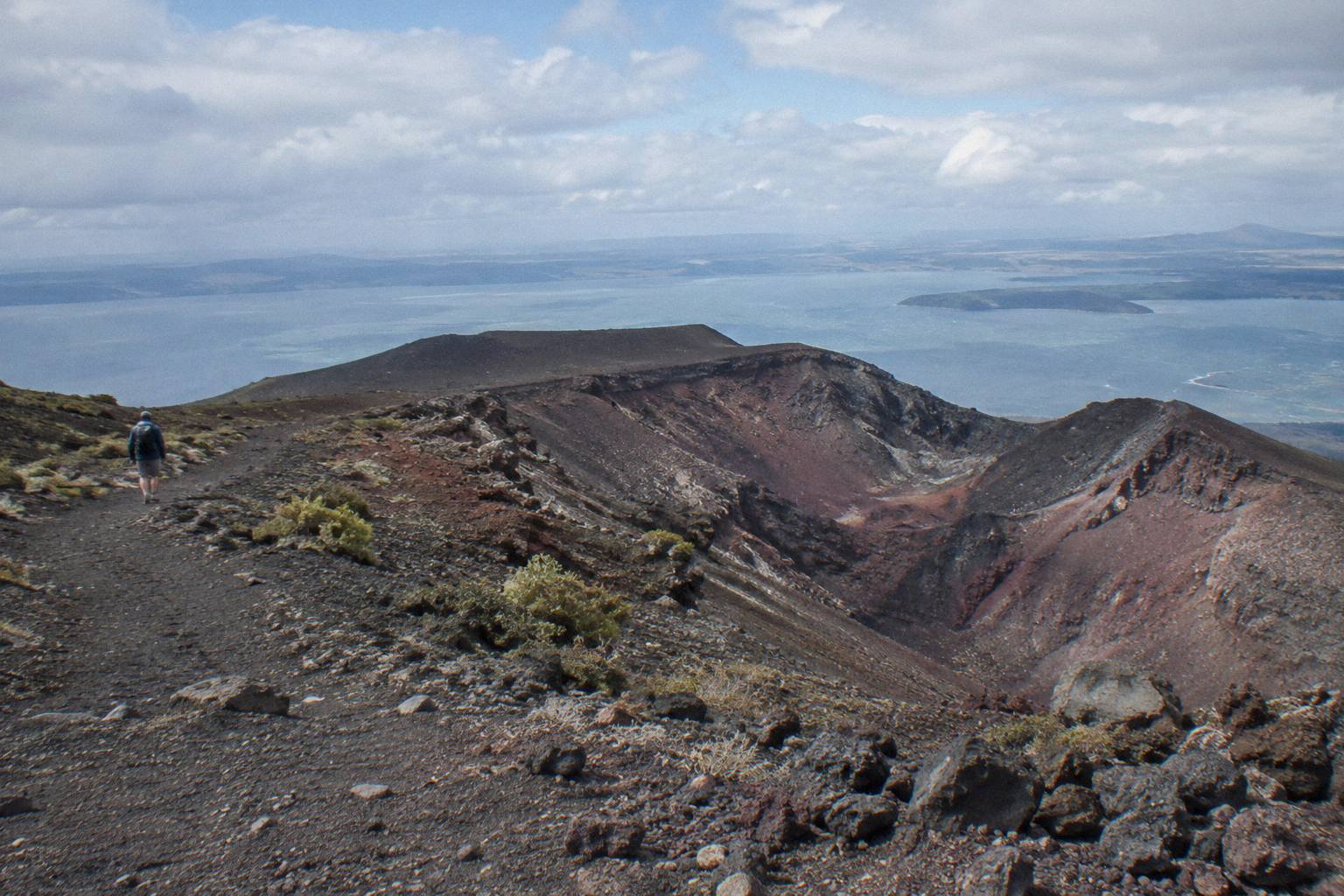
The scree itself is loose volcanic gravel on a steep inner slope, and the descent means making your way down that surface. Kaitiaki describes it in its FAQ as "a 45 degree slope approximately 400m deep", though that description is the operator's wording and not a measurement of the mountain. Guests who opt in run or slide down it into the crater basin, then regain the rim by a different line. Guests who opt out stay on the crater edge and wait, take photos, or walk a flatter stretch with the guide's agreement. Both choices happen on the same trip, on the same day, with the same guide watching both groups.
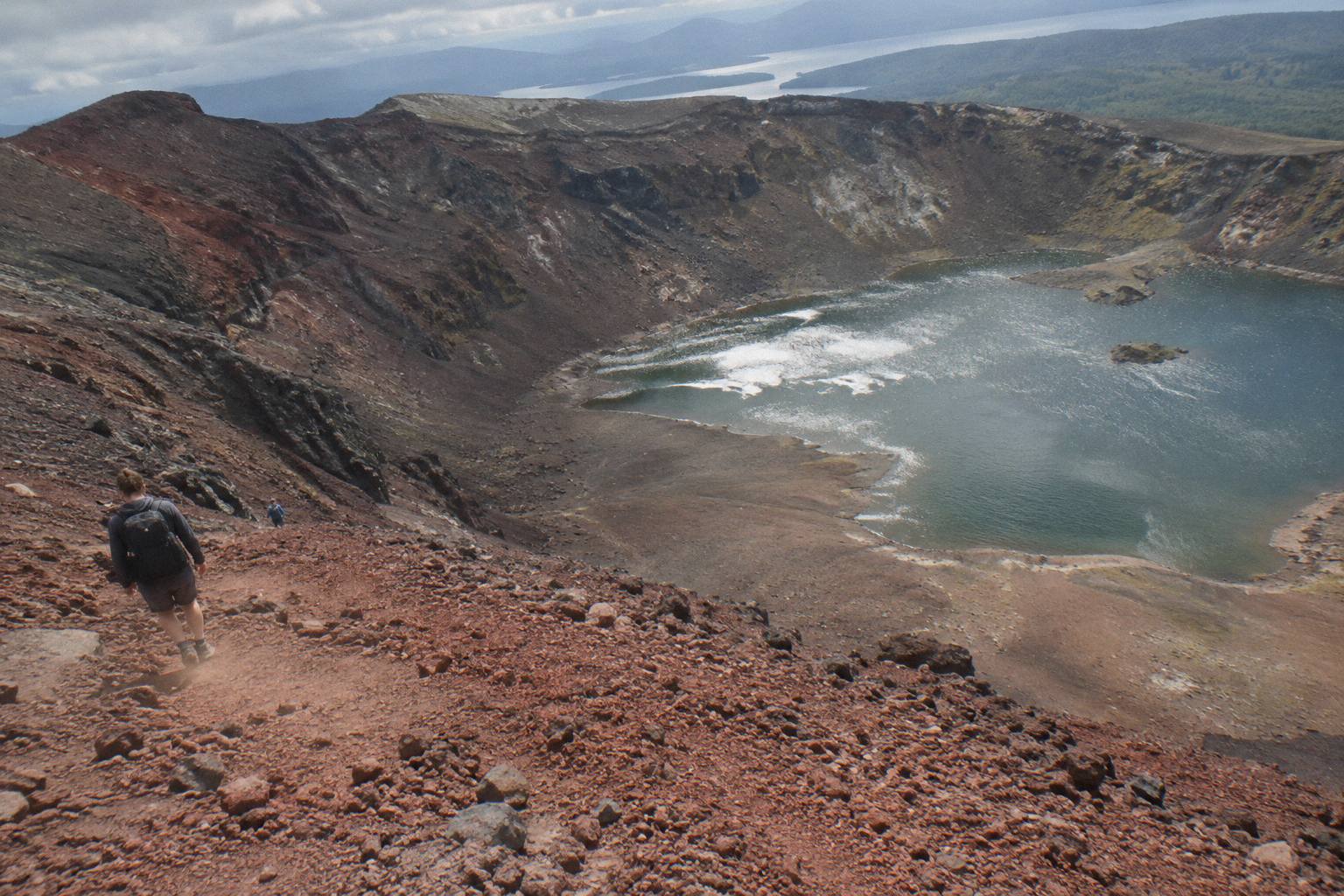
Context matters for anyone picturing the worst. The ground everywhere on the mountain is volcanic scoria that "can be slippery", in the operator's FAQ phrasing, and two sections of about 50 m each need four points of contact, meaning hands as well as feet. Those two short sections are part of the summit approach, not unique to the descent. The summit itself stands at 1,111 m according to GNS Science, with Ruawahia Dome the highest of the mountain's three domes. Benches along the way give natural pause points, and at the second bench the guide shows the summit trail, which is one of several moments where a worried walker can flag a preference and be heard.
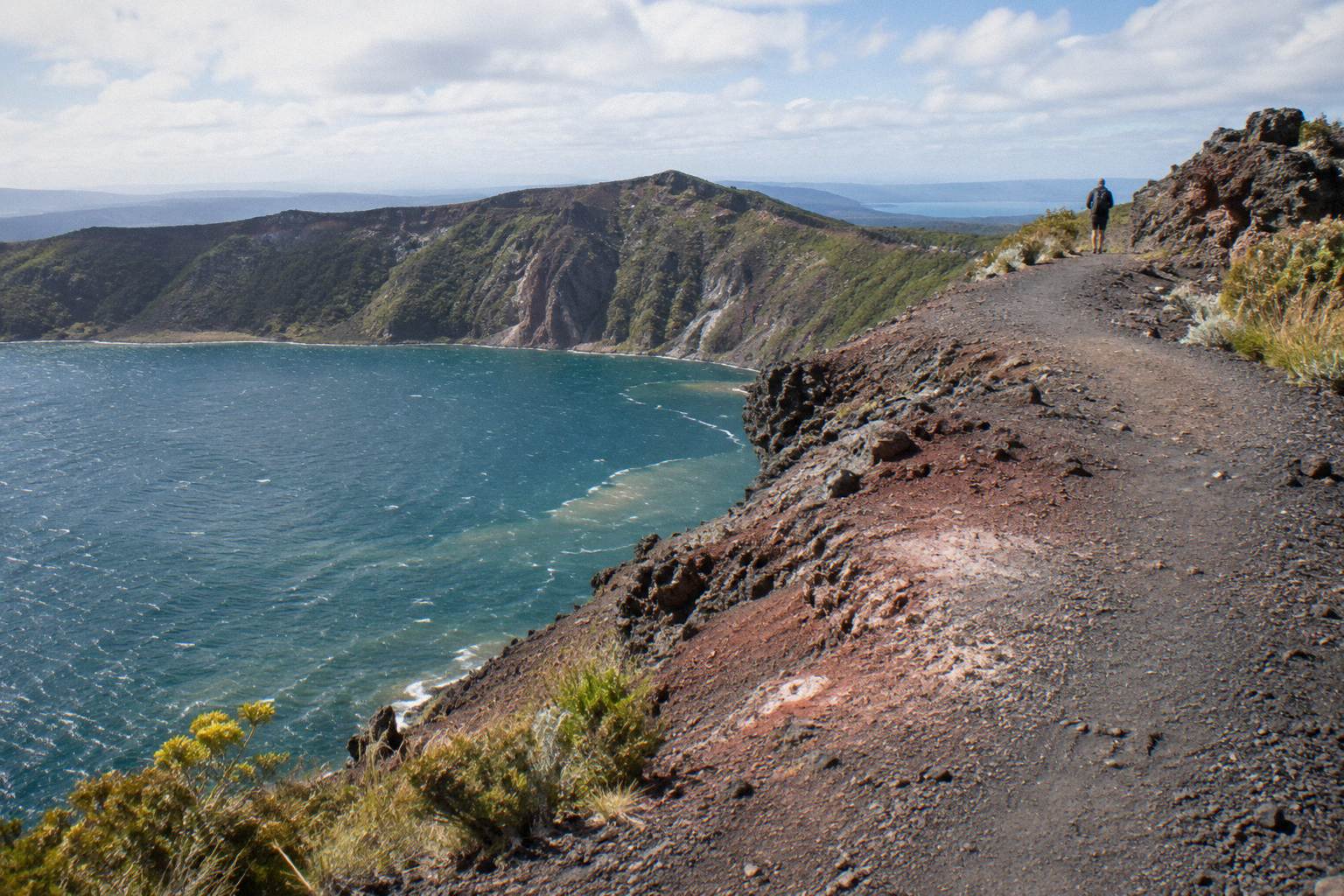
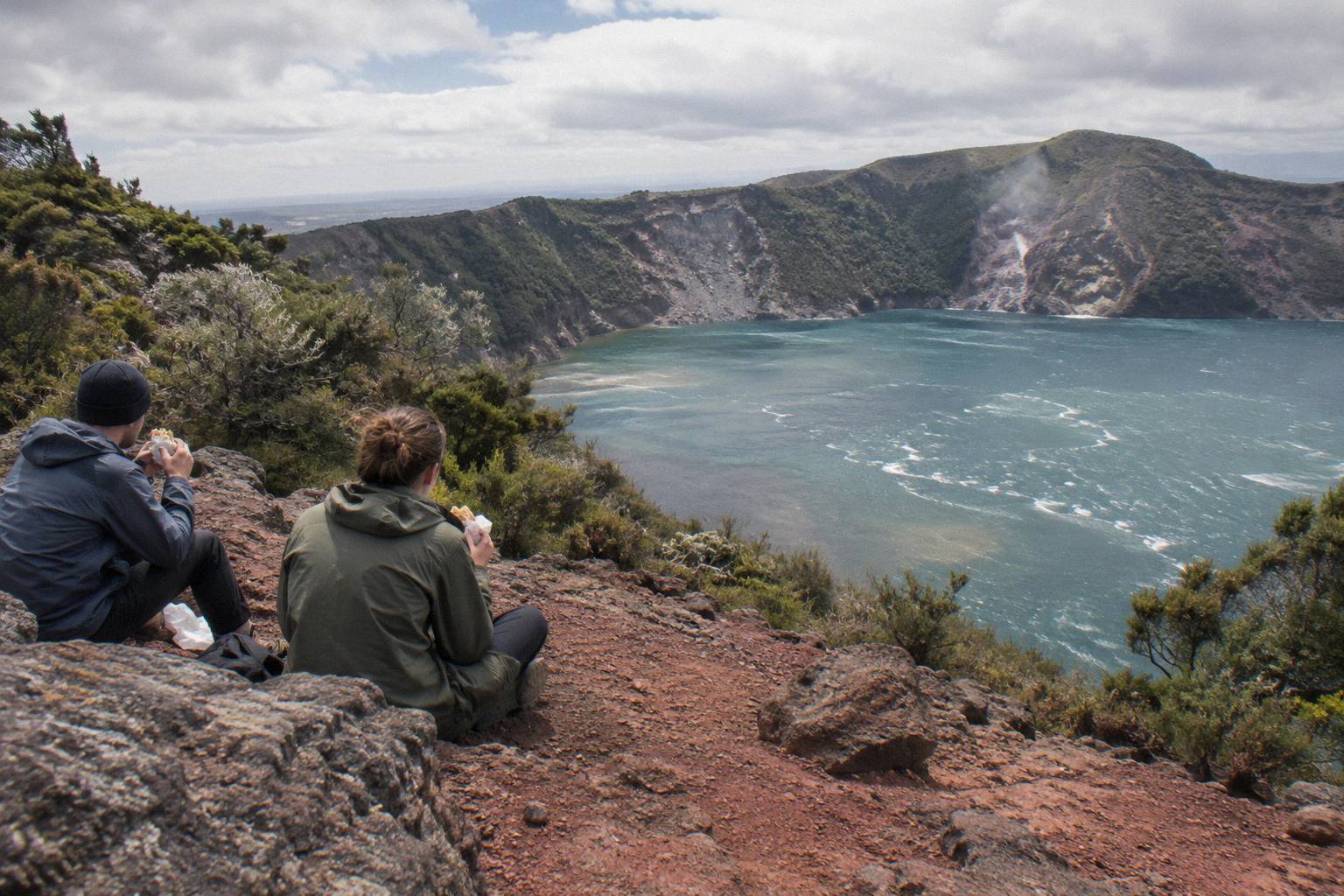
What the descent is not: it is not a rappel, not a climb, and not a requirement for the views. The 360 degree panorama from Ruawahia's summit area comes before any question of going lower. The scree run explained in detail covers what the experience feels like for those who choose it. Nobody should arrive believing the crater basin is the payoff and the rim is a consolation, because the opposite is closer to the truth: the rim views across the Lakes district and the rifted craters are the headline, and the descent is a bonus for keen legs.
One practical note on technique and safety: a neutral rundown of facts is as far as any article should go. Your guide briefs the group on the day, watches the conditions, and makes the call on what is offered, which is the whole point of taking a guided trip rather than an independent one. Conditions on loose scoria change with weather and foot traffic, and a guide who walks the route regularly is far better placed than any written description to judge whether the optional run suits a particular morning.
Who The Operator Lists As Not Suitable
According to the booking page, the half-day trip is not suitable for children under 7, travelers with low fitness levels, or anyone with back problems, heart problems, or other serious medical conditions. The operator also states that the trip is not wheelchair accessible. That list governs the entire 4 hours 30 minutes experience, from the Main Carpark on Hemo Road in Whakarewarewa all the way to the summit and back. It is a trip-level screen, not a descent-level one, and it deserves to be read in full before anyone decides anything about the crater itself.
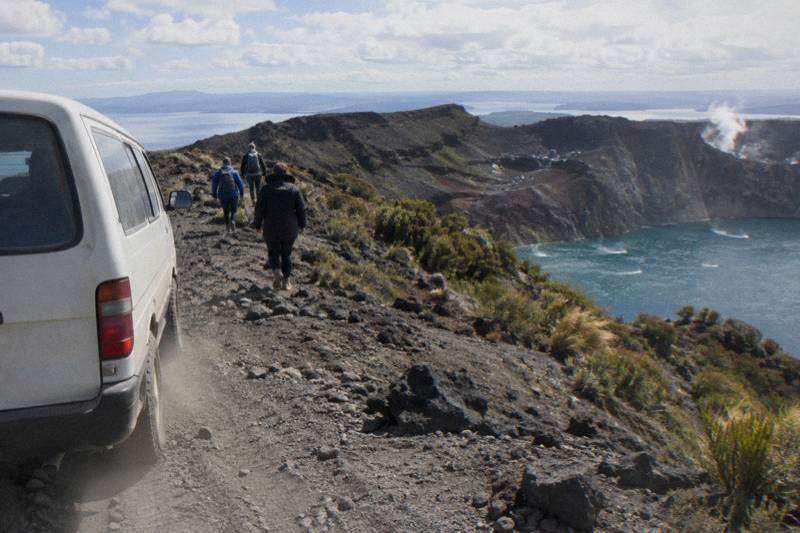
Why does the screen sit at trip level? Because the day involves more than walking. The operator's FAQ describes about 30 minutes of driving from Rotorua to the base of the 4WD track, then roughly 8.2 km of bumpy off-road travel in a 4WD vehicle, a base camp stop with a composting toilet where walking sticks are handed out, and then the hikoi on foot from where the road ends. Motion sickness is common enough that the FAQ tells guests to inform the guide. Someone with a serious back condition could find the drive alone uncomfortable, long before any scree appears.
| What the operator says | Where it applies | Source wording |
|---|---|---|
| Minimum age 7 | Whole trip | As the operator states |
| Low fitness not suitable | Whole trip | Booking page |
| Back problems not suitable | Whole trip | Booking page |
| Heart problems not suitable | Whole trip | Booking page |
| Serious medical conditions not suitable | Whole trip | Booking page |
| Not wheelchair accessible | Whole trip | Booking page |
| Moderate fitness needed for the summit track | Summit track | Operator FAQ |
| Optional run down into the crater | Descent only | Half-day page |
| Lighter walking options instead of the summit | Summit approach | Operator FAQ |
The last two rows are the ones nervous readers should hold onto. If the summit track itself feels like too much on the day, the FAQ explicitly says guests may take lighter walking options instead of the summit. That is a second layer of choice sitting underneath the first one. A traveller can join the trip, ride the 4WD, walk the gentler sections, skip the summit push, never approach the descent, and still have a full morning on an extraordinary mountain. Two layers of opting out, both published by the operator, both honoured by the guides, and neither costing anything in what the ticket includes.
Fitness questions get their own deeper treatment in the difficulty and fitness guide, which pulls together everything the operator publishes about exertion levels. The short version for the descent question: moderate is the operator's own word, moderate is a floor for the summit track, and the descent is optional on top of that floor.
What Is Optional And What Is Not
On the guided half day, the optional parts are the summit push and the crater descent, while the meeting, the 4WD ride, the guided crater walk of about 90 minutes per the booking page wording, and the return are fixed parts of the ticket. The trip runs 4 hours 30 minutes from the Hemo Road carpark, ends back at the same point, and the booking pages offer free pickup from central Rotorua accommodation. Within that frame, the operator's materials carve out the flexible parts plainly.
Put the choices in a table, because the layers confuse people:
| Trip element | Fixed or optional | Notes |
|---|---|---|
| Meet at Main Carpark, Hemo Road | Fixed | Free pickup from central Rotorua accommodation offered on the booking pages; never a promised time, ask when you book |
| 4WD ride up the mountain road | Fixed | Roughly 8.2 km off-road after about 30 minutes of driving from Rotorua |
| Base camp stop | Fixed | Composting toilet, walking sticks handed out |
| Guided crater walk | Fixed | About 90 minutes per the booking page wording |
| Summit track | Optional | Operator FAQ: guests may take lighter walking options instead |
| Run down into the crater | Optional | Half-day page wording |
| Snacks and water | Bring your own | Kaitiaki says it provides no snacks |
The full-day hike, which Kaitiaki also runs, adds Tarawera Dome and about 1.5 hours more walking than the half day, but only the half day and the Kaituna combo have pages covered here. The half day is the natural fit for someone whose question is "do I have to", because it holds the most escape hatches per hour. The Kaitiaki Half-Day 4WD And Crater Walk rates 4.9 across 359 reviews, and its tour page shows what a booking includes: the 4.5-hour guided crater experience, a local guide, 4x4 transport, and hotel pickup and drop-off from central Rotorua. The booking page shows the amount for your date.
One thing worth knowing that first-page search results rarely surface: the concession money that funds conservation on the mountain flows from trips like these. The Ruawahia 2B Trust reinvests most tourism concession revenue in conservation work, with wilding pine removal first, and conservation projects give work and training to Ngati Rangitihi rangatahi. Kaitiaki and Volcanic Air describe themselves as proud concessionaires working alongside Ngati Rangitihi. Skipping the descent does not shortchange the mountain; the guided model is the conservation model.
Two booking mechanics deserve attention before you commit. Free pickup from central Rotorua accommodation is offered on the booking pages, but no pickup time is ever promised, so ask for yours when you book. The amount for your date appears on the booking page, and the free cancellation window, up to 24 hours for every trip compared here, means a late change of mind about the crater run costs you nothing but timing.
On the mountain, the fixed stops answer two packing questions. Walking sticks are handed out at base camp, so poles are one thing you can leave at home, and the composting toilet there is the one facility named anywhere in the materials quoted here. Food is your job entirely: Kaitiaki provides no snacks, so whatever you eat and drink across the 4 hours 30 minutes rides up with you.
One caution tempers the escape-hatch appeal. The not-suitable list on the booking page, covering low fitness, back and heart problems and serious medical conditions, applies to the whole trip, not just the optional parts, so treat it as a gate at booking. The full day is no workaround either: it adds Tarawera Dome and about 1.5 hours more walking, and its page is not among those covered here.
Choosing A Flight If The Descent Worries You
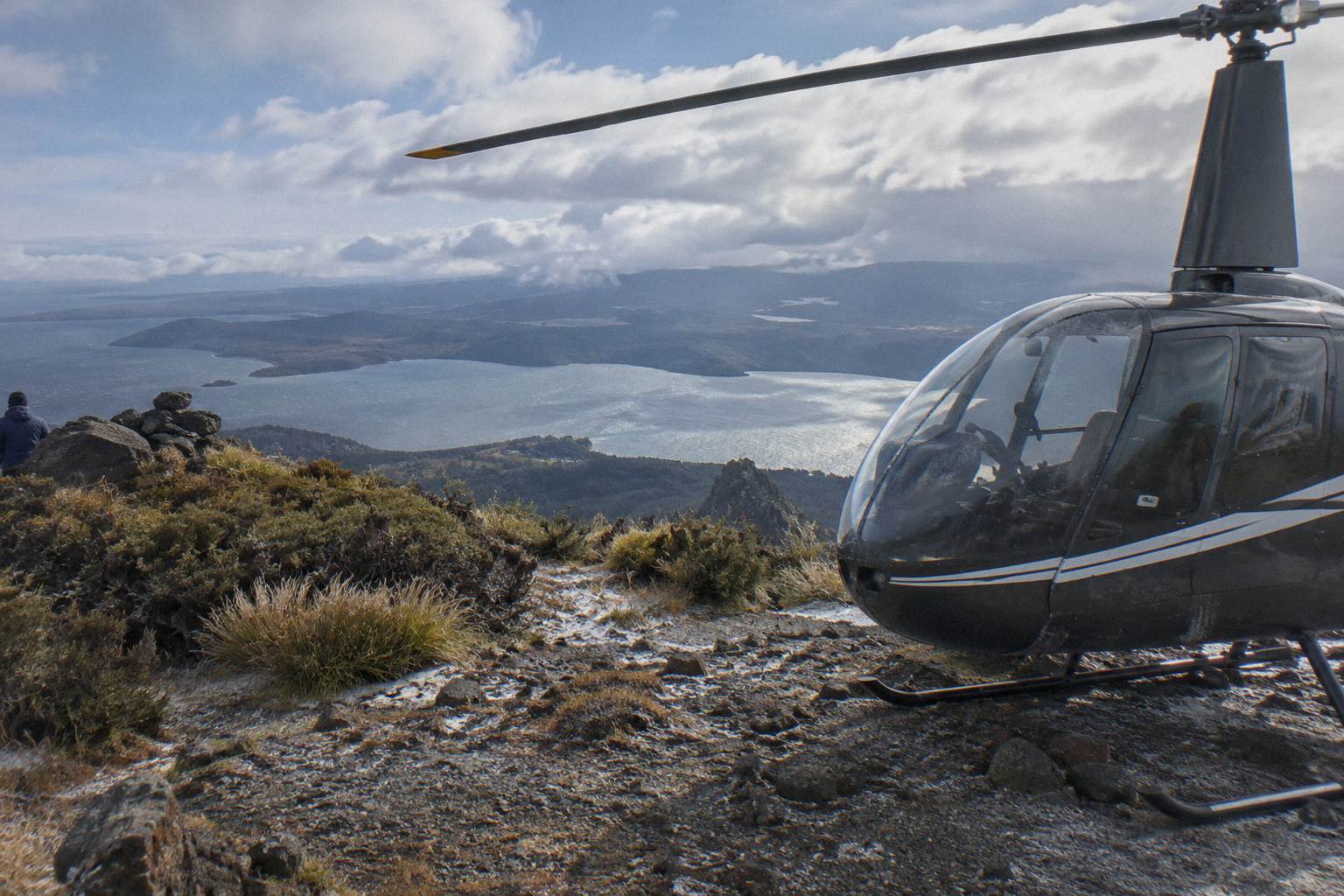
If no part of the scree appeals, a helicopter landing puts a guided summit walk into a shorter, steeper-free format: Volcanic Air's 40-minute flight lands on the mountain for a brief guided walk, from NZ$675 per person, rated 4.9 across 43 reviews. The operator page describes a 15-minute guided walk on the summit, while the booking page says about 20 minutes: attribute each to its source and expect a short stop either way. Crucially, no scree running is part of a helicopter landing. Note that landing is at the pilot's sole discretion and depends on weather, volcanic activity and passenger loadings, in Volcanic Air's own wording.
The comparison is not about which is better, because walk and flight serve different travellers. The walk spends hours on the mountain, earns the ridge on foot, and includes the optional descent. The flight compresses the summit into minutes and adds an aerial pass over lakes Okareka, Okataina and Tarawera on the way. The walk needs moderate fitness for the summit track; the flight needs a weight check, 135 kg per seat on the booking page, with passengers over 110 kg possibly given specific seating and individual weights taken at booking, plus a minimum of 2 adult fares for the flight to operate.
A middle path also exists for the thoroughly descent-averse. The Tarawera Scenic Floatplane Flyover, from NZ$395 per person and rated 4.8 across 48 reviews, is a flyover with no landing, always say so in the same sentence, and it skips standing on the mountain entirely while still crossing the volcanic landscape with pilot commentary. The helicopter landing and summit walk guide compares the airborne formats in detail. Every Volcanic Air option above carries free cancellation up to 24 hours on the booking page.
For readers who want both adventure and a skip on the scree, the Kaituna Rafting And Tarawera Crater Walk Combo pairs about 1.5 hours of Kaituna River whitewater rafting, roughly an hour of it on the water, with the 4x4 ride up Tarawera and a 90-minute guided crater walk, about 9 hours in all, minimum age 13. River gear and safety equipment are included, life jackets, wetsuits, booties, splash jackets and fleeces among them, and complimentary transport from central Rotorua accommodation and the Rotorua Information Centre appears on the booking page with 22 pickup options. You are returned after the first activity and collected again for the second. The descent logic of the half day carries over: the guided walk is the fixed part, and what you attempt on the slopes is a conversation with the guide.
Common Mistakes Worried Walkers Make
The most common mistake worried walkers make is treating the whole mountain as one indivisible dare. The operator's own materials split the day into fixed travel, an optional summit push, and an optional descent, each with its own published wording, so a walker who lumps everything together never sees those distinctions. People cancel trips over a slope they were never obliged to touch. The second mistake is assuming the exclusion list on the booking page refers only to the crater, when it screens the entire trip including the bumpy 8.2 km off-road stretch. The third is arriving without water or snacks, since Kaitiaki says it provides no snacks and the FAQ tells guests to bring both.
A fourth mistake cuts the other way: underestimating the fixed parts. Sturdy shoes, the FAQ says sturdy trainers are fine, comfortable clothing for the weather, and a motion-sickness heads-up to the guide all matter more to the average day than the descent decision does. A fifth is forgetting that the weather call belongs to the operator. The departure for your date shows during booking, so confirm timing details with the operator when you book.
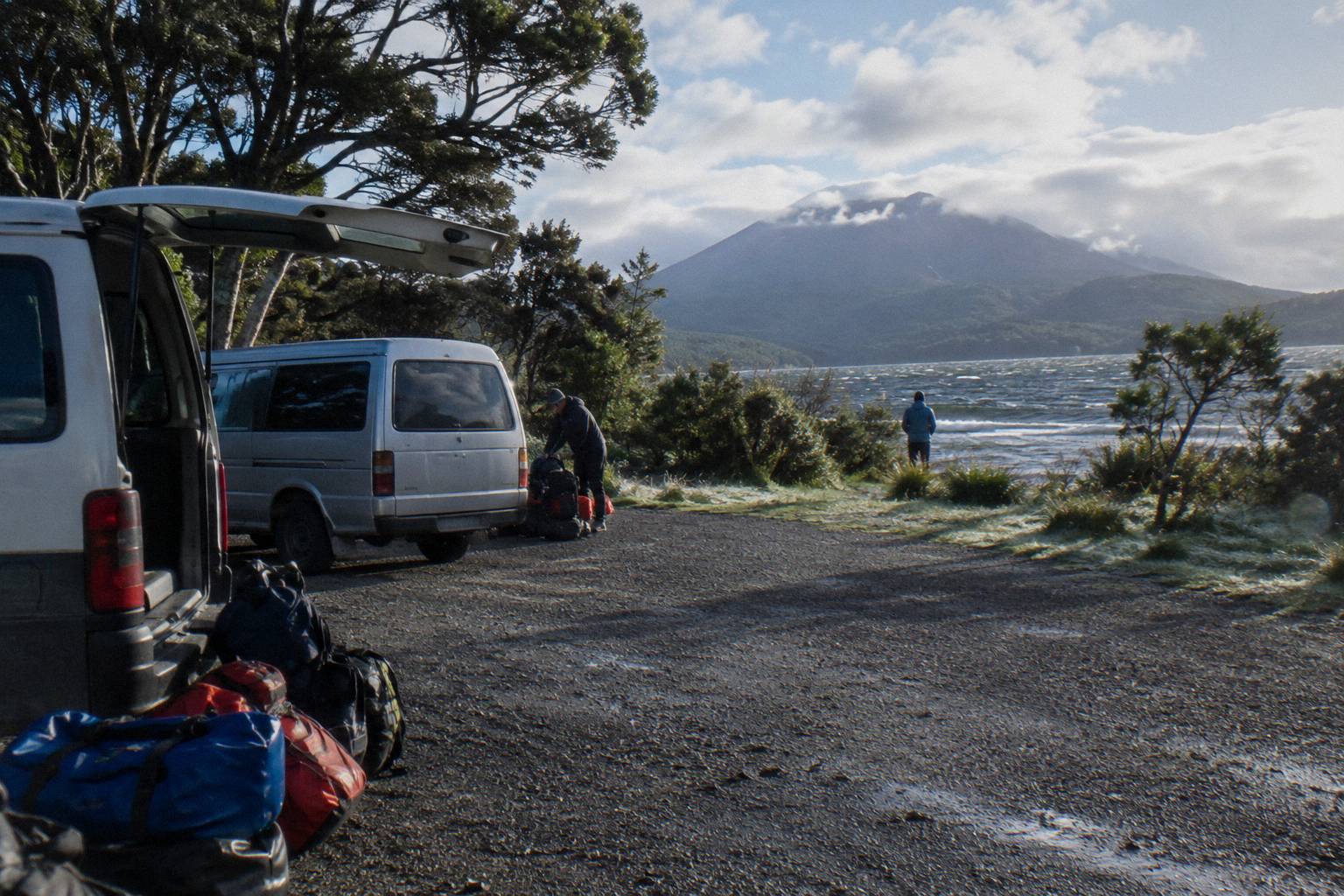
Finally, do not confuse the mountain's crater walk with the lake-edge Tarawera Trail, a 15 km DOC tramping track from the Te Wairoa car park to Hot Water Beach via Te Rata Bay, where dogs, bikes and vehicles are not permitted and patches of sand are very hot. That trail never ascends the volcano at all, so the optional-descent question simply does not arise on it. If the question is whether the kids can handle the day, the guided hike with kids and age limits guide covers the age rules per product.
Whether you book a walk, a heli landing, or a flyover, the rule holds: on Mt Tarawera Volcano Hike trips run by concessionaires, going down into the crater is a choice offered to willing legs, never a condition of the ticket.
Common Questions About The Crater Descent
Do You Have To Go Down Into The Crater On A Mt Tarawera Guided Hike?
No. Kaitiaki's half-day page describes the run down into the crater as optional, and the operator's FAQ adds that guests may take lighter walking options instead of the summit track itself.
Is The Scree Dangerous?
No safety verdict belongs here. The operator's FAQ describes the scree as "a 45 degree slope approximately 400m deep" and notes the volcanic scoria can be slippery. The guide briefs the group and decides what is offered on the day.
Can I Wait At The Top While Others Descend?
Yes, that is the standard alternative. The rim views are part of the trip for everyone, and guests who skip the descent stay with the group at the crater edge.
What If The Summit Track Is Too Much For Me?
The operator's FAQ says guests may take lighter walking options instead of the summit. The 4WD ride, base camp stop and guided crater walk remain part of the day.
Does A Helicopter Landing Include The Scree?
No. Volcanic Air's 40-minute flight includes a short guided summit walk, about 15 minutes per the operator page and about 20 minutes per the booking page, with no scree running involved. Landing is at the pilot's sole discretion.
Can I Cancel If I Change My Mind About The Descent?
Free cancellation up to 24 hours applies on the booking page for the trips compared here. Inside 24 hours, ask the operator when you book, since terms beyond that window are theirs to set.