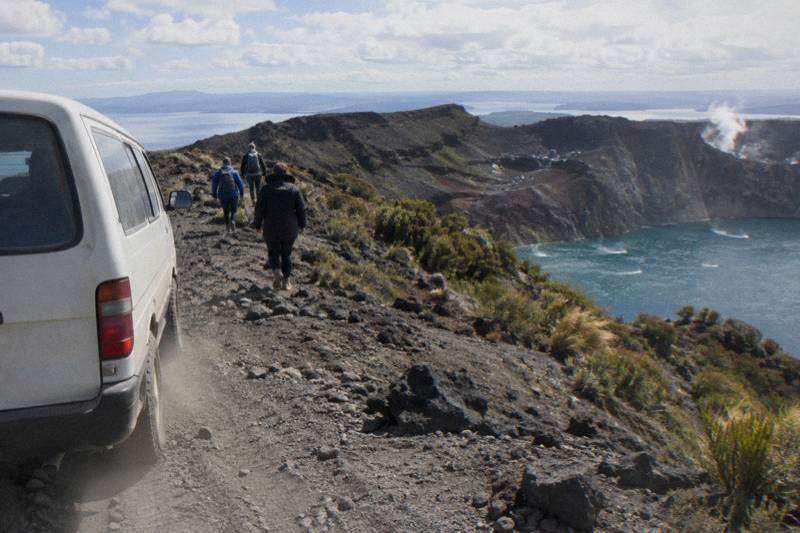
Mt Tarawera Scree Run On The Crater Walk
The scree run is the single feature of the Mt Tarawera crater walk that visitors ask about most before booking, and it is also the most misunderstood. Here is exactly what the operator publishes about it, who the booking page excludes, and the questions worth asking a guide on the day.
Short answer
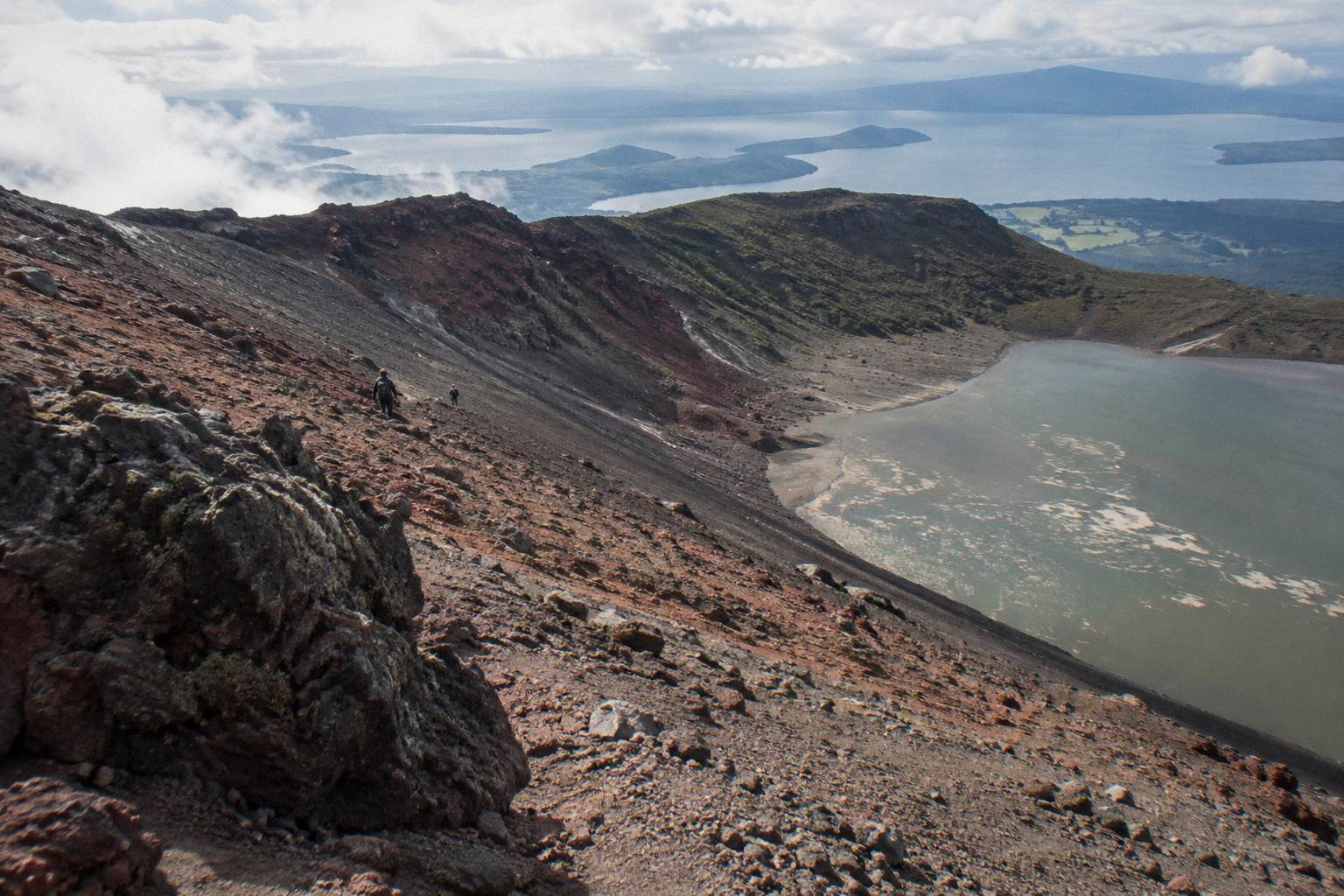
The scree run is an optional descent into the crater on the Kaitiaki Half-Day 4WD And Crater Walk. Kaitiaki describes the scree as a 45 degree slope approximately 400m deep, on slippery volcanic scoria. Guests can skip it and take lighter walking options instead. Children under 7 and several health conditions are excluded by the booking page.
The scree run is the part of the Mt Tarawera crater walk that turns a scenic volcano hike into something people tell stories about afterwards. It is also the part that generates the most questions before anyone books: how steep is it really, is it mandatory, what happens if you would rather not slide down a mountain of loose rock. The short answers are that Kaitiaki Adventures, the operator that runs the guided crater walk, describes the scree in its own FAQ as "a 45 degree slope approximately 400m deep", that the descent is optional, and that nobody is pushed into doing it. Everything below comes from what the operator actually publishes, with no invented measurements, no technique coaching and no promises the operator never makes.
What The Scree Run Actually Is
The scree run is an optional descent into the crater of Mt Tarawera, offered on the Kaitiaki Half-Day 4WD And Crater Walk. Kaitiaki's half-day page mentions an optional run down into the crater, and its FAQ describes the scree as a 45 degree slope approximately 400m deep. Nobody has to do it: lighter walking options exist instead of the summit, and the guide makes the call on the day.
The mountain itself is a dome volcano, 1,111 m at Ruawahia Dome according to GNS Science, and the guided trip reaches the summit area on foot after a 4x4 ride up the mountain road. Once at the top, the crater opens out below, its walls made of the loose volcanic scoria that gives the scree run its name. Scoria is light, sharp-edged volcanic rock, and Kaitiaki's FAQ says plainly that the ground "can be slippery".
What makes the feature unusual is the surface itself. On a normal tramping track your boots grip soil or rock. On scree, each step displaces a small avalanche of loose stone, and descenders move with the ground rather than across it. That is the entire appeal, and also the entire reason some people choose to watch from the rim instead. The operator's marketing mentions the run as an option on its half-day trip, the 4 hours 30 minutes "Mt Tarawera Volcanic Crater Experience", rated 4.9 across 359 reviews on the booking page, which also confirms free cancellation up to 24 hours before.
Two things should be clear from the start. First, the descent is optional per Kaitiaki's own half-day page, so a booking never commits anyone to it. Second, no published source gives the crater's width or depth as a surveyed measurement: the "45 degree slope approximately 400m deep" wording is Kaitiaki's FAQ description of the scree slope, quoted as the operator's words rather than as an official survey figure. Treating it any other way would be repeating marketing as geology.
What The Operator Says About The Ground
Kaitiaki's FAQ is the primary source, and it says three specific things: the scree is a 45 degree slope approximately 400m deep, the ground is volcanic scoria that can be slippery, and two sections of about 50 m need four points of contact. Those are the only published ground facts. No crater dimensions, no speeds and no difficulty grading beyond "medium to moderate" appear anywhere.
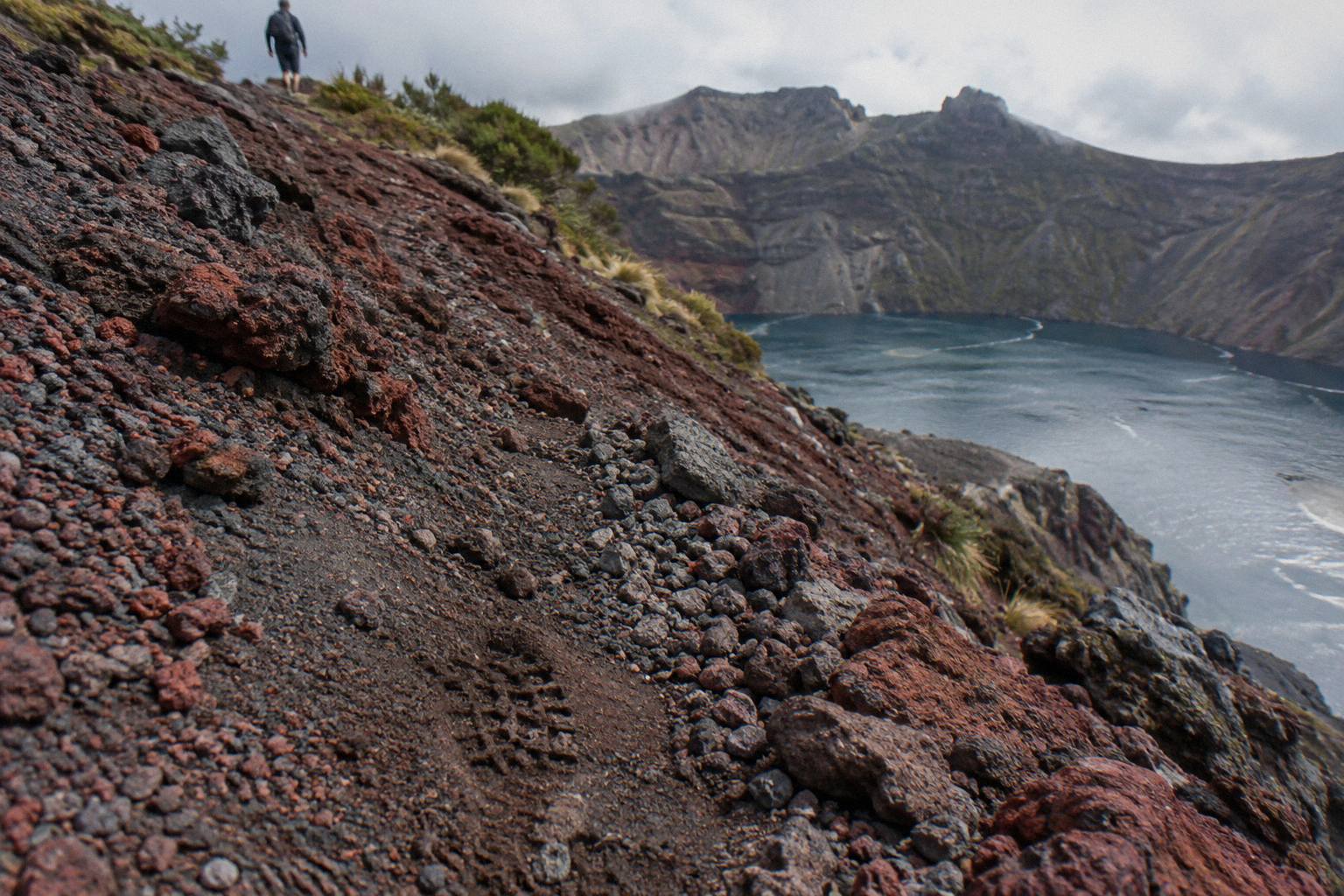
The FAQ wording deserves quoting precisely, because secondhand versions of it drift. Kaitiaki describes the scree as "a 45 degree slope approximately 400m deep". It describes the walking surface as volcanic scoria that "can be slippery". And it notes two sections of about 50 m where walkers need four points of contact, meaning hands as well as feet. Those three sentences, plus the note that the summit track needs a medium to moderate fitness level, are the complete published picture of the terrain on the mountain.
| What the ground is like | The operator's exact position | Where it comes from |
|---|---|---|
| Scree slope angle and size | "A 45 degree slope approximately 400m deep" | Kaitiaki FAQ, quoted as the operator's wording |
| Surface material | Volcanic scoria that "can be slippery" | Kaitiaki FAQ |
| Hands-on sections | Two sections of about 50 m need four points of contact | Kaitiaki FAQ |
| Fitness for the summit track | Medium to moderate, with lighter walking options available | Kaitiaki FAQ and half-day page |
| The descent itself | An optional run down into the crater | Kaitiaki half-day page |
| Crater width, depth or volume | Ask when you book | Not published anywhere read |
The differences between these Tarawera tours matter more than they seem. A 45 degree slope sounds abstract until you picture a staircase tilted to half again as steep as a ladder leaning against a wall, except the stairs are made of shifting gravel. Some people hear that and get excited. Others hear it and correctly decide the rim view is enough. Both reactions are reasonable, and the trip is built to serve both, since lighter walking options replace the summit push entirely for guests who want them.
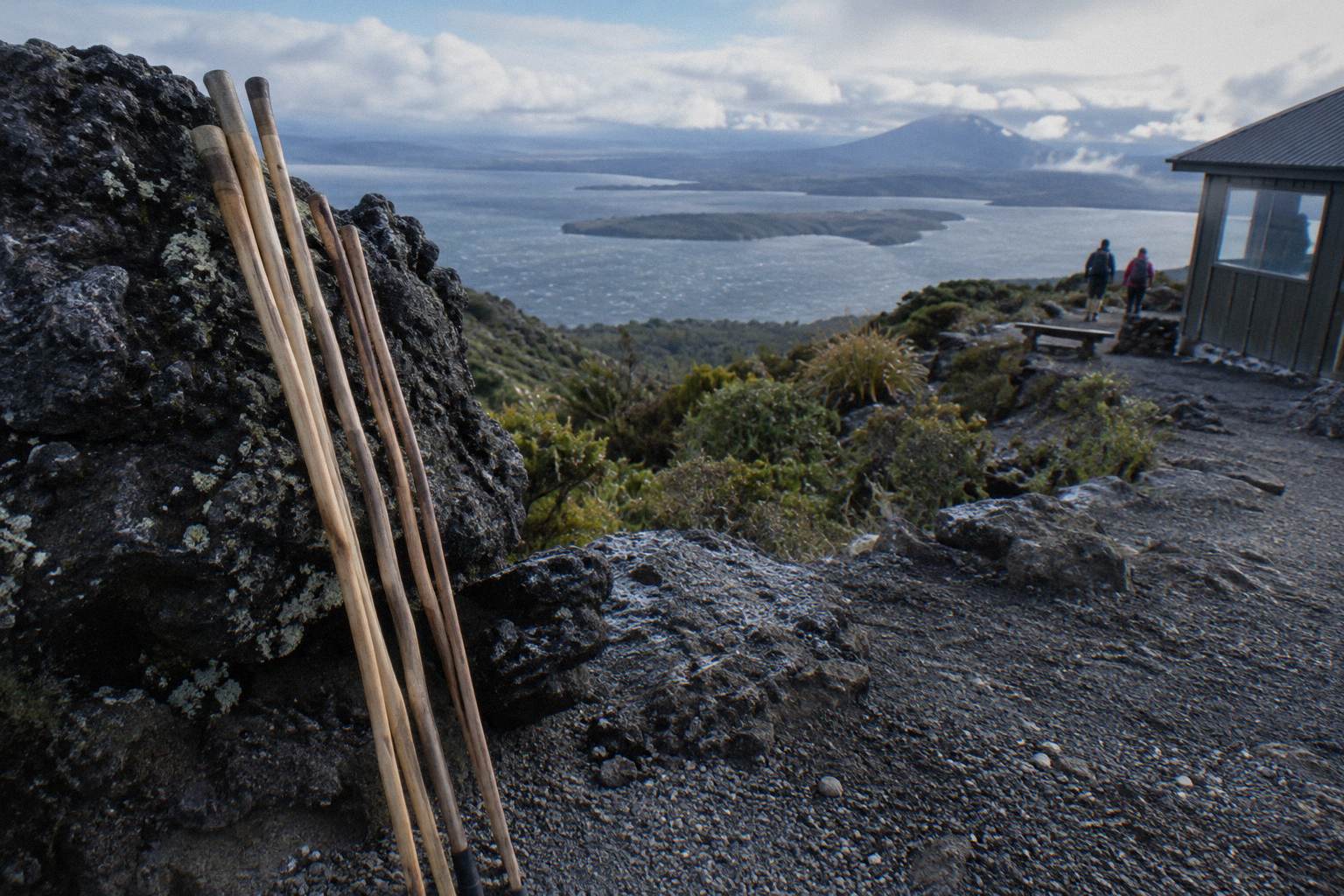
The operator's own FAQ, at the Kaitiaki Adventures FAQ page, is worth reading in full before booking, because it also covers the journey to the mountain: about 30 minutes' drive from the meeting point at the Main Carpark on Hemo Road, then roughly 8.2 km of off-road travel in the 4WD vehicle, with a base camp stop where walking sticks are handed out and a composting toilet is available. The sticks are given out at base camp, before the walking begins, and guests who prefer a pole on loose ground should take one.
If the guided walk sounds right, the trip that contains the scree run is the Kaitiaki Half-Day 4WD And Crater Walk, and you can check availability for your dates. The amount for your date shows during booking.
Do You Have To Do The Scree Run
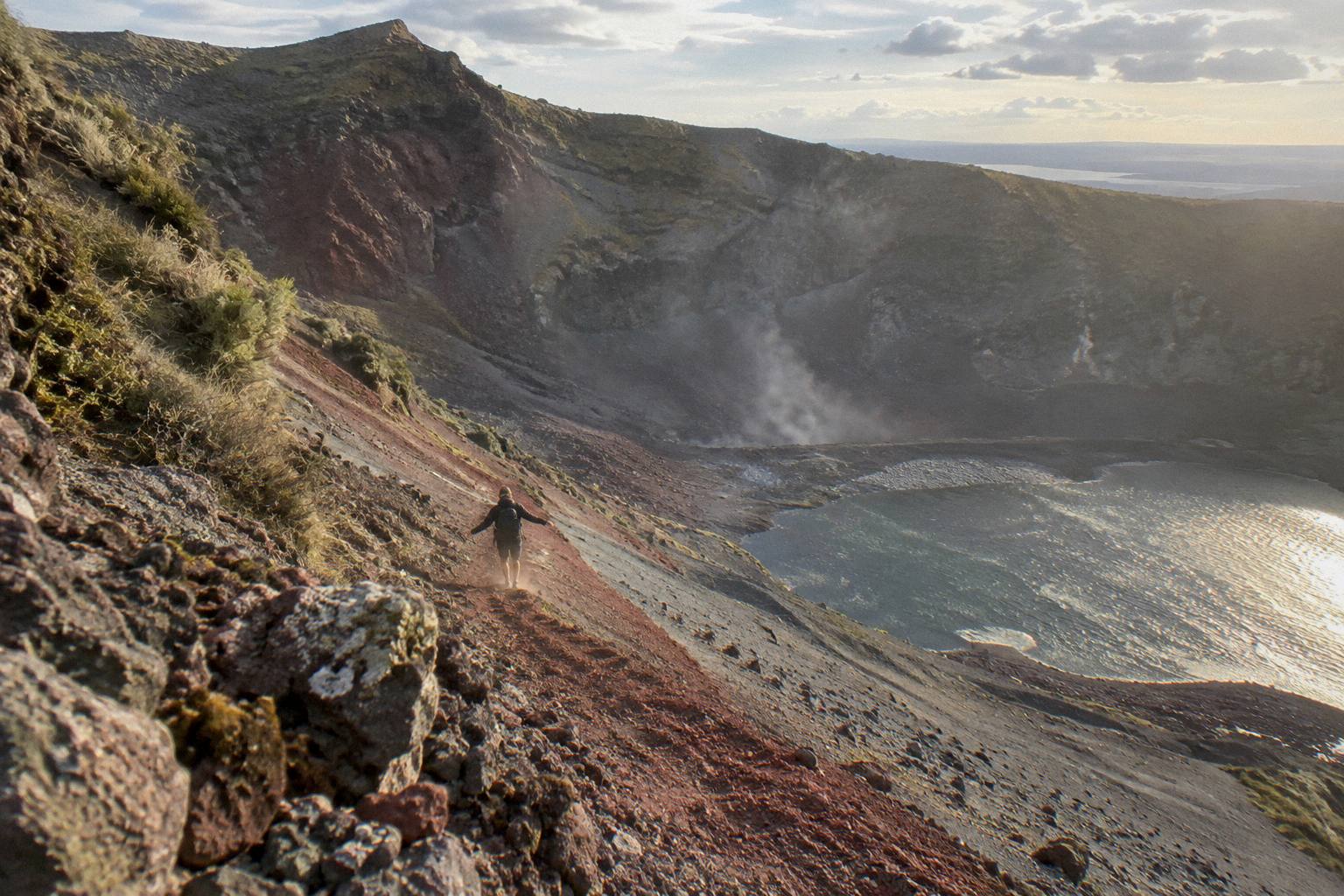
No. The descent into the crater is optional on the half-day trip, per Kaitiaki's own page, and the operator also offers lighter walking options instead of the summit track altogether. Guests can stay on the upper track, take the easier options, or watch the crater from the rim while others descend. Nobody is required to run down anything.
The word "optional" carries real weight here. Kaitiaki's half-day page lists the crater run as an optional part of the experience, which means the guide frames it, invites it and supervises it, but each guest decides. The same FAQ that describes the 45 degree slope also says guests may take lighter walking options instead of the summit, so even the walk to the top of Ruawahia Dome is not compulsory. A visitor who wants the 4x4 ride, the volcanic landscape and the views without any steep ground can have exactly that.
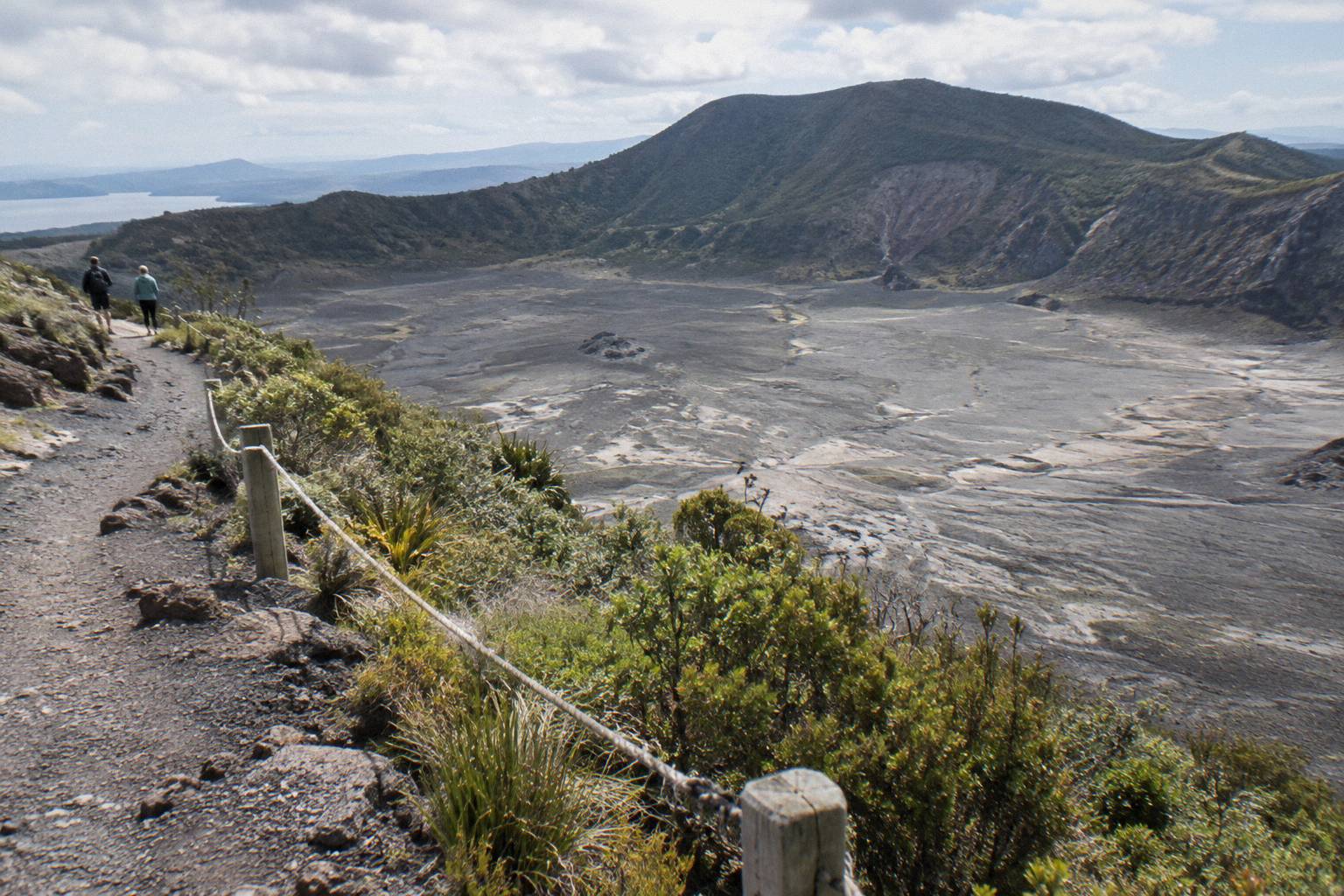
The design of the day reflects that flexibility. Benches are placed along the route, and at the second bench the guide shows the summit trail, a natural decision point where the group splits by choice. Some continue to the summit and the scree. Others remain with a shorter loop. The published description of the walk never frames the scree as a test or a requirement, and there is no suggestion in any operator material that skipping it diminishes the trip.
For anyone weighing whether the whole summit track suits them, the deeper breakdown of how hard the Tarawera crater walk really is covers the fitness wording in detail. The short version: the operator says medium to moderate, the booking page excludes several health conditions, and the terrain is volcanic scoria rather than a formed track.
A useful mental model before the day: the scree run is one moment inside a 4 hours 30 minutes experience, not the experience itself. The trip includes the off-road drive, the crater landscape, the summit views and the guided commentary about the 1886 eruption, when more than 100 people were killed in villages near the mountain in New Zealand's largest eruption of the last 500 years, according to GNS Science. Deciding against the descent still leaves a full morning on an extraordinary mountain.
Who The Booking Page Excludes
The booking page for the half-day trip lists children under 7, low fitness, back problems, heart problems and serious medical conditions as not suitable, and the trip is not wheelchair accessible. Minimum age is 7 as the operator states. The list is about the whole trip, not only the scree, but it maps directly onto who should attempt steep, loose ground.
| Who the booking page excludes from the half-day trip | What the page says |
|---|---|
| Children under 7 | Not suitable; minimum age 7 as the operator states |
| Low fitness levels | Listed as not suitable |
| Back problems | Listed as not suitable |
| Heart problems | Listed as not suitable |
| Serious medical conditions | Listed as not suitable |
| Wheelchair users | Trip is not wheelchair accessible |
The exclusions are blunt, and they exist for good reason. Loose scoria underfoot is unpredictable in a way firm ground is not, and the two 50 m sections needing four points of contact demand grip, balance and the ability to move quickly if the surface shifts. A back that objects to sudden jolts, or a heart that objects to short bursts of effort, are exactly the conditions the operator names. Guests with those conditions can still visit the mountain by other means, including the flight options discussed below, but the guided crater walk is not the right vehicle for them.
What the booking page does not do is grade the scree separately from the walk. There is no beginner or expert version, no separate waiver and no published split between the summit track and the descent. It all runs as a single experience with optional add-ons. You can take the walk and skip the scree, because the descent is optional, but there is no scree without the walk: you reach it on foot, along the summit track, after the 4x4 ride and the benches.
If the exclusions rule the half-day out but the mountain still calls, Kaitiaki also runs a longer combination day, the Kaituna Rafting And Tarawera Crater Walk Combo, a 9-hour pairing of whitewater rafting on the Kaituna River with the same 90-minute guided crater walk, minimum age 13, with complimentary transport from central Rotorua on the booking page. It carries the same crater walk at its core, so the same ground facts and the same fitness wording apply. No price is published for it, so the amount for your date shows during booking, and free cancellation up to 24 hours applies.
Fitness, Age And The Summit Track
Kaitiaki says a medium to moderate fitness level is needed for the summit track, with lighter walking options for guests who prefer them. Minimum age is 7 as the operator states. The summit stands at 1,111 m per GNS Science. No published source grades the scree separately, promises any speed, or offers technique coaching, and none appears here.
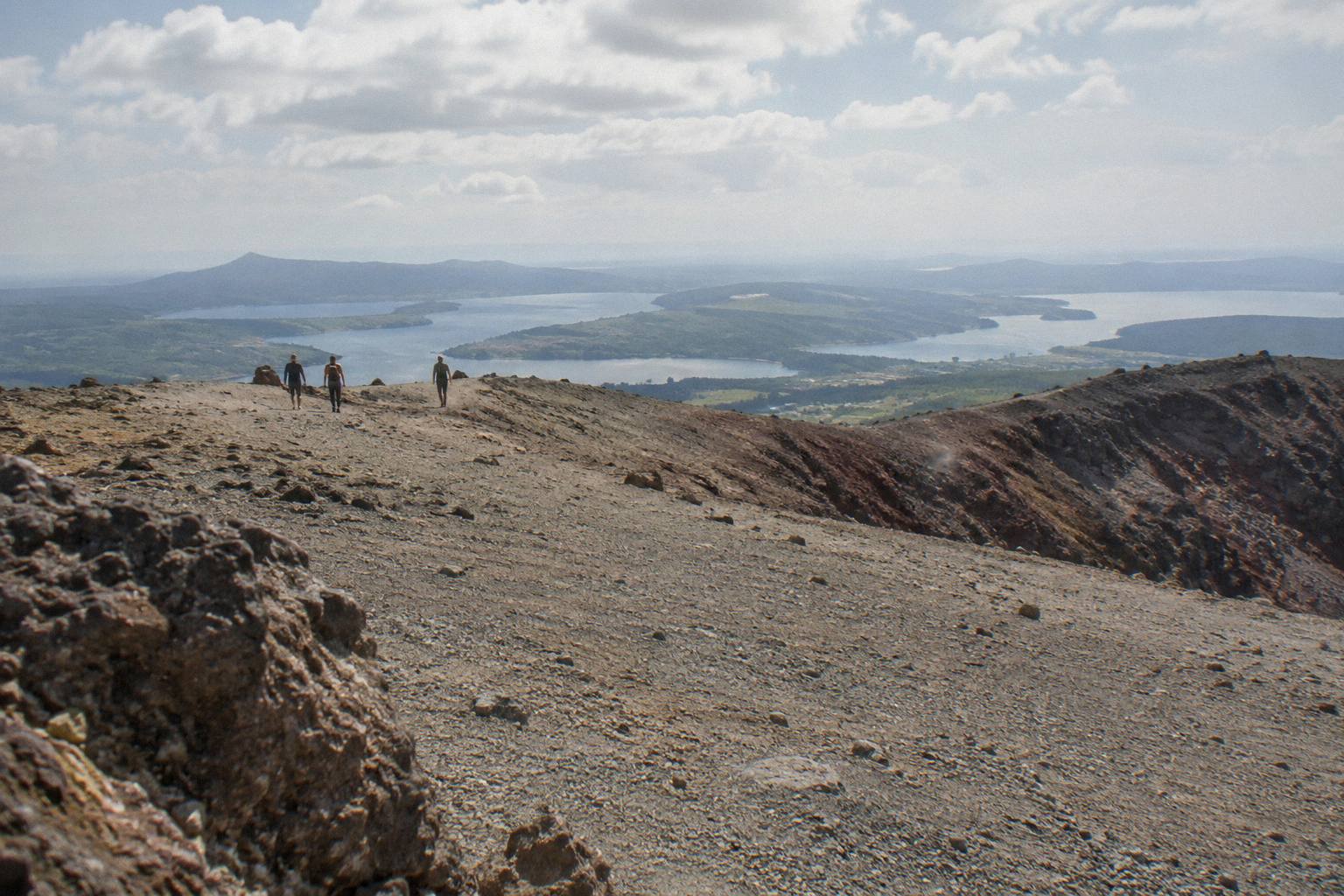
The operator's fitness wording is modest and worth taking at face value. Medium to moderate means the summit track is not an alpine route, but it is also not a lakefront stroll: it crosses volcanic scoria, includes the two four-point-of-contact sections described earlier, and gains the summit of Ruawahia Dome, at 1,111 m the highest of Tarawera's three domes according to GNS Science. Guests who find that description unappealing are invited by the operator's own FAQ to take lighter walking options, and the benches along the route make pacing straightforward. More of these guides are collected on Mt Tarawera Volcano Hike.
Age limits vary by product, which catches families out. The half-day crater walk takes children from age 7, as the operator states. The Kaituna combo requires age 13, because the rafting leg, not the mountain, sets the bar. Families weighing the decision may find the fuller write-up of taking kids on the Tarawera guided hike useful, since it gathers every age and suitability rule in one place.
What no published source supports is any claim about how fast anyone descends the scree, how long the descent takes, or the correct way to place your feet. Those depend on the individual, the guide's instructions on the day and the conditions, and responsible coverage stops at the operator's own words. The same applies to summit weather: Rotorua town's climate normals describe the town at about 280 m, while the summit at 1,111 m is colder and windier, and no published figure gives a summit temperature, so layering decisions belong to the day itself.
What To Wear And Bring
Kaitiaki asks for sturdy walking shoes, with sturdy trainers accepted, comfortable clothing for the weather, a bottle of water and snacks, because the operator provides none. Walking sticks are handed out at base camp. A motion-sickness warning asks guests to tell the guide, relevant for the roughly 8.2 km off-road drive.
Footwear is the one gear decision that genuinely interacts with the scree. Loose scoria rewards a shoe that holds the foot and sheds grit, and the operator's standard, sturdy walking shoes or sturdy trainers, is the right benchmark. Fashion trainers, sandals and new unworn boots all fail that test in different ways. Beyond shoes, the list is short and unfussy, which is characteristic of the whole operation.
| Item | What the operator says | Notes for the day |
|---|---|---|
| Footwear | Sturdy walking shoes; sturdy trainers are fine | The scree shifts under any shoe; grip matters more than brand |
| Clothing | Comfortable clothing for the weather | Summit is colder and windier than Rotorua town below |
| Water | Bring a bottle | No water is provided on the mountain |
| Snacks | Bring your own; Kaitiaki provides none | Explicit in the FAQ |
| Walking sticks | Given out at the base camp stop | Take one if loose ground worries you |
| Motion sickness | Tell the guide if affected | The 4WD approach is roughly 8.2 km of off-road travel |
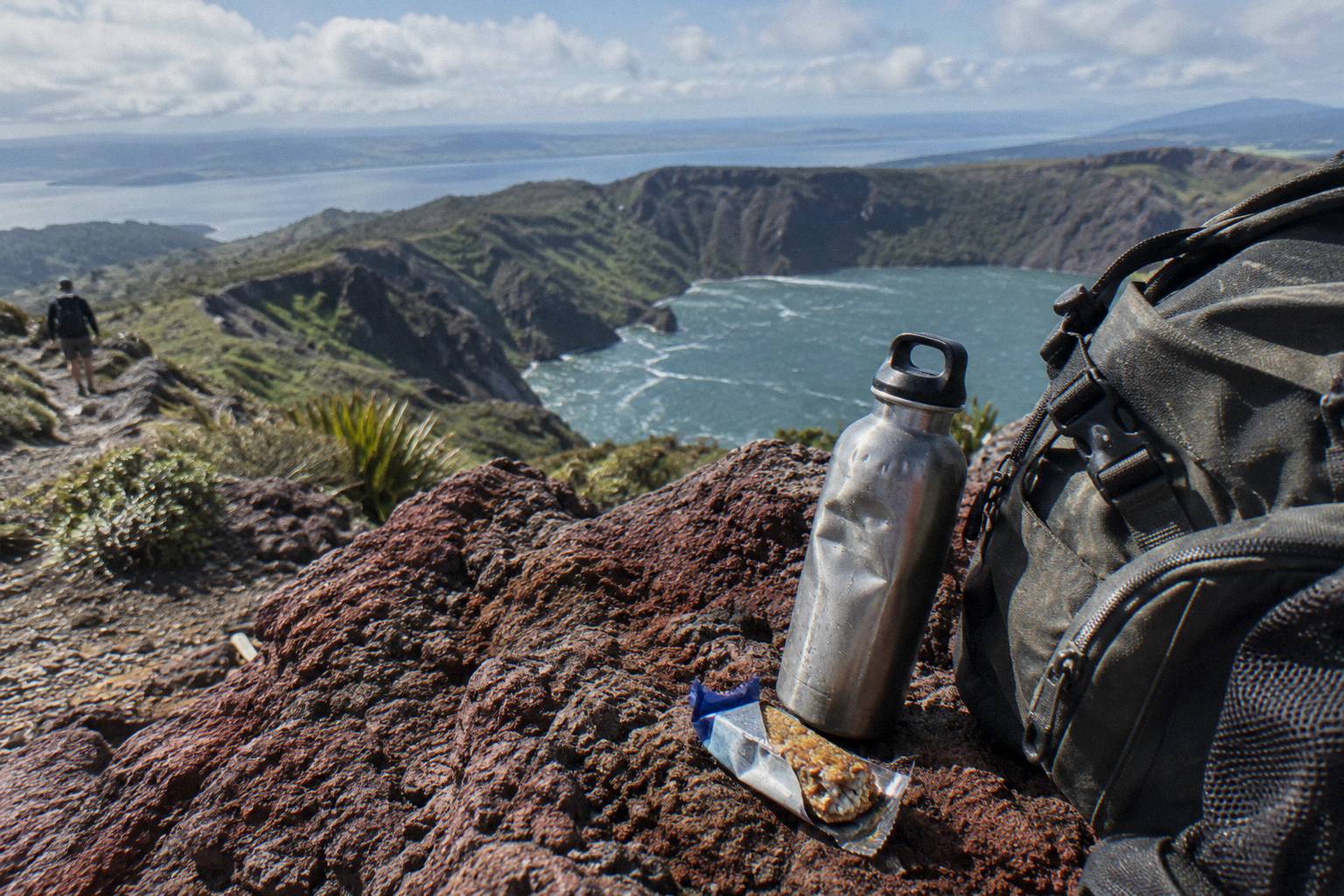
The food point deserves its own sentence because it surprises people: the booking page inclusions cover the 4.5-hour guided experience, a local guide, the 4x4 transport and hotel pickup and drop-off from central Rotorua, but Kaitiaki says it provides no snacks. A muesli bar in a pocket is the difference between a good last hour and a hungry one. For the full packing treatment, including weather thinking, the dedicated guide on what to wear and bring for the crater walk goes deeper than the operator's FAQ does.
Seeing The Crater Without Running Down It
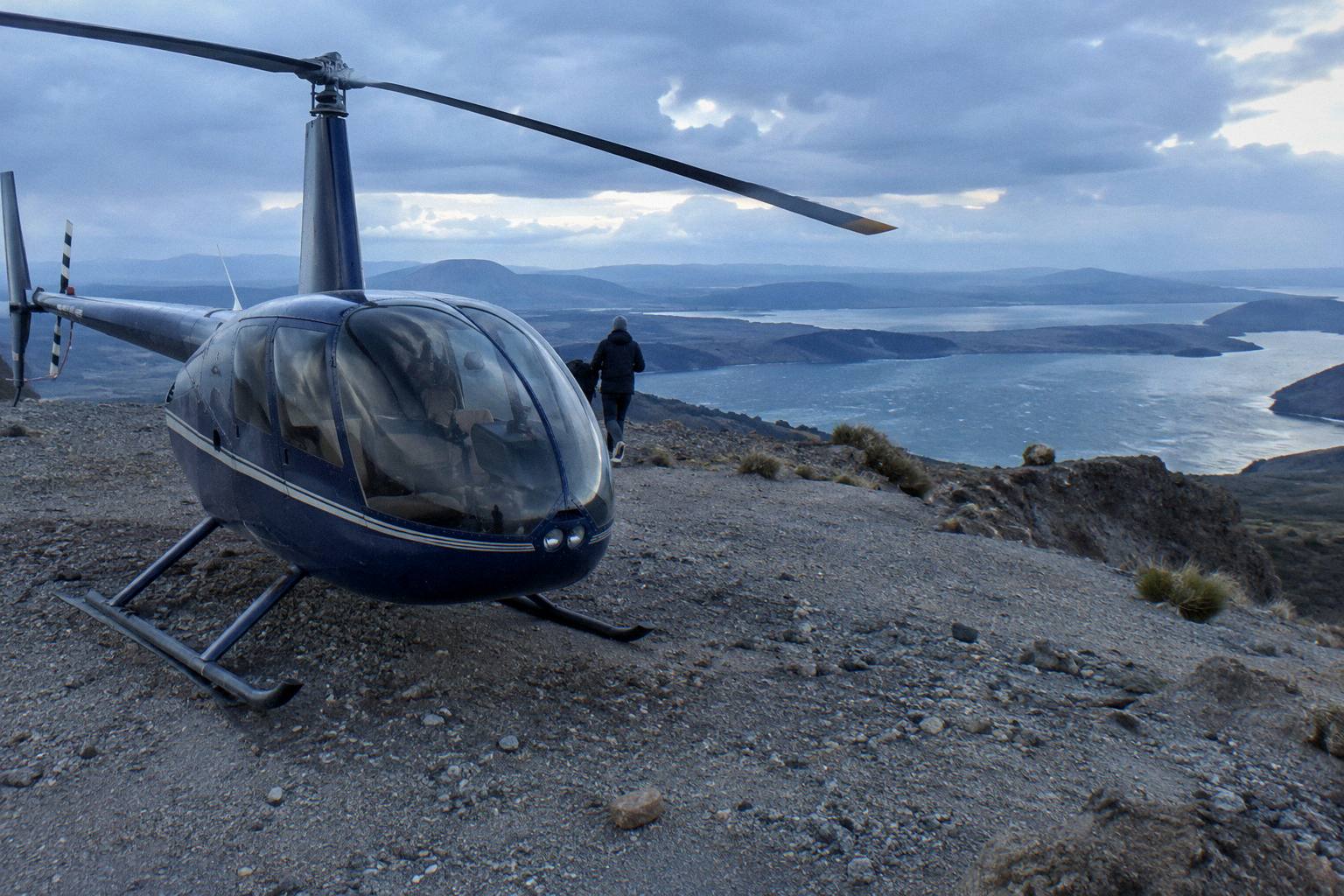
Not everyone who wants to see inside the Tarawera crater wants to descend it on foot. Volcanic Air, which Kaitiaki describes as its partner on the mountain, runs flights that land on the summit: the 40-minute landing flight, from NZ$675 per person, rated 4.9 across 43 reviews, includes a guided summit walk of about 15 to 20 minutes, with landing at the pilot's sole discretion.
The two operators frame themselves as partners rather than rivals: Kaitiaki's conservation page says both companies are concessionaires working alongside Ngati Rangitihi, whose people hold kaitiakitanga of the mountain, and that the Ruawahia 2B Trust which governs the land reinvests most tourism concession revenue in conservation, wilding pine removal first. That arrangement explains why the walking and flying products complement each other rather than compete. Details are on Kaitiaki's conservation page.
The 40-Minute Summit Landing Flight departs the Rotorua City Lakefront helipad, crosses lakes Okareka, Okataina and Tarawera, and, conditions permitting, lands on the mountain for a short guided walk: the operator's own page says 15 minutes, the booking page about 20 minutes. The landing is never guaranteed; Volcanic Air's wording reserves landings to the pilot's sole discretion depending on weather, volcanic activity and passenger loadings. The booking page lists a weight rule of 135 kg per seat, with passengers over 110 kg possibly given specific seating and weighed individually at booking, and a minimum of 2 adult fares for a flight to operate. Free cancellation up to 24 hours applies.
For a lower-commitment look, the Tarawera Scenic Floatplane Flyover, from NZ$395 per person and rated 4.8 across 48 reviews, is a flyover only, with no landing, in the same sentence as its rating because the distinction matters. It runs 30 minutes from the lakefront floatplane base with pilot commentary over the volcanic landscape. If even a flyover sounds like too much machine, the question of whether you can walk Tarawera without a guide has its own answer, and it is a more nuanced one than most visitors expect.
Questions To Ask Your Guide Before The Descent
Ask about conditions on the day, group pacing and how the guide manages the scree when you book and again at the rim. Six questions cover it: ground state, the lighter options, the sticks, the hands-on sections, the watch-from-here spot, and where the walk rejoins.
Every one of these has a real answer on the day and no published answer in advance, which is exactly why they are worth asking. The guide makes decisions based on the scoria's state, the weather and the group in front of them, and no article can pre-empt that. What an article can do is make sure nobody stands at the top of a 45 degree slope, as the operator describes it, wishing they had asked something an hour earlier.
| Question to ask | Why it matters |
|---|---|
| How is the scoria running today? | Loose ground behaves differently wet or dry; only the guide on the day knows |
| What are the lighter walking options from here? | The FAQ says they exist; the guide confirms what they are on the day |
| Should one of the walking sticks come along? | Sticks are handed out at base camp; rim advice may differ |
| Where exactly are the two 50 m hands-on sections? | Knowing where four points of contact are needed removes surprises |
| Where is the best spot to watch if someone sits the descent out? | Watching is a normal choice, not a consolation prize |
| Where does the walk rejoin after the crater floor? | Everyone should know the plan before anyone starts down |
One more belongs on the list for anyone with children aged 7 or over: what the operator expects of younger walkers on the summit track and at the descent. The minimum age is 7 as the operator states, and the FAQ's fitness wording applies to everyone, but a guide's read on a specific child on a specific day beats any general rule. Ask early, at booking, not at the rim.
Common Scree Run Mistakes
Most problems on the scree come from four avoidable mistakes: treating the descent as compulsory, wearing footwear that cannot hold loose ground, arriving with no water or snacks because none are provided, and never telling the guide about a bad back, a heart condition or motion sickness. Each one is checked against what the operator publishes, and each has a one-line fix.
First mistake: assuming the run is mandatory and building anxiety around it. The operator's own half-day page calls it optional, and the FAQ offers lighter walking options instead of the summit. Fix: decide at the second bench, where the guide shows the summit trail, not in the car park.
Second mistake: the wrong shoes. The operator's benchmark is sturdy walking shoes, with sturdy trainers accepted. Slippery-soled fashion trainers are not that. Fix: whatever grips gravel and holds the ankle, worn in before the day.
Third mistake: no food or water. Kaitiaki says it provides no snacks, and the FAQ asks guests to bring a bottle of water. Fix: pocket snacks and a filled bottle, packed the night before.
Fourth mistake: staying quiet about health. The booking page excludes back problems, heart problems and serious medical conditions for good reason, and the motion-sickness warning exists because the roughly 8.2 km off-road approach is genuinely bumpy. Fix: declare everything at booking and to the guide on the day. If a health condition rules the walk out entirely, the flight alternatives above reach the same summit with the crater in view.
Common Questions About The Mt Tarawera Scree Run
Is The Mt Tarawera Scree Run Compulsory?
No. Kaitiaki's half-day page describes the run down into the crater as optional, and the operator's FAQ confirms lighter walking options exist instead of the summit track. Guests can watch from the rim or take a shorter route while others descend.
How Steep Is The Scree On Mt Tarawera?
Kaitiaki's FAQ describes it as "a 45 degree slope approximately 400m deep". That is the operator's own wording rather than a survey measurement, and no official source gives the crater's width or depth. Treat the sentence as a description of what the slope feels like, which is very steep.
Can Children Do The Scree Run?
The half-day trip accepts children from age 7, as the operator states, and the fitness wording of medium to moderate applies to everyone. How any individual child handles loose ground is a judgement for the guide and the family on the day, so ask when you book.
What Should You Wear On Your Feet For The Scree?
Kaitiaki asks for sturdy walking shoes and accepts sturdy trainers. Loose scoria shifts underfoot, so grip and a secure fit matter more than anything else. Walking sticks are handed out at the base camp stop and are worth taking on loose ground.
Are Drinks And Snacks Provided On The Crater Walk?
No. Kaitiaki says it provides no snacks, and its FAQ asks guests to bring a bottle of water. The booking page inclusions cover the guided experience, the guide, the 4x4 transport and central Rotorua hotel pickup and drop-off, but not food or drink.
Can You See The Crater Without Doing The Scree Run?
Yes, two ways. On foot, the rim and the summit views are part of the same trip and need no descent. From the air, Volcanic Air's landing flights put you on the summit with a short guided walk, from NZ$675 per person for the 40-minute flight, and its floatplane flyover from NZ$395 per person crosses the crater without landing at all.