Mt Tarawera Guided Hike With Kids: Age Limits And Family Options
The age rules decide the format before anything else does. Kaitiaki Adventures states ages 7 and over for its crater walks, the Kaituna rafting combo states 13 and over, and the Volcanic Air helicopter products take infants on laps with the age rule to ask the operator directly.
Short answer
Kaitiaki Adventures states a minimum age of 7 for the half-day and full-day crater walks, and 13 for the Kaituna rafting combo. Volcanic Air's helicopter and floatplane products seat infants on laps, require 2 adult fares minimum, and leave the age rule to be asked at booking. The half-day crater walk runs 4 hours 30 minutes; the 40-minute summit landing flight costs from NZ$675 per person.
The 10 June 1886 eruption buried villages, reshaped Lake Rotomahana and left behind a mountain whose access rules still reflect what happened that night. Mt Tarawera sits on private land governed by the Ruawahia 2B Trust, which reinvests most tourism concession revenue in conservation, and Ngati Rangitihi hold kaitiakitanga over the maunga. Kaitiaki Adventures and Volcanic Air describe themselves as concessionaires working alongside Ngati Rangitihi, and their guided trips are the summit experiences a family can book. For a fuller picture of Mt Tarawera Volcano Hike options, the age rules are where every family decision starts, because each product carries its own limit and one operator's rule never transfers to another.
What Age Do Children Need To Be For The Mt Tarawera Crater Walk?
Kaitiaki Adventures states ages 7 and over for its half-day and full-day crater walks, so a child who has turned 7 can join the guided summit walk with the family. The Kaituna rafting and crater walk combo carries a different rule, 13 and over, because it adds whitewater rafting. Volcanic Air's flights publish their own conditions, and the age question for those goes straight to the operator at booking.
The half-day product, the "Mt Tarawera Volcanic Crater Experience", runs about 4.5 hours for ages 7 and over and takes in the summit of Ruawahia with, in Kaitiaki's own words, "360 degree views". The Full Day Hike runs about 6.5 hours, also for ages 7 and over, and adds Tarawera Dome plus about 1.5 hours more walking than the half day. That longer day deserves real thought with younger children: the extra time is spent on volcanic scoria, a surface the operator describes as one that "can be slippery".
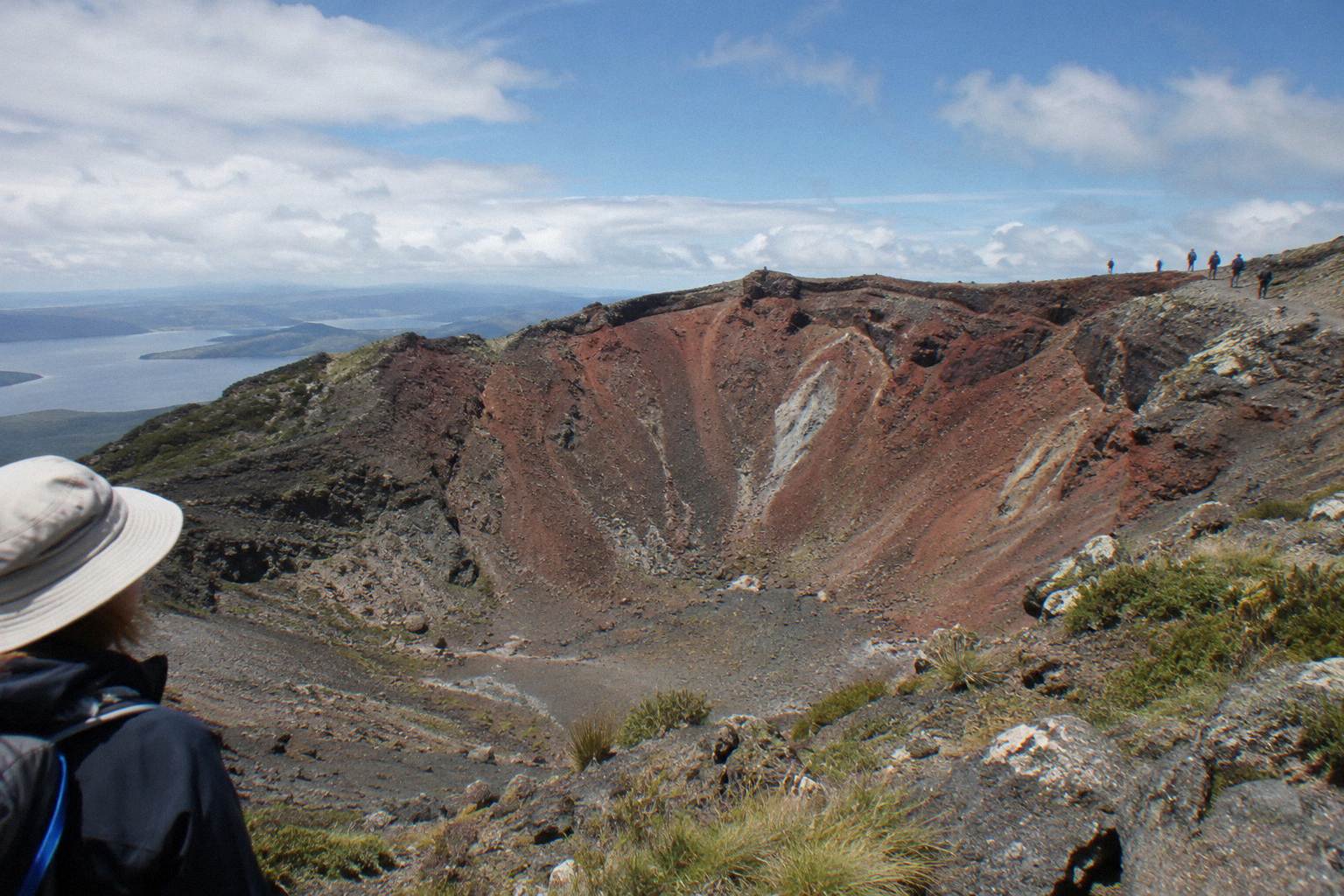
Where the age limit bites hardest is the summit option within the half day. Kaitiaki says a medium to moderate fitness level is needed for the summit track, and importantly, guests may take lighter walking options instead of the summit. A 7-year-old who reaches the second bench, where the guide shows the summit trail, can stay on a gentler line while a parent continues, though how that works in practice on the day is a question for the guide. The scree itself is described in Kaitiaki's own FAQ words as "a 45 degree slope approximately 400m deep", a quote from the operator rather than a measurement, and two sections of about 50 m need four points of contact.
All amounts here are in New Zealand dollars. For child fares, departure times and group sizes, the answer is one consistent phrase: ask when you book. Asking early beats discovering a gap at the trailhead.
The trust structure behind access explains why an age rule matters at all. The mountain is not a public walking track in the ordinary sense, and no official page authorises unguided walking to the summit, which is covered in more depth in the guide on whether you can walk Mt Tarawera without a guide. Guided trips fund the conservation work, wilding pine removal first among the projects, that the trust directs.
Which Tours Allow Kids And Which Have Higher Age Limits?
The crater walks take children from age 7, the Kaituna combo takes teenagers from 13, and the flights take infants on laps, so nearly every family configuration has one workable format. The 40-minute summit landing flight, the 1-hour mountain landing flight, the dual landing flight and the floatplane flyover all publish lap-seating for infants and a minimum of 2 adult fares, with the age rule itself to ask Volcanic Air about.
The cleanest way to compare the formats is side by side. None of the rules below transfers between products. Where a cell says ask the operator, confirm with them at booking.
| Trip | Minimum age | Fitness or weight rule | Landing |
|---|---|---|---|
| Kaitiaki Half-Day 4WD And Crater Walk | 7 and over (operator statement) | Moderate fitness; low fitness, back problems, heart problems and serious medical conditions not suitable | Summit walk on foot |
| Kaitiaki Full Day Hike (booked via Kaitiaki's own site) | 7 and over (operator statement) | About 1.5 hours more walking than the half day | Summit walk on foot |
| Kaituna Rafting And Tarawera Crater Walk Combo | 13 and over | Low fitness not suitable; moderate fitness needed | Summit walk on foot |
| Volcanic Air 40-Minute Summit Landing Flight | Ask Volcanic Air | 135 kg per seat; over 110 kg may mean specific seating | At the pilot's discretion |
| Volcanic Air 1-Hour Mountain Landing Flight | Ask Volcanic Air | 110 kg total per passenger | At the pilot's discretion |
| Tarawera And Orakei Korako Dual Landing Flight | Ask Volcanic Air | 130 kg total per passenger | At the pilot's discretion |
| Tarawera Scenic Floatplane Flyover | Ask Volcanic Air | 135 kg per seat | No landing, flyover only |
Families with teenagers have the widest choice of all, because the 13-and-over rule on the Kaituna combo opens a full-day format that pairs about 1.5 hours of rafting, roughly 1 hour of it on the water, with a 90-minute guided crater walk and 4x4 transport up the mountain. Complimentary transport from central Rotorua accommodation and the Rotorua Information Centre covers 22 pickup options, with a return after the first activity and a fresh collection for the second, which removes the two hardest logistics for a parent. No price and no rating appear for it, so treat it as a format comparison rather than a value one.
For families whose youngest is between 7 and 12, the two crater walks and the flight formats are the live options, and the choice becomes about time on volcanic ground versus time in the air. A family split across the age line, say a 10-year-old and a 15-year-old, can even run two formats on adjacent days rather than force one trip to fit both.
Is A Helicopter Landing A Good Option For Families With Small Children?
A helicopter landing flight sidesteps the age-7 walking rule entirely, since Volcanic Air's flights seat infants on laps and require a minimum of 2 adult fares, with the age rule confirmed directly with the operator. The 40-minute summit landing flight costs from NZ$675 per person and puts a guided walk of 15 to 20 minutes on the summit itself, though a landing is never guaranteed.
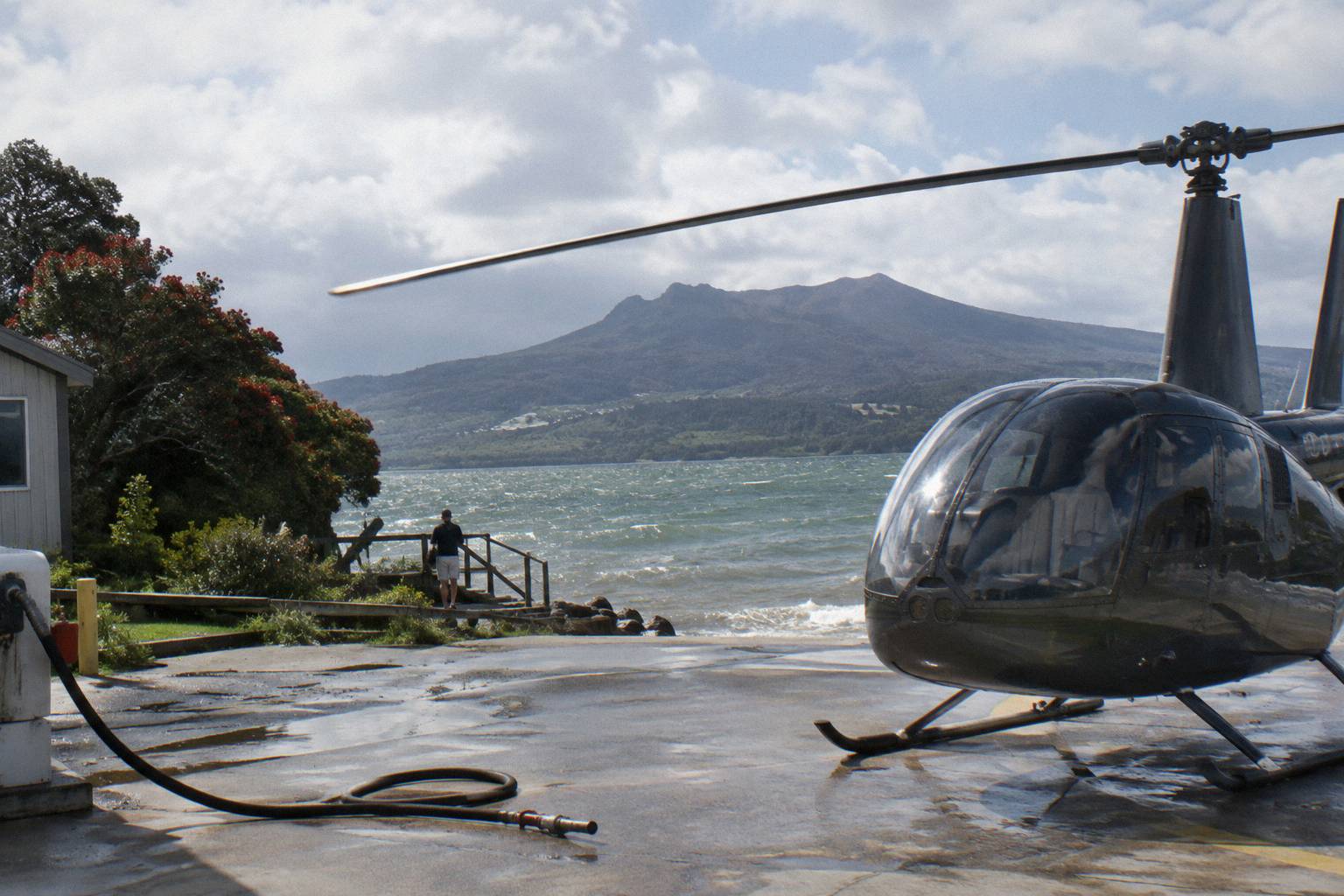
The 40-minute flight departs from Lakefront Drive on the Rotorua City Lakefront and passes over lakes Okareka, Okataina and Tarawera before landing on the summit for a guided walk. The walk's length depends on which page you read, and both are the operator's own words: the Volcanic Air page says 15 minutes, the booking page says about 20 minutes. It is rated 4.9 across 43 reviews, a figure that tells you about the flight experience overall rather than about any family suitability.
The single most important sentence for a family booking is Volcanic Air's own wording: "Tour duration, flight times and inclusions may vary due to weather conditions, volcanic activity and passenger loadings. Excursion landings are undertaken at your own risk and such landings are at your pilot's sole discretion." In practice that means the family could fly, see the lakes and the rifted mountain from the air, and receive a landing only if conditions on the day allow it. Weight matters too: 135 kg per seat on the booking page, and passengers over 110 kg may be given specific seating with individual weights taken at booking.
For a bigger half-day out, the dual landing flight runs 3 hours from NZ$1,490 per person, landing on Mt Tarawera for a guided walk and then continuing by ferry to Orakei Korako for a 1-hour self-guided visit, with admission included. It is listed as not suitable for pregnant travellers, people with mobility impairments or people afraid of heights, which is worth weighing for any nervous young flyer. The 1-hour mountain landing flight splits the difference on duration, and its price sits in the same category as the Kaitiaki walks: confirm it at booking.
The floatplane flyover, from NZ$395 per person for 30 minutes and rated 4.8 across 48 reviews, flies over Mt Tarawera and the volcanic landscape but never lands on the mountain, and every mention of it should carry that fact. For a family with a toddler, that flyover is often the realistic taste of the crater landscape, because nobody has to walk a scoria slope or sit through a summit briefing.
How Demanding Is The Crater Walk For A Seven-Year-Old?
Kaitiaki lists moderate fitness as the requirement, with children under 7, low fitness, back problems, heart problems and serious medical conditions not suitable, and the trip not wheelchair accessible. The walk covers volcanic scoria that can be slippery, two sections of about 50 m needing four points of contact, and benches that break the climb into stages, with lighter walking options available instead of the summit.
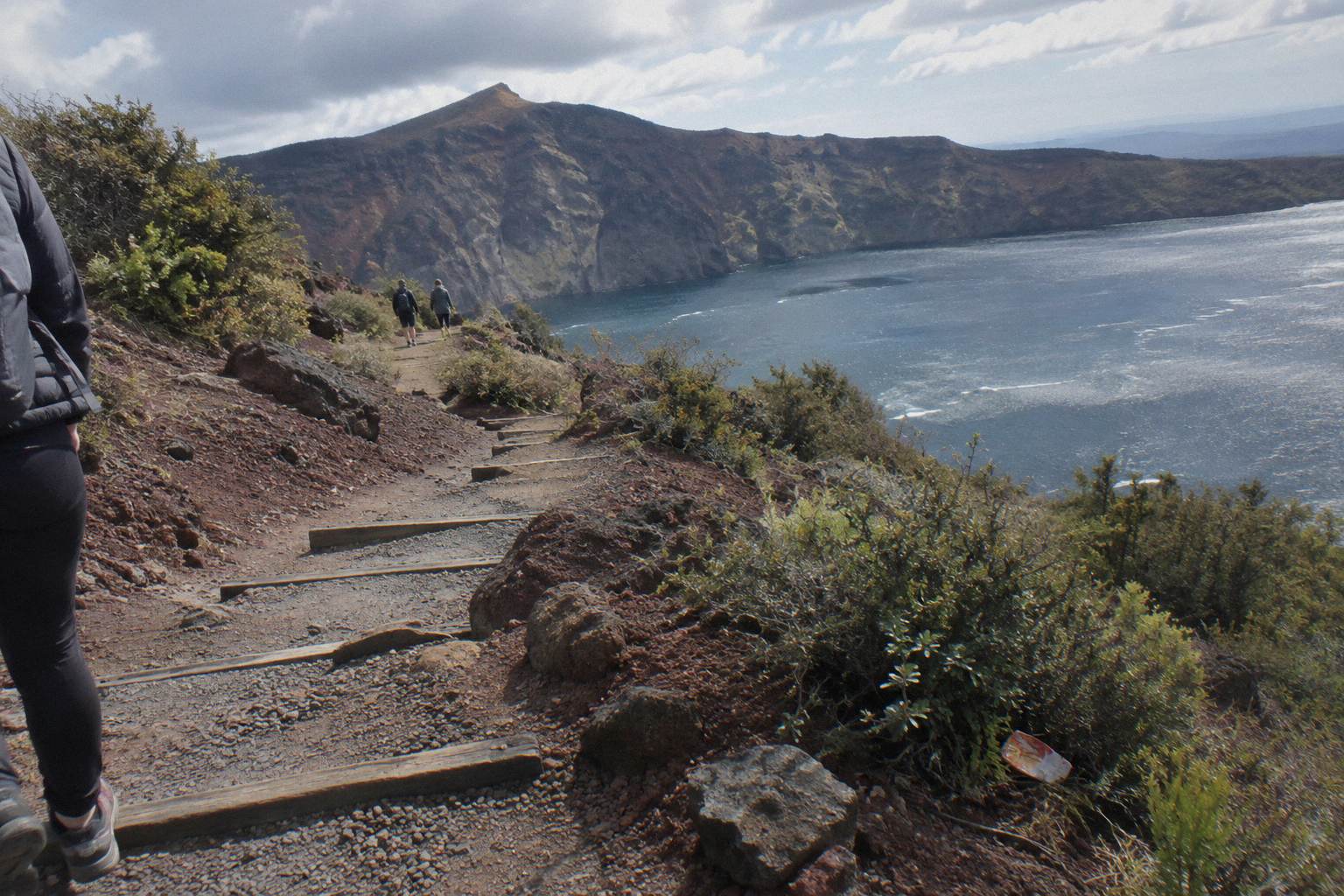
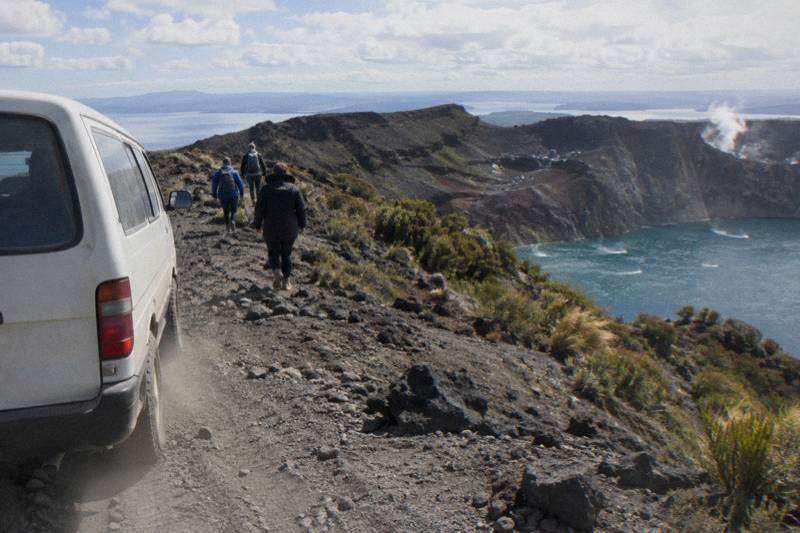
The journey to the walk is its own small adventure and, for many children, the favourite part. From the meeting point at the Main Carpark on Hemo Road it is about 30 minutes by road to the base of the 4WD track, then roughly 8.2 km of bumpy off-road driving, with a base camp stop that has a composting toilet and walking sticks. Motion sickness is a real consideration on that road, and Kaitiaki's FAQ asks guests to tell the guide if it affects them.
On the track itself, benches appear along the way, and at the second bench the guide shows the summit trail. The summit stands at 1,111 m, Ruawahia Dome being the highest of the mountain's three domes, a figure from GNS Science rather than from marketing. The optional run down into the crater is mentioned on Kaitiaki's half-day page, and the scree slope involved is the one described in the operator's FAQ words as "a 45 degree slope approximately 400m deep". Whether a specific child should attempt that descent is a judgement for the parent and the guide on the day, and no verdict is offered here.
A useful framing for parents: the half-day trip is 4 hours 30 minutes door to door, of which about 90 minutes is guided crater walking per the booking page wording. The rest is transport, the base camp stop and time at the summit viewpoints. That ratio suits a 7-year-old far better than a full day of continuous walking would. The deeper breakdown of terrain and effort lives in the guide on crater walk difficulty and fitness, which treats the gradient and surfaces without the family lens.
The featured option for most families is the Kaitiaki Half-Day 4WD And Crater Walk, rated 4.9 across 359 reviews, with free pickup from central Rotorua accommodation offered on the booking page, though no pickup time can be promised and the arrangement should be confirmed at booking. Check availability
What Should Children Wear And Bring On The Walk?
Kaitiaki's FAQ asks for sturdy walking shoes, with sturdy trainers acceptable, comfortable clothing for the weather, a bottle of water and snacks, because none are provided. The 4WD approach and the exposed summit make layers the practical choice, and the operator's own list is short and specific, which keeps packing simple for a family.
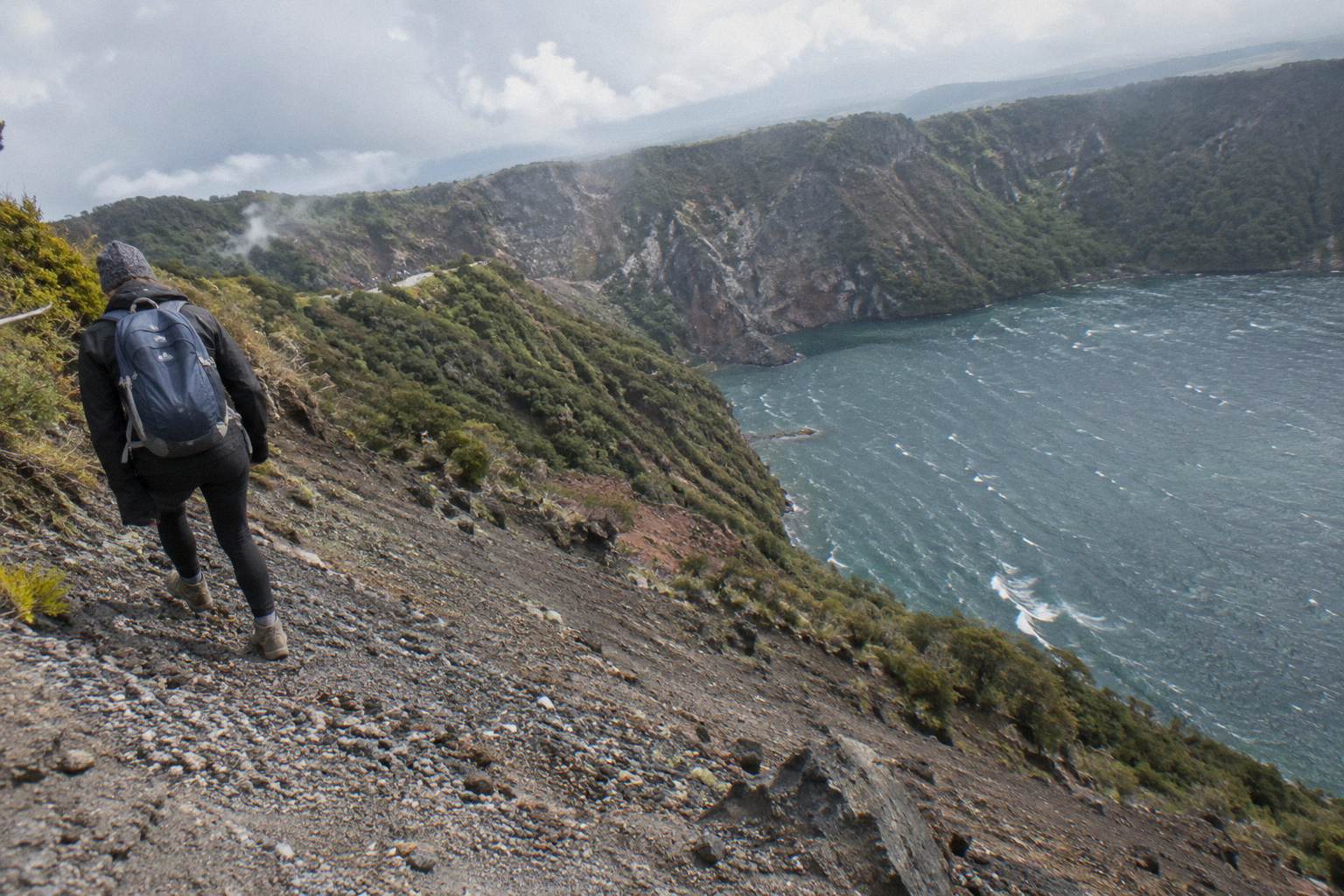
Snacks deserve their own line because the operator is explicit: Kaitiaki says it provides no snacks, so food and drink are entirely the family's job. Water bottles that fit a child's hands, plus a small treat for the summit, cover the half-day comfortably. The wider packing question, including what works on the scoria and how the layers should go, is laid out in the guide on what to wear and bring on the crater walk.
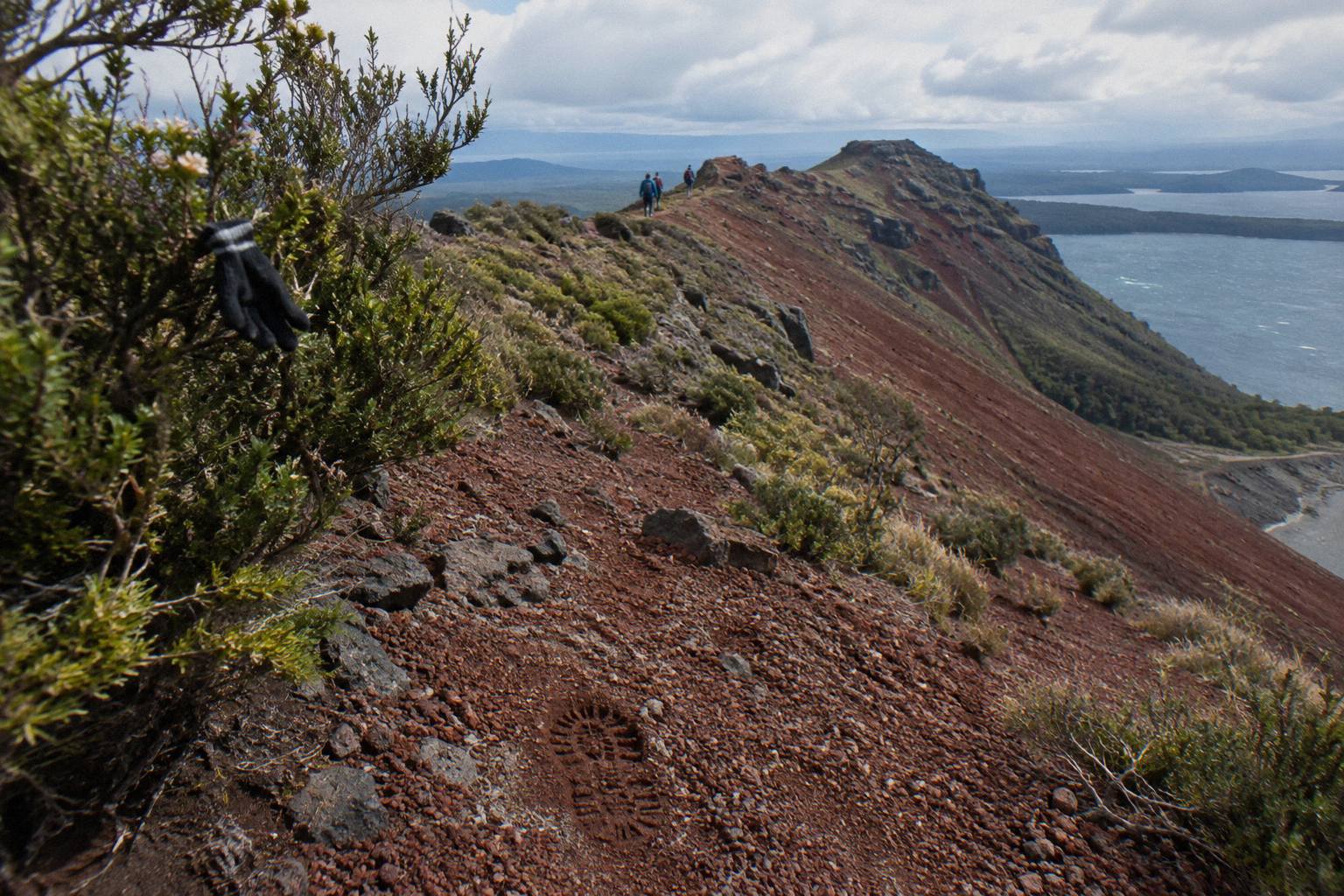
Footwear is the one item where the operator's wording is firm. Sturdy walking shoes, or sturdy trainers, because the volcanic scoria rolls underfoot and the two four-point-of-contact sections reward grip. Walking sticks are handed out at base camp, which helps children on the descent more than the climb. The composting toilet at base camp is the last facility before the walk begins, so a pre-walk stop is a habit worth insisting on.
A quick checklist against the operator's own list keeps the morning calm.
| Item | Kaitiaki's own wording | Family note |
|---|---|---|
| Footwear | Sturdy walking shoes; sturdy trainers fine | Grip matters most on the descent |
| Clothing | Comfortable clothing for the weather | Layers for the exposed summit |
| Water | Bottle of water | Child-sized bottles are easier on track |
| Snacks | None provided, bring your own | Pack extra for the summit stop |
| Walking sticks | Given out at base camp | Take them for the scree |
| Motion sickness | Tell the guide | Relevant for the 8.2 km 4WD approach |
How Does Weather Change A Family Trip To Tarawera?
Rotorua's town climate averages a mean daily maximum of 23.1 °C in February and 12.0 °C in July, with July the wettest month at 137.4 mm and November the driest at 86.8 mm, but the summit at 1,111 m runs colder and windier than those town figures. For the flights, weather sits inside Volcanic Air's own clause that landings are at the pilot's sole discretion depending on conditions, volcanic activity and passenger loadings.
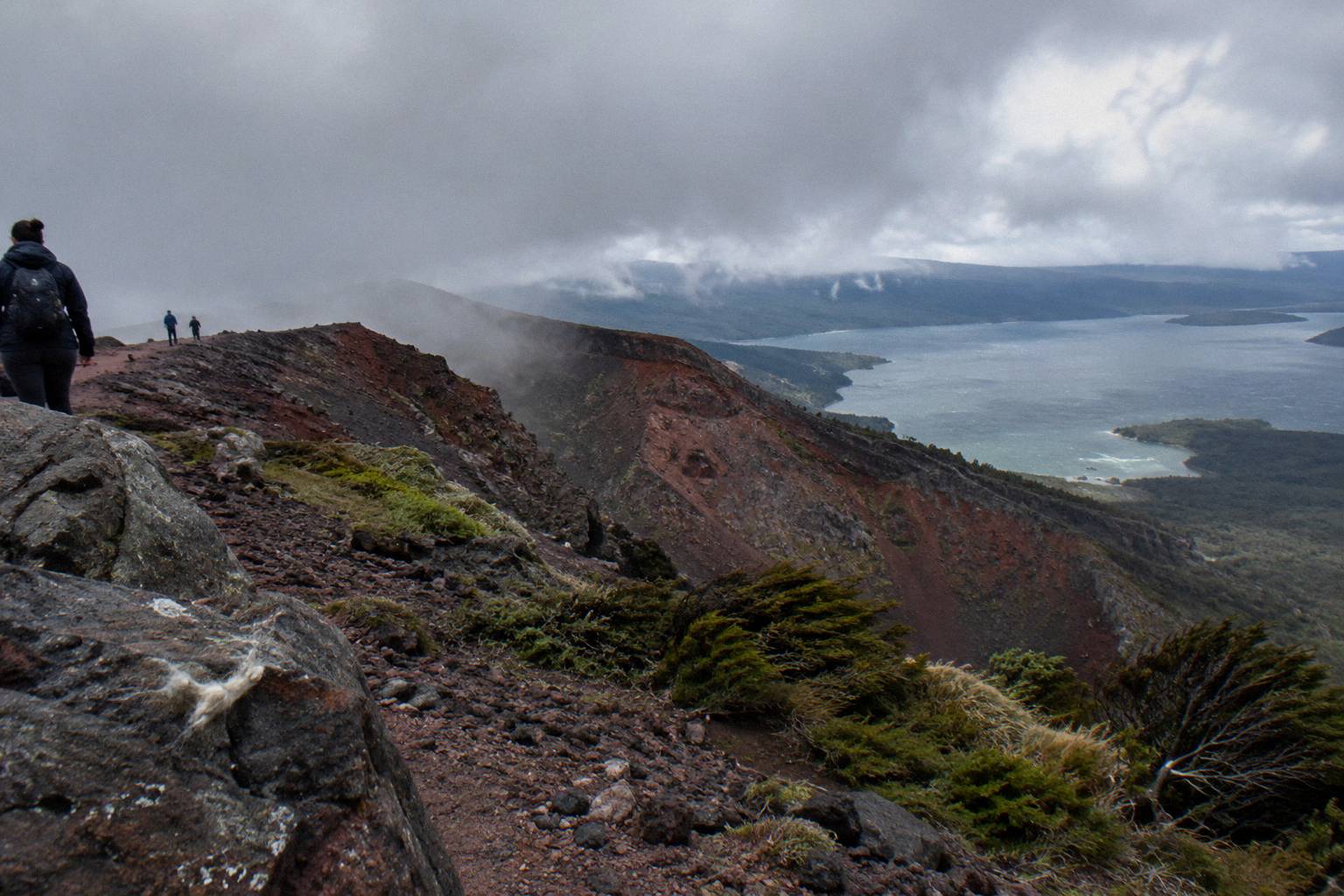
The climate numbers deserve careful reading because they describe Rotorua town at about 280 m elevation, not the mountain. A February day that reads as 23.1 °C in town can feel sharply cooler on an exposed summit ridge with wind across it, and children feel that gap faster than adults. The town records about 1,355.6 mm of rain across about 118.6 rainy days in a year, so a rain layer belongs in the pack in every month. The monthly picture for planning a visit is worked through in the guide on which months suit a crater walk.
For the walking trips, wet weather changes the ground rather than cancelling the day outright: scoria that "can be slippery" in the operator's words becomes genuinely treacherous when damp, and the scree descent in particular is off the table in poor conditions. For the flights, the weather clause works the other way, a flight may still fly when the summit walk is miserable, but the landing component can drop out of it. A family booking a landing flight should hold the expectation lightly: the flight and the aerial views are the guaranteed shape of the product, the landing is the pilot's call.
| Month | Mean daily max (C) | Rain (mm) |
|---|---|---|
| January | 22.9 | 93.8 |
| February | 23.1 | 100.4 |
| July | 12.0 | 137.4 |
| November | 18.6 | 86.8 |
All six tours carry free cancellation, with the exact cutoff shown on the live booking page, the clause that makes a weather-sensitive family booking low risk. Book early for school holidays, hold the date, and let the forecast decide inside the free window rather than gambling weeks out.
What Family Mistakes Are Worth Avoiding At Tarawera?
The recurring mistakes are applying one product's age rule to another, assuming a helicopter landing is guaranteed, arriving without snacks or water, and treating the lake-edge Tarawera Trail as a summit route, none of which is fatal but each of which can sink a carefully planned family day. Every rule below is the operator's own stated condition, and each has a simple fix at booking time.
First, the age rules belong to the specific product. A family that reads "ages 7 and over" on the crater walk and books the Kaituna combo for a 9-year-old will hit the 13-and-over wall, because that limit exists for the rafting component and not the walk. Second, the landing question: Volcanic Air's own words put summit landings at the pilot's sole discretion depending on weather, volcanic activity and passenger loadings, so a family sold on the landing photograph should book the flight for the flight, and treat the landing as the bonus it legally is.
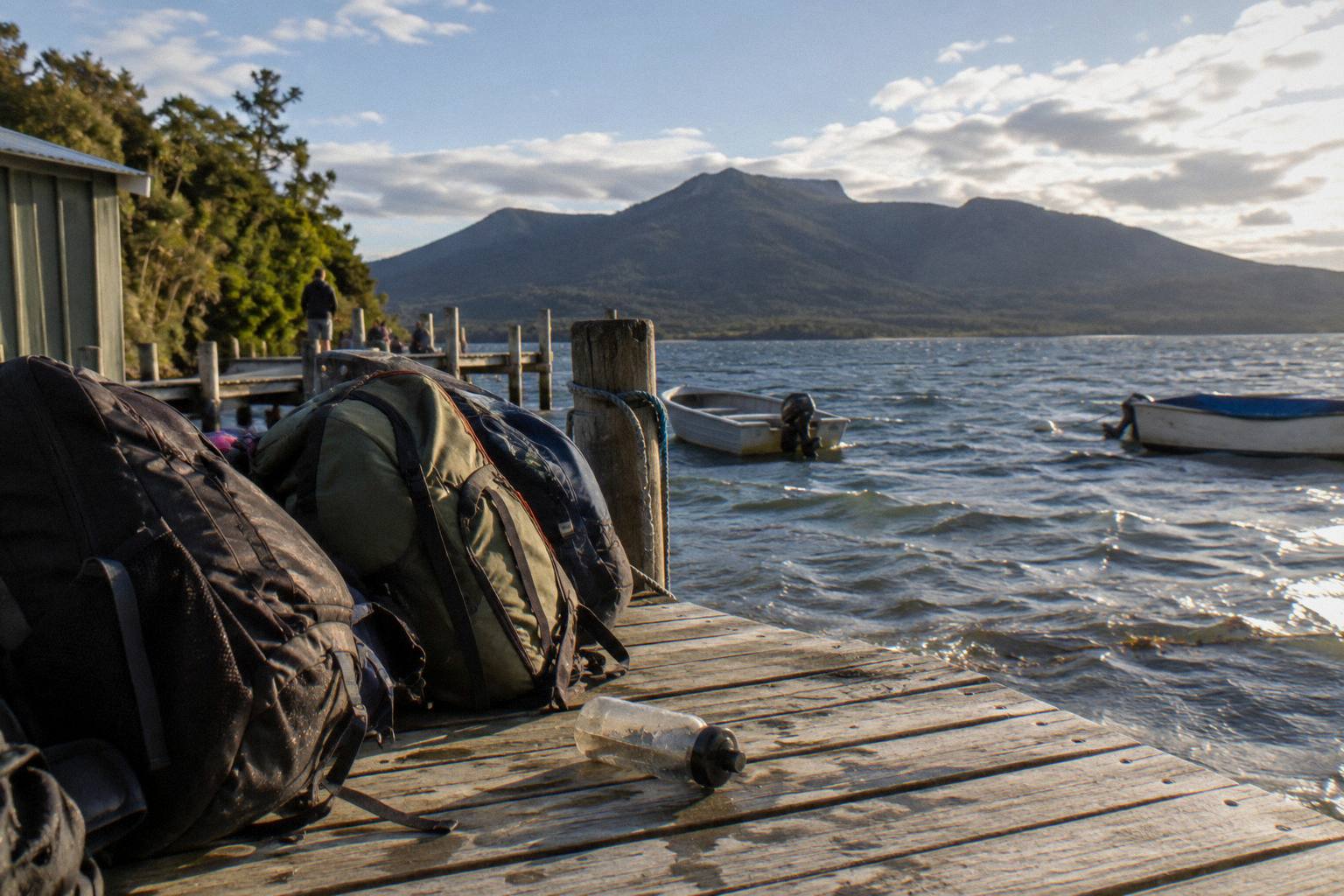
Third, snacks. The operator states plainly that none are provided, and a hungry child on a volcanic ridge at 1,111 m is a fixable problem fixed only in advance. Fourth, the Tarawera Trail confusion: DOC's Tarawera Trail is a 15 km advanced tramping track along the lake edge from the Te Wairoa car park to the Hot Water Beach campsite via Te Rata Bay, with dogs, bikes and vehicles not permitted, and it never climbs the mountain. Families sometimes book accommodation around the trail believing it reaches the crater, and it does not. The comparison of the two is laid out in the guide on the Tarawera Trail versus the crater walk.
Fifth, underestimating the drive day. The Kaituna combo runs about 9 hours across two separately timed activities, which is a long day for a 13-year-old and a very long one for the parent driving to a pickup point twice. Sixth, forgetting that the Buried Village of Te Wairoa, a natural pairing with any Tarawera morning, opens 10am to 4pm Wednesday to Sunday only, last entry 3.45pm. A Monday visit finds it closed, and the eruption story that explains the whole landscape is told there.
The dual landing flight earns its place in a mistakes discussion as the splurge that needs planning: from NZ$1,490 per person for 3 hours, it pairs the Mt Tarawera landing and guided walk with a ferry to Orakei Korako and a 1-hour self-guided visit, admission included, and its notes rule out pregnant travellers, people with mobility impairments and anyone afraid of heights. A family with a nervous flyer aboard should weigh that carefully before committing to the longest flight product.
A final mistake is philosophical: expecting the crater walk to be a nature stroll. GNS Science records Tarawera as one of the dome volcanoes of the Okataina Volcanic Centre and the site of New Zealand's largest eruption in the last 500 years, an eruption heard as far as Blenheim with ash falling as far as Christchurch. Children who know that story before the walk climb with a different attention, and the guide telling it on the summit is half the value of going guided.
Common Questions About Mt Tarawera Guided Hikes With Kids
What Is The Minimum Age For The Mt Tarawera Crater Walk?
Kaitiaki Adventures states ages 7 and over for both the half-day crater experience, about 4.5 hours, and the Full Day Hike, about 6.5 hours. The booking page additionally lists children under 7 as not suitable.
Can Children Under 7 See Mt Tarawera From The Air?
Yes, subject to conditions. Volcanic Air's helicopter and floatplane products seat infants on laps, require a minimum of 2 adult fares, and leave the age rule to be asked at booking. The floatplane flyover, from NZ$395 per person for 30 minutes, flies over the mountain without landing.
Is The Summit Landing On A Helicopter Flight Guaranteed?
No. Volcanic Air's own wording states that excursion landings are undertaken at your own risk and at your pilot's sole discretion, and that duration, flight times and inclusions may vary due to weather conditions, volcanic activity and passenger loadings.
What Is The Minimum Age For The Kaituna Rafting And Tarawera Combo?
Thirteen and over, per the booking page. The combo runs about 9 hours across two separately timed activities, with about 1.5 hours of rafting, roughly 1 hour on the water, and a 90-minute guided crater walk.
Are Snacks Provided On The Crater Walk?
No. Kaitiaki says it provides no snacks, and its FAQ asks guests to bring sturdy walking shoes, comfortable clothing for the weather, a bottle of water and snacks.
Can A Child Skip The Summit Section Of The Crater Walk?
Possibly, and it is worth asking the operator. Kaitiaki's FAQ says a medium to moderate fitness level is needed for the summit track and that guests may take lighter walking options instead of the summit, so raise it when you book.