Is The Mt Tarawera Crater Walk Worth It
A close-to-deciding look at the Mt Tarawera crater walk: what the half day trip includes, the fitness asked, the cost picture, and the helicopter and rafting alternatives.
Mount Tarawera last erupted on 10 June 1886, in what GNS Science calls New Zealand's largest eruption of the last 500 years, and today you can stand on its summit on a guided trip that takes roughly half a day. That is a genuinely unusual thing to be able to do. The mountain sits on private land governed by the Ruawahia 2B Trust, which reinvests most tourism concession revenue in conservation, and guided trips with a concessionaire are the practical way most visitors reach the crater. Whether that adds up to a good use of your Rotorua day depends on your legs, your budget and how much you want the summit on foot rather than from a helicopter door.
The decision usually comes down to three questions. Does the half day trip match your fitness and your schedule? Does the cost sit sensibly against the helicopter alternatives? And are you hoping for something the trip does not promise, like a guaranteed crater descent or a steaming vent? Everything below works through those, using only what the operators themselves say.
Yes, for most walkers it is: the half day crater walk takes about 4 hours 30 minutes across volcanic scoria with lake views, asks only a moderate fitness level, admits children from age 7, and carries a 4.9 rating across 359 reviews, and with free cancellation up to 24 hours before, there is little risk in booking and plenty of evidence that people leave glad they did.
The rating number deserves its review count beside it, which is why both appear together throughout. A 4.9 drawn from 359 reviews is a substantial pool of guests. What it cannot tell you is whether your knees will enjoy a walk the operator itself grades as needing medium to moderate fitness, or whether the weather on your date will deliver the "360 degree views" Kaitiaki names on its own tour page. Those two variables, legs and sky, do more to shape the day than anything else.
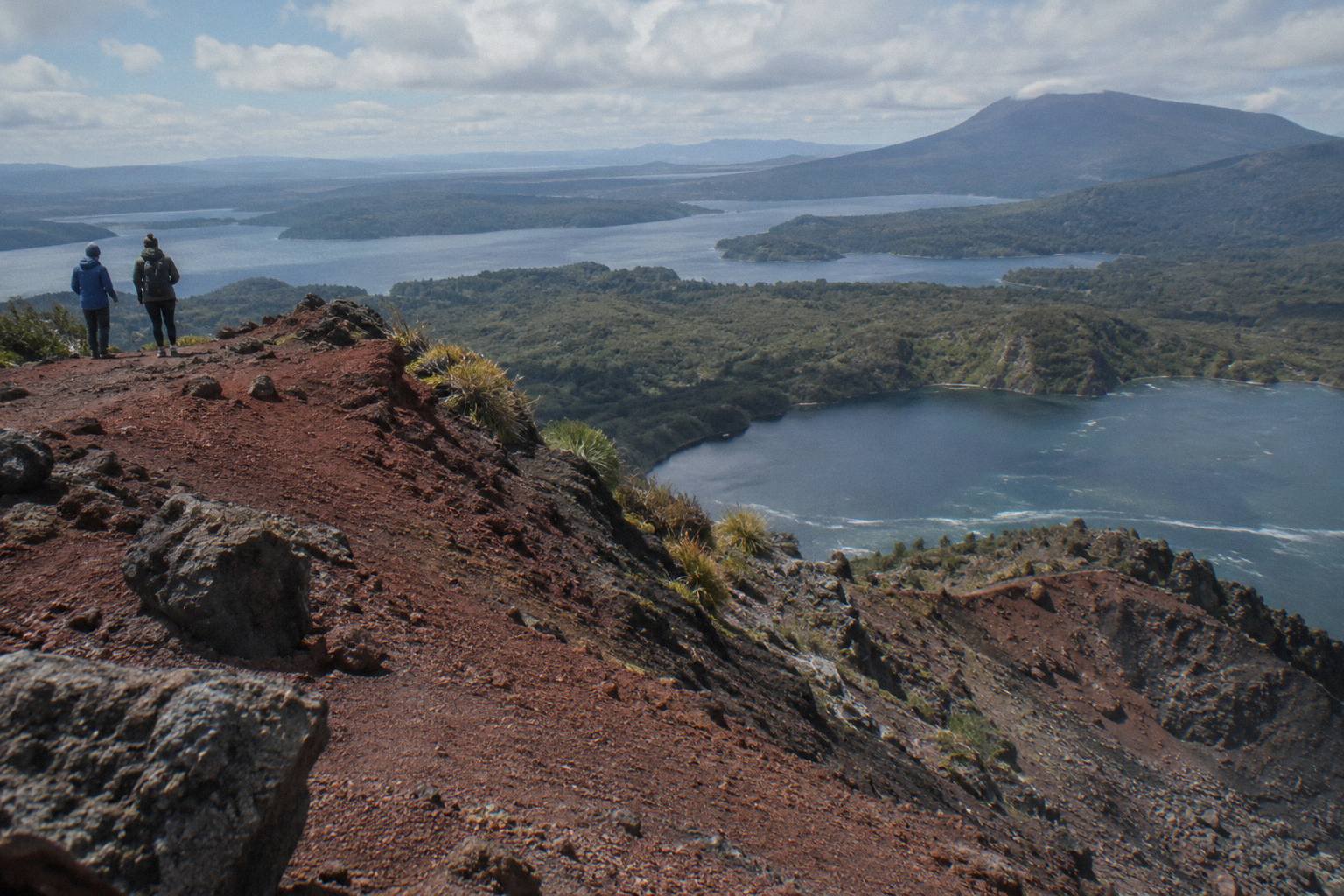
It helps to know what the mountain is before judging the trip. GNS Science describes Tarawera as one of the dome volcanoes of the Okataina Volcanic Centre, with Ruawahia Dome the highest of three at 1,111 m. The 1886 eruption was heard as far as Blenheim and ash fell as far as Christchurch, and more than 100 people were killed in villages near the mountain. Walking the crater of a place with that history is the substance of the trip; the operator does not dress it up with promises of steam or activity, because there are none to make.
That history is also why access works the way it does. Kaitiaki Adventures and Volcanic Air describe themselves as concessionaires working alongside Ngati Rangitihi, who hold kaitiakitanga of the maunga, and the trust reinvests most concession revenue in conservation work, wilding pine removal first. Your fare funds that arrangement, which for many visitors is part of what makes the fare feel well spent. The question of who owns the mountain and why guided access exists has its own write-up in Mt Tarawera Volcano Hike, alongside deeper coverage of every route and format.
What You Actually Get For Your Half Day
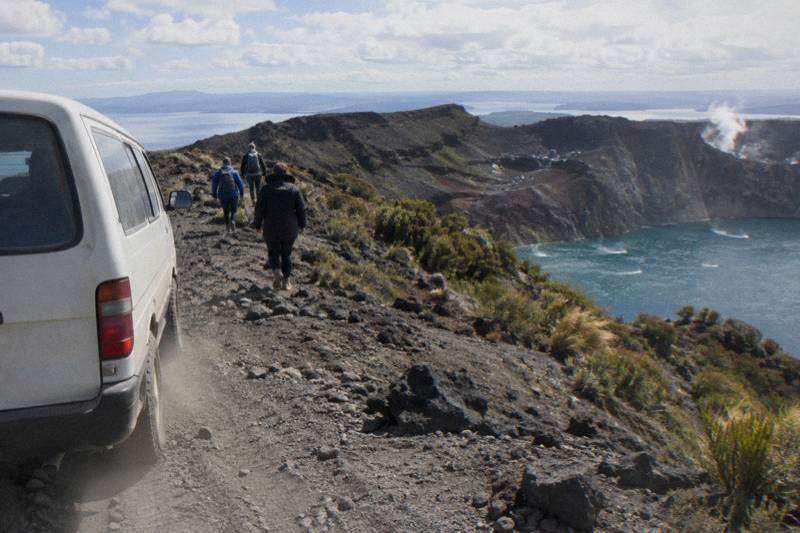
The booking page for the Kaitiaki Half-Day 4WD And Crater Walk includes a 4.5-hour guided crater experience, a local guide, 4x4 transport up the mountain, and hotel pickup and drop-off from central Rotorua. The meeting point is the Main Carpark on Hemo Road in Whakarewarewa, and about 90 minutes of guided crater walking sits at the heart of it, per the booking page wording. Snacks and water are yours to bring.
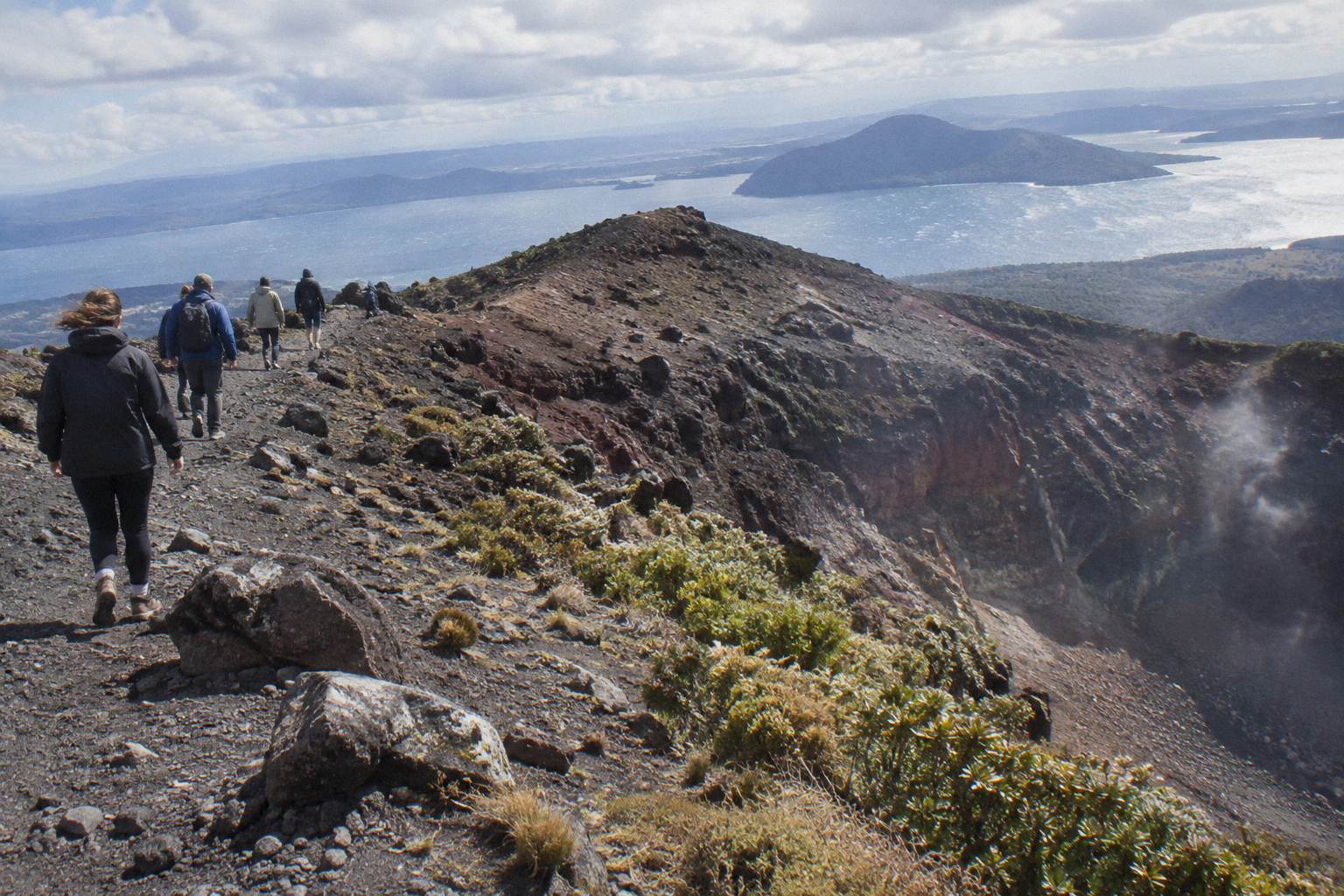
The shape of the day matters more than the total hours. Kaitiaki's own FAQ describes a drive of about 30 minutes from Rotorua to the base of the 4WD track, then roughly 8.2 km of bumpy off-road riding to a base camp stop with a composting toilet, where walking sticks are handed out. The road ends where the walk starts. That 4x4 approach is the quiet hero of the trip: it lifts you most of the way up the mountain, so the walking effort is concentrated on the summit track and the crater rim rather than a full ascent from the lake shore.
Along the track there are benches, and at the second bench the guide points out the summit trail. From the top, Kaitiaki's own tour page describes a summit of Ruawahia with "360 degree views", and those words belong to the operator rather than to any independent measurement of what you will see on a given morning. The half day page also mentions an optional run down into the crater, which is exactly as appealing or unappealing as it sounds depending on your knees and your shoes.
Two practical notes from the operator's FAQ are worth carrying into your decision. Motion sickness sufferers should tell the guide, because the off-road section is genuinely bumpy, and the ground on the walk is volcanic scoria that "can be slippery" in Kaitiaki's words. Sturdy trainers are fine footwear; thongs are not. If the small logistics matter to you, the question of toilets on the crater walk and what to pack has a fuller answer in the toilets and facilities question, and the fitness grading gets its own section below.
How Fit You Need To Be
Kaitiaki asks for a medium to moderate fitness level for the summit track, sets a minimum age of 7 as the operator states, and lists low fitness, back problems, heart problems and serious medical conditions as not suitable on the booking page. The trip is not wheelchair accessible. Guests who would rather not attempt the summit may take lighter walking options instead, so the summit itself is not compulsory.
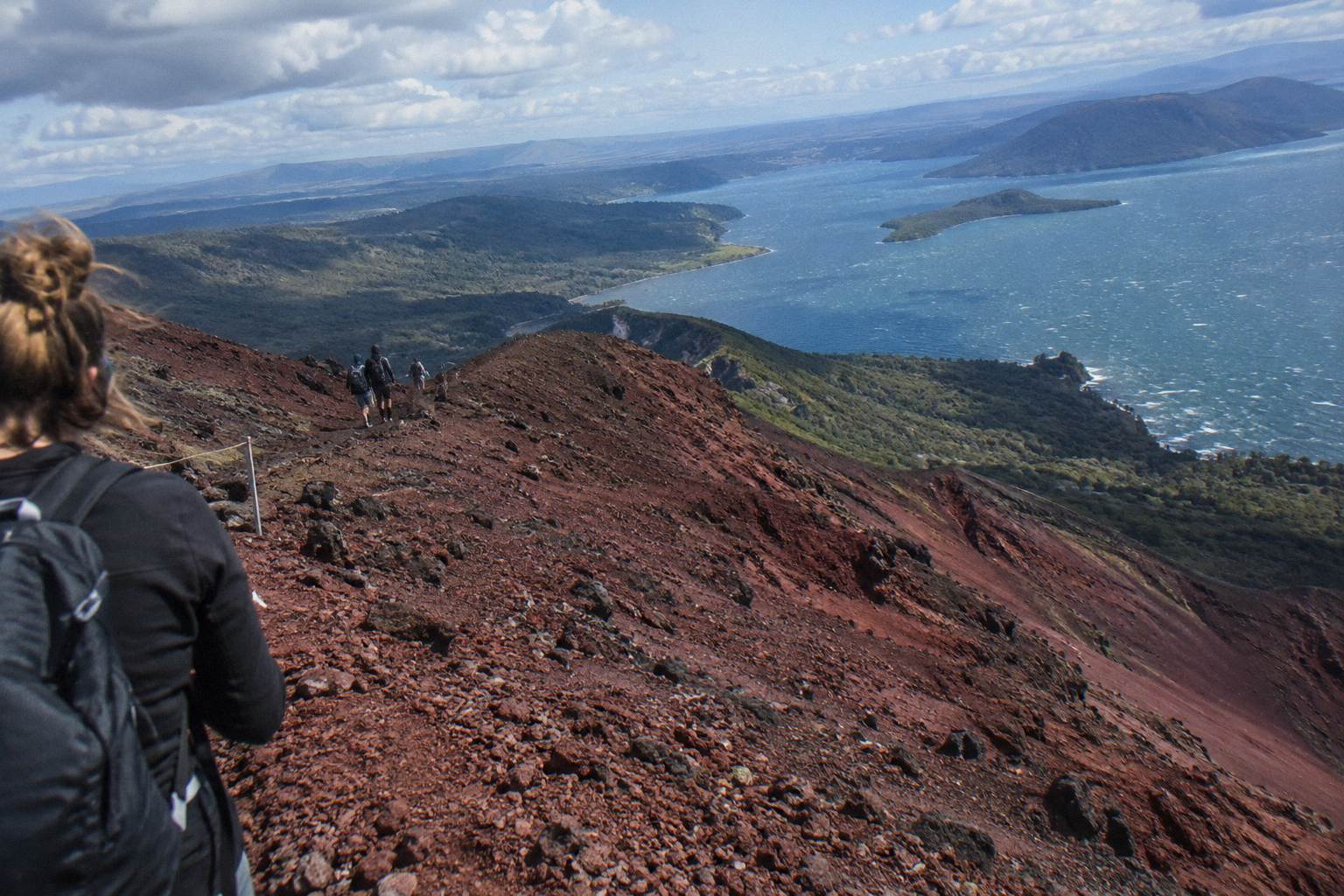
The scree deserves its reputation. Kaitiaki's FAQ describes it, in the operator's own words, as "a 45 degree slope approximately 400m deep". Quote that as Kaitiaki's description rather than as an independent survey of the crater, but take it seriously as a signal: descending loose scree at that angle is a controlled slide more than a walk, and two sections of about 50 m are flagged as needing four points of contact. The optional crater run in the half day description means exactly that, running or tumbling down a soft red slope, and it is optional for good reason.
| Factor | What the operator says |
|---|---|
| Fitness level | Medium to moderate for the summit track |
| Minimum age | 7 for the half day trip, 13 for the Kaituna combo |
| Not suitable for | Low fitness, back problems, heart problems, serious medical conditions |
| Scree | Kaitiaki's words: "a 45 degree slope approximately 400m deep" |
| Tricky sections | Two sections of about 50 m needing four points of contact |
| Ground surface | Volcanic scoria that "can be slippery" |
| Lighter options | Available instead of the summit track |
If you are weighing whether your group can handle it, the fuller breakdown in the difficulty and fitness guide works through each stage of the track. The short version is that a reasonably active adult who walks hills occasionally will find the summit achievable and memorable, while anyone with a heart condition or a bad back should take the exclusion seriously rather than hoping to manage on the day. Children from 7 are welcome on the half day, and there is a dedicated write-up on hiking Tarawera with kids and age limits if that is your situation.
The cancellation terms also lower the risk of committing early. Every booking page for the six trips compared in the next section offers free cancellation up to 24 hours before, so a wobbly forecast or a late change of plan does not lock you in. Weather calls on the day remain the operator's to make, and the departure time for your date shows during booking.
What It Costs And What Is Included
The 40-minute helicopter summit landing flight costs from NZ$675 per person, and the floatplane flyover, which does not land, costs from NZ$395 per person. All amounts are New Zealand dollars, free cancellation up to 24 hours applies to every trip compared, and the Kaitiaki half day walk has no single quotable price, since booking pages show different amounts, so check your date and compare before paying.
Most of these tour prices are dynamic, so check the live listings before comparing costs. The only from-prices that can be stated are the two above plus the dual landing flight at from NZ$1,490 per person. Nothing can be said about the Kaituna combo's price, the 1-hour landing flight's price, or the half day walk's price beyond directing you to the booking page for your date, and there are no child, family or promo figures to quote from any source. If a figure matters to your budget, the amount for your date is one click away.
What the half day fare buys, per its booking page, is the guided crater experience, a local guide, the 4x4 transport up the mountain, and hotel pickup and drop-off from central Rotorua. Food and drink are not part of it: Kaitiaki says it provides no snacks, so bring water and something to eat, because there is nowhere to buy either on a volcano. For a deeper look at value per dollar, the cost and inclusions guide lines up what each format includes against its booking page.
The one comfort worth repeating: free cancellation up to 24 hours applies to all six trips on their booking pages, which makes an early reservation a low-stakes way to hold a seat while you watch the forecast.
The Helicopter And Combo Alternatives
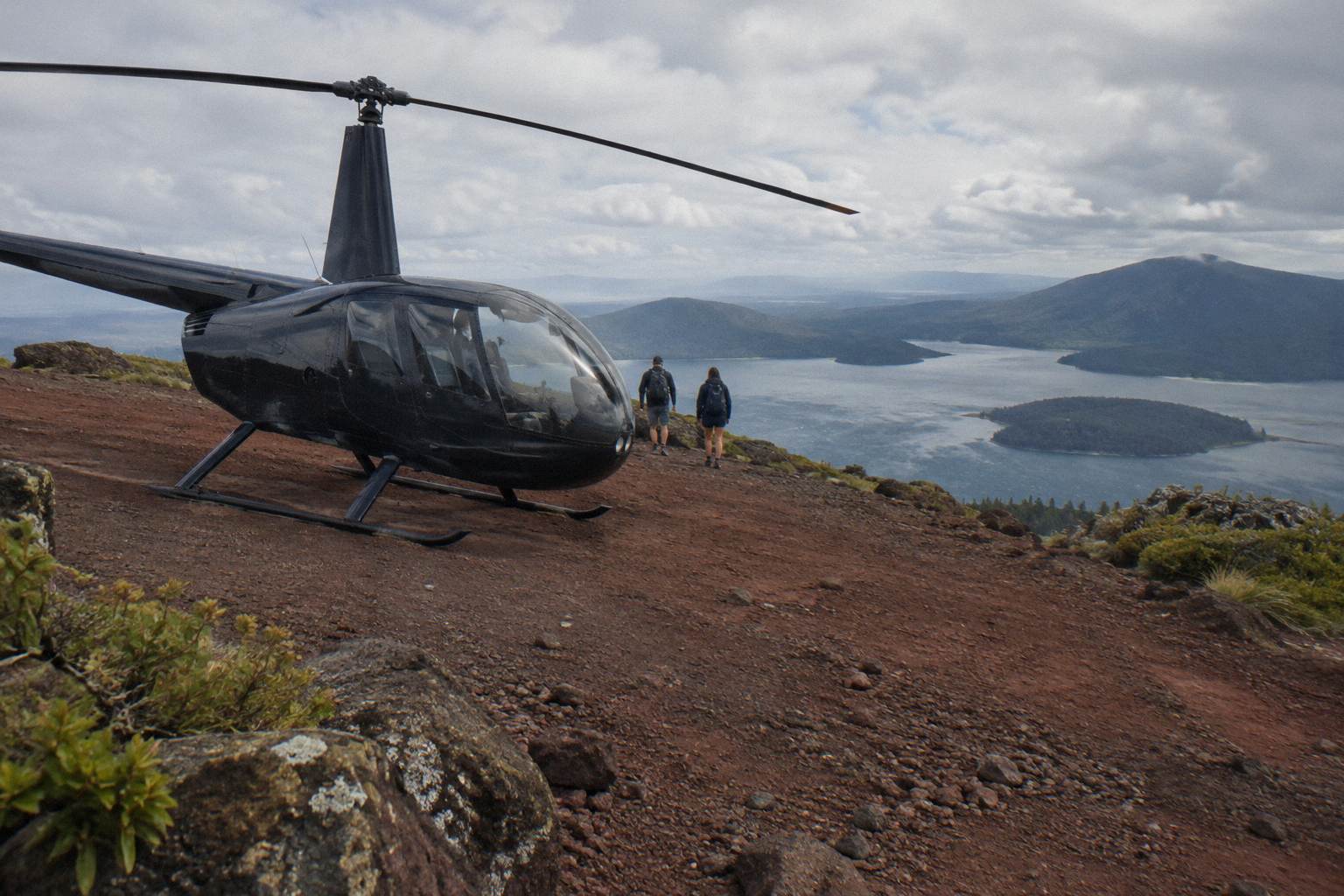
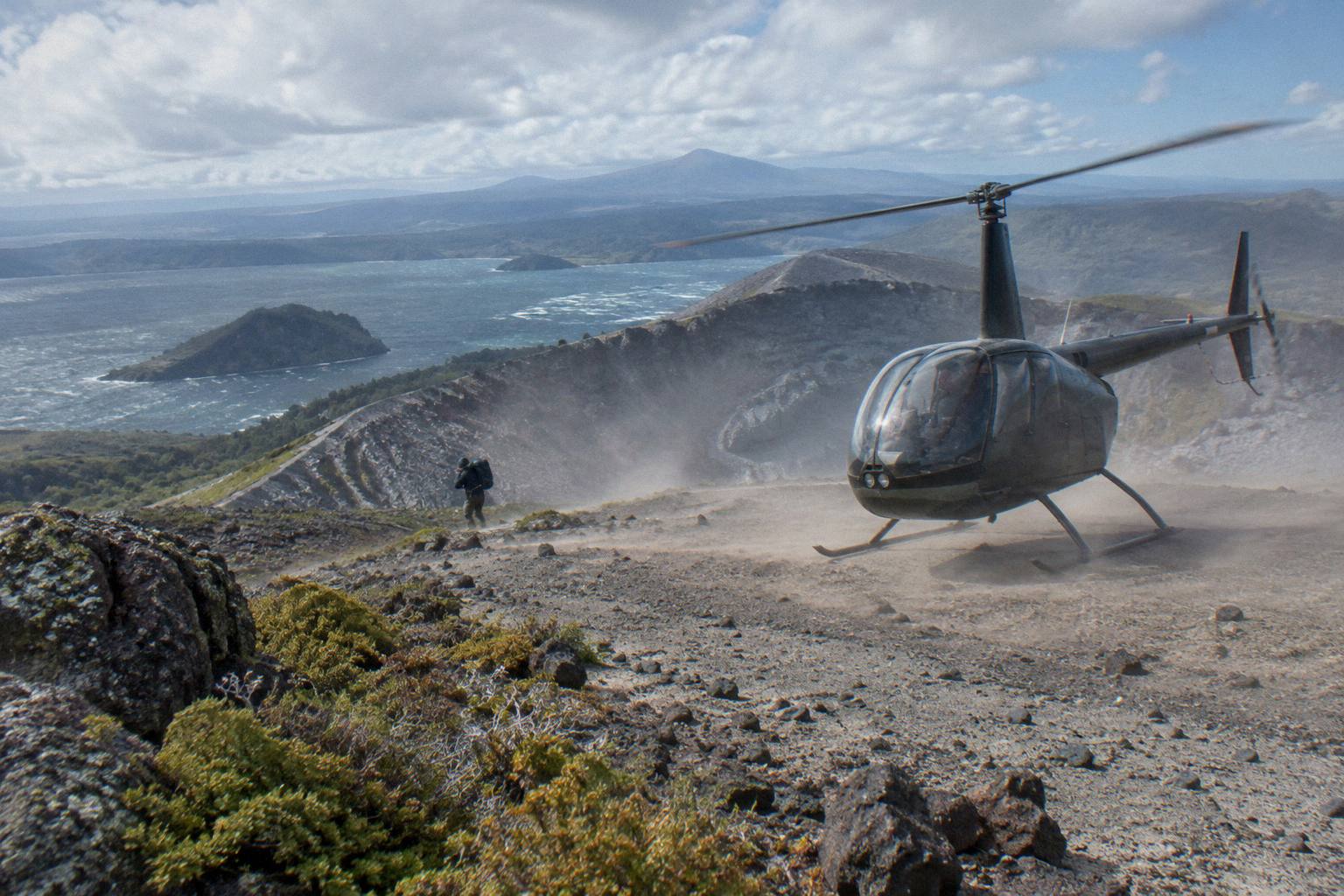
The Volcanic Air 40-Minute Summit Landing Flight costs from NZ$675 per person, carries a 4.9 rating across 43 reviews, flies over lakes Okareka, Okataina and Tarawera, and lands on the summit for a guided walk the operator page times at 15 minutes and the booking page at about 20 minutes. Landings are at the pilot's sole discretion, so a touchdown is never guaranteed.
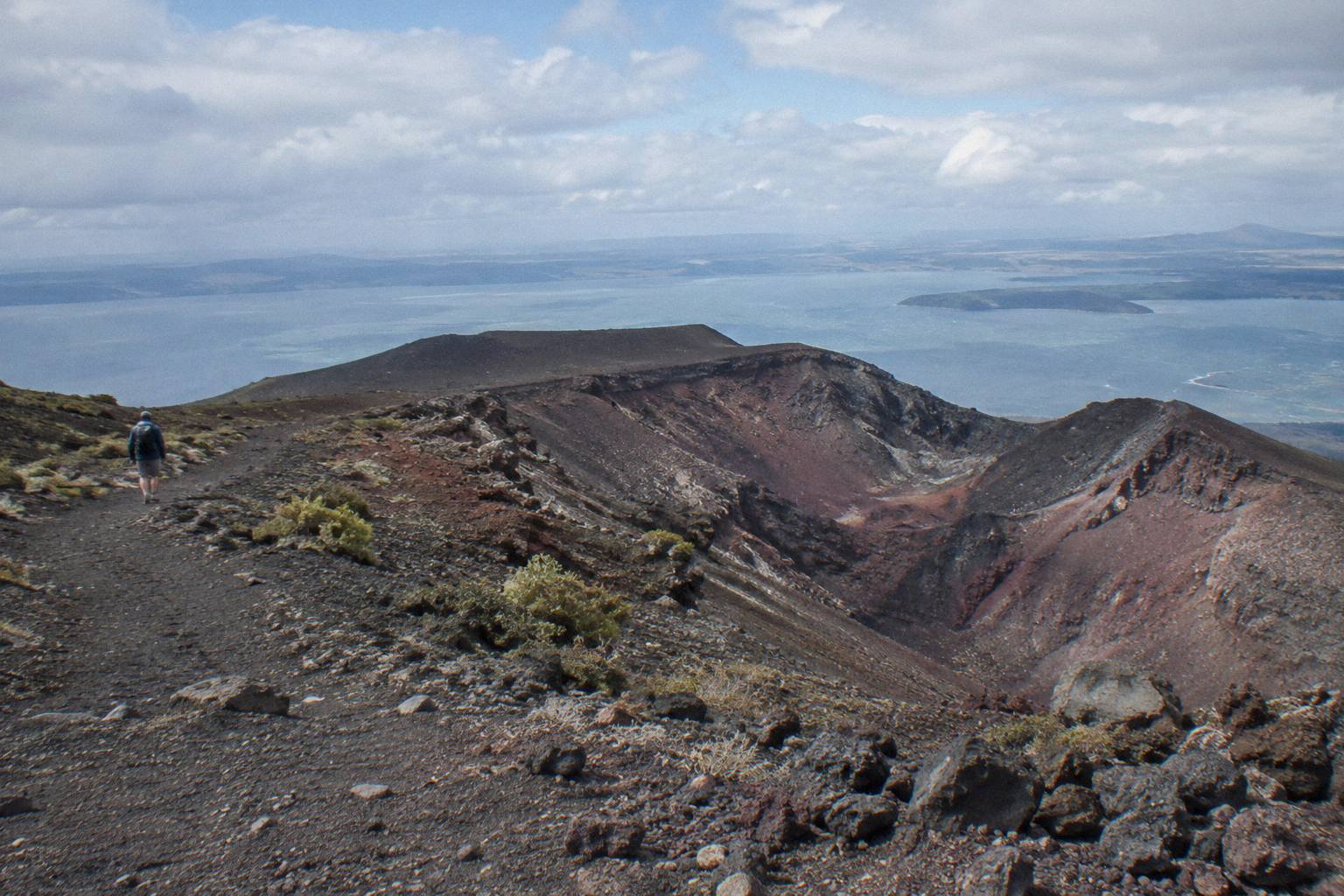
The comparison between walking and flying is a comparison of time on the mountain against time in the air. The walk gives you hours on the crater, a scree run if you want it, and the slow reveal of the landscape from the track. The helicopter gives you the rift from above in minutes, three lakes on the approach, and a short guided walk on the summit before flying back to the Rotorua lakefront. Neither format is better; they are different purchases, and the choice comes down to which memory you want to take home.
Volcanic Air's own wording on the landing deserves to be read in full before you pay: "Tour duration, flight times and inclusions may vary due to weather conditions, volcanic activity and passenger loadings. Excursion landings are undertaken at your own risk and such landings are at your pilot's sole discretion." That is the operator being straight about the one thing every buyer wants promised. You can read it in context on the operator's own Tarawera landing flight page. Weight rules apply per seat, infants sit on laps, and a minimum of 2 adult fares is needed for a flight to operate; the age rule is one to ask Volcanic Air about directly.
There are two more formats on the same mountain. The Tarawera Scenic Floatplane Flyover costs from NZ$395 per person, carries a 4.8 rating across 48 reviews, and is a flyover only, with no landing on the mountain, which is always worth saying in the same breath. The Tarawera And Orakei Korako Dual Landing Flight costs from NZ$1,490 per person, lands for a guided walk on Tarawera, then continues by ferry to Orakei Korako with a 1-hour self-guided visit, admission included, over about 3 hours. For a full side-by-side of the flight products, the helicopter landing and summit walk guide does that comparison in detail.
The third alternative is not a flight at all. The Kaituna Rafting And Tarawera Crater Walk Combo is a 9-hour day for ages 13 and over that pairs about 1.5 hours of Kaituna River whitewater rafting, roughly an hour of it on the water, with the same 4x4 ascent and 90-minute guided crater walk as the half day. All river gear is included, life jackets, wetsuits, booties, splash jackets and fleeces, along with complimentary transport from central Rotorua accommodation or the Rotorua Information Centre, with 22 pickup options on the booking page and a return trip between the two activities. No rating and no price can be quoted for it. It suits a visitor who wants one very full day instead of two half days, and it is the only combo with a page of its own, covered in the rafting and crater walk combo guide.
Who Should Think Twice Before Booking
The booking page rules out children under 7, anyone with low fitness, back problems, heart problems or serious medical conditions, and the trip is not wheelchair accessible. Beyond those exclusions, the visitors most likely to feel shortchanged are those expecting a wild, active volcano, a guaranteed summit view, or a wilderness expedition, because Tarawera offers none of the three and the operators do not promise them.
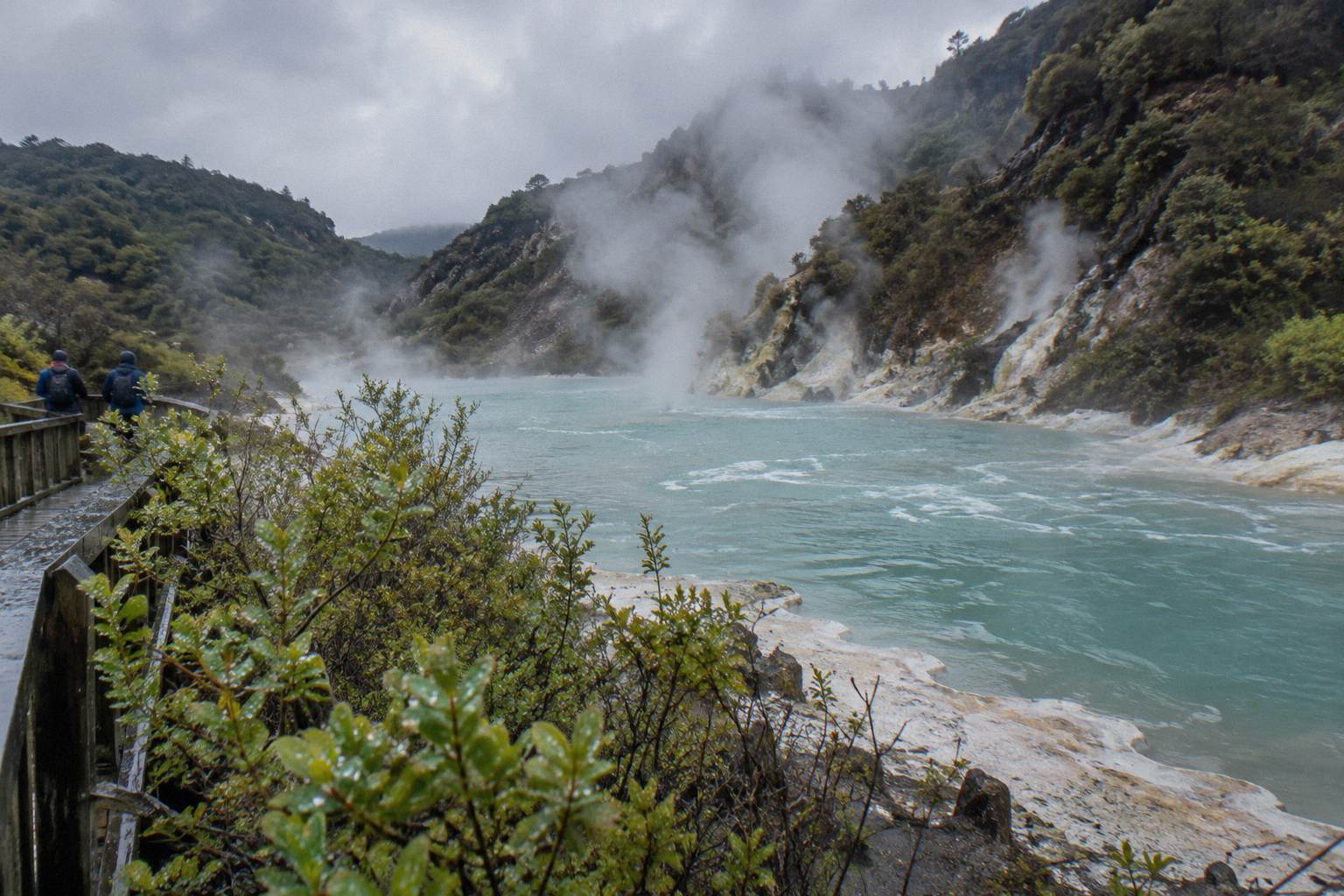
Start with the volcano itself. GeoNet publishes the current volcanic alert level for the Okataina Volcanic Centre, the caldera that contains Tarawera, so check it before you travel; GNS describes Tarawera as a dome volcano within an active caldera. Anyone booking in the hope of steaming vents or rumbling ground is booking for the wrong mountain. The drama of Tarawera is geological and historical: a red rifted crater from a single catastrophic night in 1886, not a live show. The eruption story, and how many people died in it, is covered in the 1886 eruption history.
Then there is the view question. A summit at 1,111 m in the Bay of Plenty interior can sit inside cloud for hours, and no operator guarantees a view from the top, on foot or by helicopter. The free cancellation window up to 24 hours before gives you one clean escape hatch if the forecast turns, but inside that window the weather is the weather. The weather and landing conditions guide explains how the two operators handle bad-weather calls, and it is worth reading before you commit a fixed date.
Finally, be clear that this is a guided concession trip on private land, not a freedom walk. The mountain is governed by the Ruawahia 2B Trust, and the guided model is what funds conservation work there. If the question you are really asking is whether you can go up without a guide, the walking without a guide question answers it directly. For visitors who enjoy guided alpine days elsewhere in the North Island, tongariroalpinecrossingtours.com covers a rather different volcanic walk worth knowing about.
Mistakes To Avoid Before You Book
The five avoidable errors are booking the half day with a group that includes someone the booking page excludes, arriving without water or snacks because the listing style implies food, fixating on a helicopter landing that is never guaranteed, ignoring the 24-hour free cancellation window when the forecast is doubtful, and comparing trips on price alone when only three from-prices can even be quoted. Each of these is a decision error, not a trip flaw.
The first mistake is the commonest. The exclusions on the half day booking page, low fitness, back and heart problems, serious medical conditions, under-7s, are there because the scree and the four-points-of-contact sections are real. A grandmother who walks daily will likely have a wonderful morning; a guest with an untreated heart condition should not board the 4x4. Read the exclusions as information, not legal cover.
The second is packing. Kaitiaki says plainly that it provides no snacks, and there is no shop at 1,111 m. Bring water, bring food, wear sturdy shoes, and tell the guide about motion sickness before the off-road climb rather than during it. The what to wear and bring guide has the full packing reasoning.
The third is treating a helicopter landing as a given. Volcanic Air's own terms put every landing at the pilot's sole discretion, dependent on weather, volcanic activity and passenger loadings. Book the flight for the flight, and treat the summit walk as the bonus it contractually is.
| Option | Time | Fitness asked | Ages | What is stated |
|---|---|---|---|---|
| Kaitiaki Half-Day 4WD And Crater Walk | 4 hours 30 minutes | Moderate | 7 and over | Guided crater walk about 90 minutes, 4x4 transport, pickup from central Rotorua, 4.9 across 359 reviews |
| Kaituna Rafting And Tarawera Crater Walk Combo | 9 hours | Moderate, ages 13 and over | 13 and over | Kaituna rafting plus the same crater walk, all river gear, complimentary transport |
| Volcanic Air 40-Minute Summit Landing Flight | 40 minutes | None stated | Ask Volcanic Air | From NZ$675 per person, 4.9 across 43 reviews, summit walk 15 to 20 minutes, landing at the pilot's discretion |
| Tarawera Scenic Floatplane Flyover | 30 minutes | None stated | Ask Volcanic Air | From NZ$395 per person, 4.8 across 48 reviews, flyover only with no landing |
The fourth mistake is forgetting the escape hatch. Free cancellation up to 24 hours applies to all six trips on their booking pages. Use it: book the date that suits, then watch the forecast and decide with a day to spare.
The fifth is comparing on price when most prices are dynamic. Only three from-prices can be stated, and none of the walking options carries a quotable amount at all. Decide on format first, walk, flight or combo, then check the live amount for your date on the Kaitiaki half day trip, where Half-Day 4WD Crater Walk shows the figures for the dates you are considering.
One closing thought on the worth-it question itself. The half day walk delivers something quite specific: a few hours of standing inside the crater of the eruption that reshaped the Rotorua landscape, reached with minimal driving and maximum guiding, on a mountain most New Zealand visitors never set foot on. Whether that specific thing is worth a half day of your trip is a judgment only you can make, but every input to that judgment is now on the table.
Common Questions About The Mt Tarawera Crater Walk
Is The Mt Tarawera Crater Walk Worth It?
The trip runs 4 hours 30 minutes, asks for moderate fitness from ages 7 and over, carries a 4.9 rating across 359 reviews, and offers free cancellation up to 24 hours before. Whether that is worth it depends on your legs, your budget and your appetite for standing in the crater of the 1886 eruption; no verdict can be made for you.
How Hard Is The Crater Walk?
Kaitiaki grades the summit track as needing medium to moderate fitness, describes the scree as "a 45 degree slope approximately 400m deep" in its own FAQ words, and flags two sections of about 50 m that need four points of contact. Lighter walking options are available instead of the summit.
Is Food Included?
No. The booking page includes the guided experience, a local guide, 4x4 transport and hotel pickup and drop-off from central Rotorua, and Kaitiaki says it provides no snacks. Bring water and food.
Can I Take Young Children?
The half day trip sets a minimum age of 7 as the operator states, and the Kaituna rafting combo sets 13. Infants sit on laps on Volcanic Air flights, and the flight age rule is one to ask Volcanic Air about.
Is The Helicopter Landing Guaranteed?
No. Volcanic Air states that landings are undertaken at the pilot's sole discretion and depend on weather, volcanic activity and passenger loadings, and that tour duration and inclusions may vary.
What Happens If The Weather Is Bad?
Free cancellation up to 24 hours before applies to every booking page, which lets you withdraw if the forecast turns. Inside that window the weather call is the operator's to make.