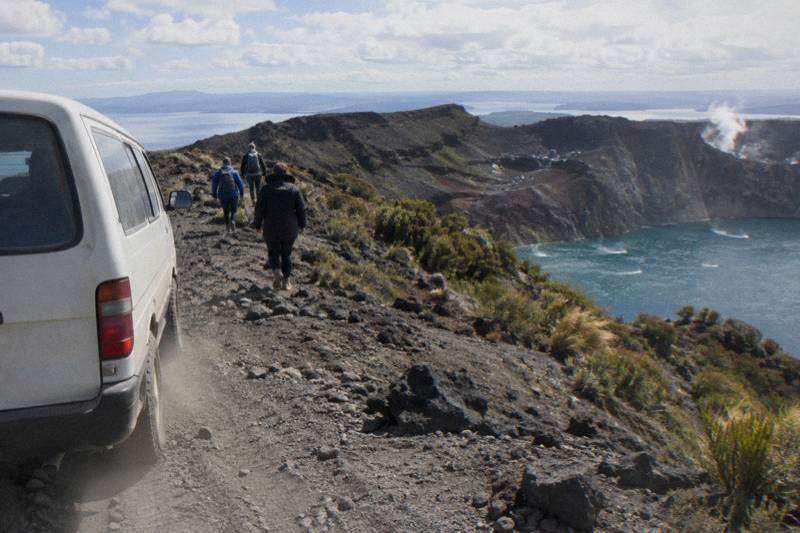
Hot Water Beach And A Mt Tarawera Crater Walk: Planning The Day
Hot Water Beach sits at the far end of Lake Tarawera, reached by a 15 km DOC tramping track, while the Mt Tarawera crater walk is a guided half-day on the mountain itself. Two different sides of the same volcano, and a day that needs careful sequencing.
Short answer
Yes, but they are two separate experiences on opposite sides of the story: the crater walk is a guided trip of about 4 hours 30 minutes with 4x4 transport up the mountain, while Hot Water Beach is reached by the 15 km Tarawera Trail or by boat. There is no combined tour, so plan around each stated duration.
Hot Water Beach and the Mt Tarawera crater walk sit on opposite sides of the same volcanic story. The beach, at Te Rata Bay on the shores of Lake Tarawera, is the steaming, lake-edge reminder of the heat below; the crater walk puts you on the summit ridge of the mountain that reshaped the whole valley on the night of 10 June 1886. GNS Science calls that eruption New Zealand's largest during the last 500 years, and more than 100 people were killed in villages near the mountain. A day that touches both the lake and the summit is a genuinely good idea, but it needs planning, because the two halves are run and reached in completely different ways.
The mountain side is guided commercial territory. Kaitiaki Adventures and Volcanic Air are the two operators whose summit trips appear on Mt Tarawera Volcano Hike, and both describe themselves as concessionaires working alongside Ngati Rangitihi, whose Ruawahia 2B Trust governs the mountain and reinvests most tourism concession revenue in conservation. The lake side is public land managed by DOC. Neither side is hard to organise, but no single product joins them together, and pretending otherwise is how a day falls apart.
Can You Combine Hot Water Beach And The Crater Walk In One Day?
In principle yes, in practice it depends entirely on how you reach the beach. The guided crater walk runs about 4 hours 30 minutes door to door, while the walk to Hot Water Beach is a 15 km advanced tramping track that DOC suggests not doing in both directions in a single day. Reach the beach by boat or camp overnight and the pairing works; walk there and back after a summit trip and it does not.
Start with what each activity actually is. The crater walk, sold as the Kaitiaki Half-Day 4WD And Crater Walk, is a fully guided experience: a local guide, 4x4 transport up the mountain, and a roughly 90-minute guided crater walk on the summit, rated 4.9 across 359 reviews on its booking page, with free cancellation up to 24 hours. The trail side could hardly be more different. The Tarawera Trail is a DOC tramping track graded advanced, running 15 km from the Te Wairoa car park on Tarawera Road to the Hot Water Beach campsite via Te Rata Bay, with dogs, bikes and vehicles all prohibited and occasional rock falls flagged. Nothing about those two halves can be merged into a single booking, so the day succeeds or fails on sequencing.
The simplest structure for the day: pick one side as your anchor and fit the other around it. Most people anchor on the crater walk, because it has fixed durations and a meeting point, and treat the beach as the flexible half. The trailhead for the Tarawera Trail is about a 15-minute drive from Rotorua, and the Kaitiaki meeting point is the Main Carpark on Hemo Road in Whakarewarewa, about 30 minutes' drive from the base of the mountain's 4WD track. Those two start points are not next to each other, and travel between them is your own arrangement. For a wider comparison of lake track versus summit track, the Tarawera Trail or crater walk question is covered in full.
One planning note that saves the day more often than any other: the crater walk trip ends back at its meeting point, and the beach has no walk-up facilities beyond the campsite. There is no timetable, water taxi or transport arrangement that can be quoted here, because none is verified. Whatever connects the two halves of your day, you arrange it yourself or ask the operator directly.
What Is Hot Water Beach At Lake Tarawera?
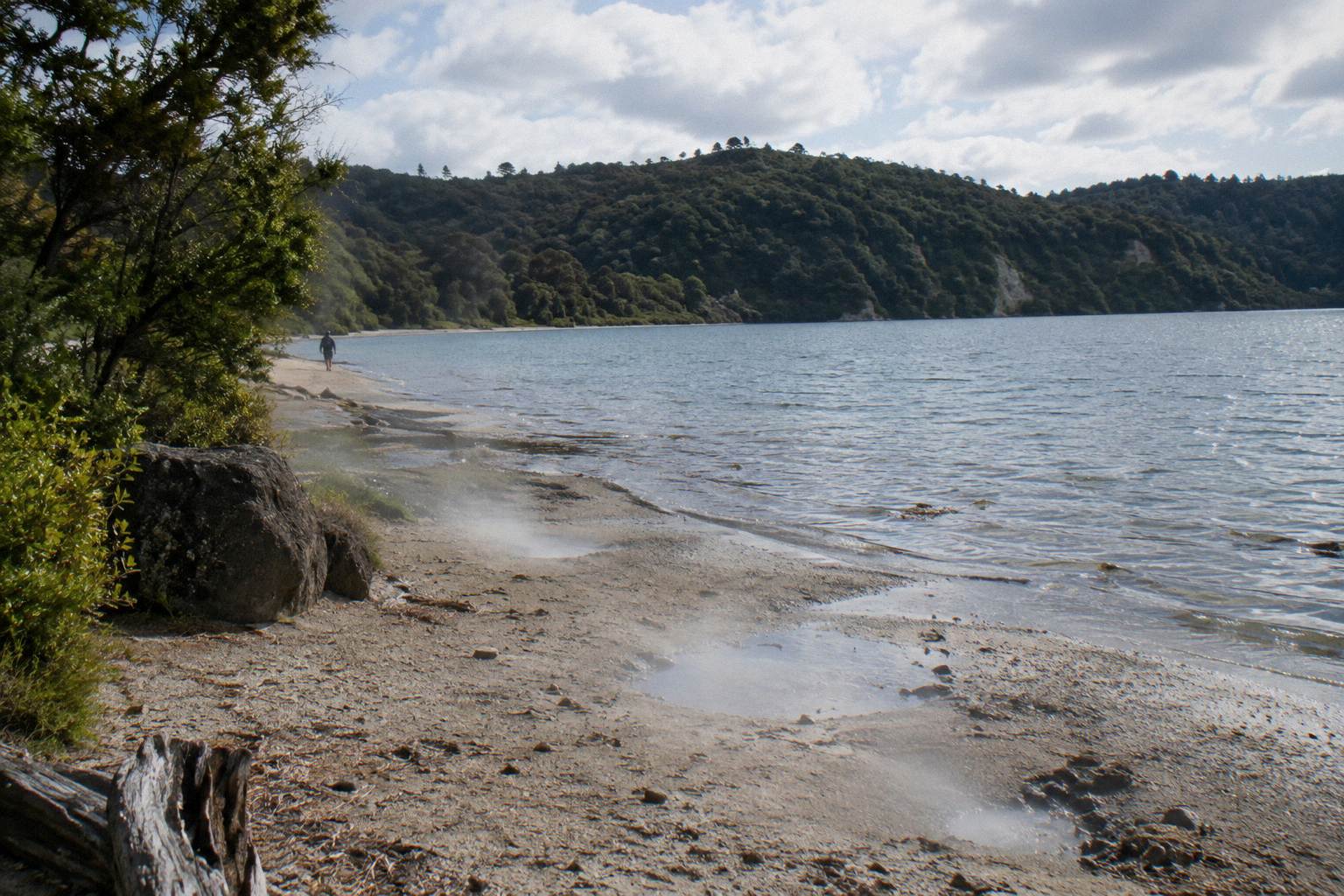
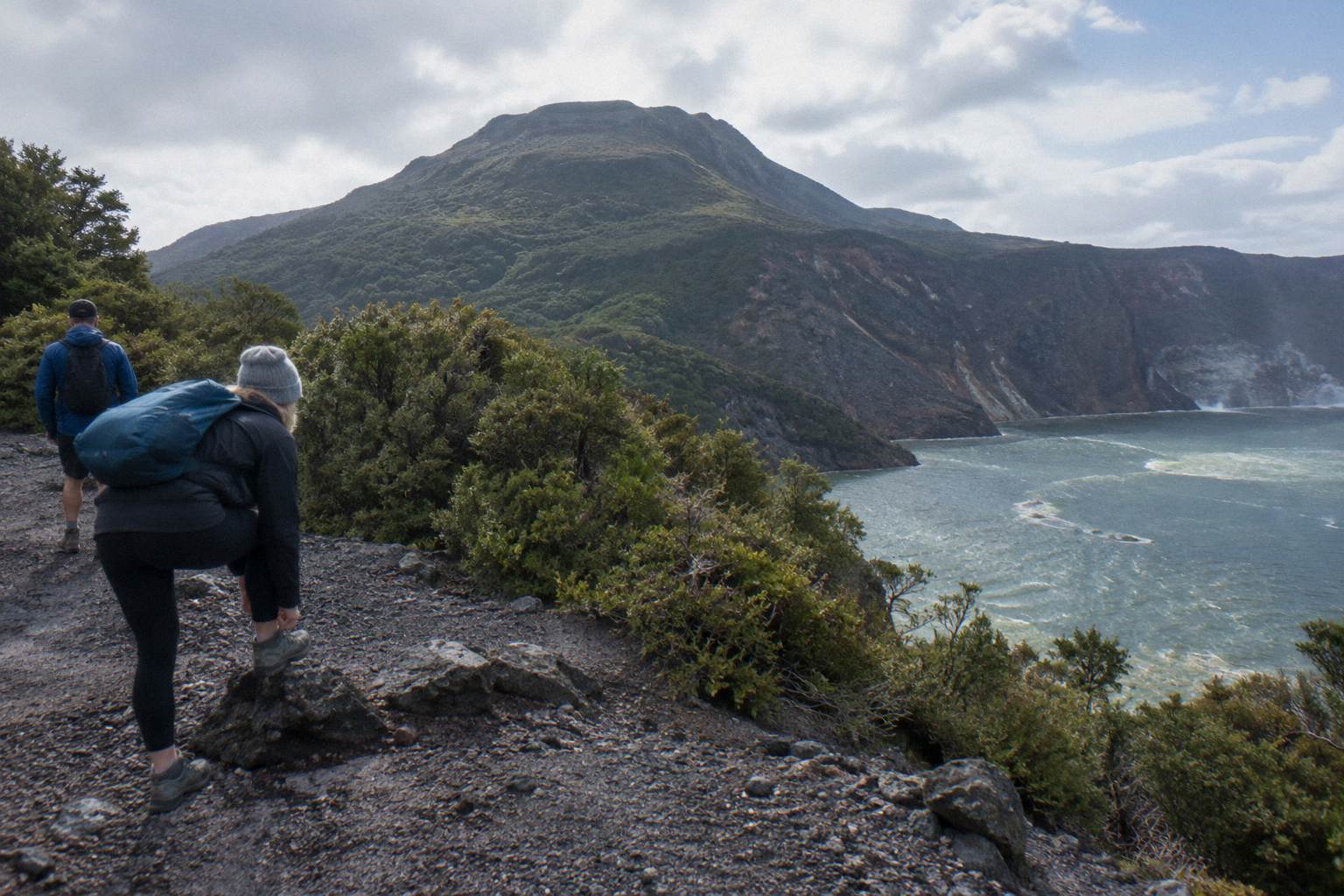
Hot Water Beach is a campsite and lake-edge spot at Te Rata Bay, at the end of the 15 km Tarawera Trail on the shores of Lake Tarawera. DOC warns that localised patches of sand are very hot, which is the geothermal signature of the area: volcanic heat still warming the ground long after the 1886 eruption. It is on the lake side, not on the mountain.
The name gets confused with the far more famous Hot Water Beach on the Coromandel Peninsula, and that confusion matters for planning. The Tarawera version is remote. You reach it by walking the trail, by boat across the lake, or by staying at the campsite there, and DOC's own advice on the track page is to use a water taxi or the campsite rather than attempting the track in both directions in one day. For water taxi operators, departure times and fares, contact DOC for current access advice.
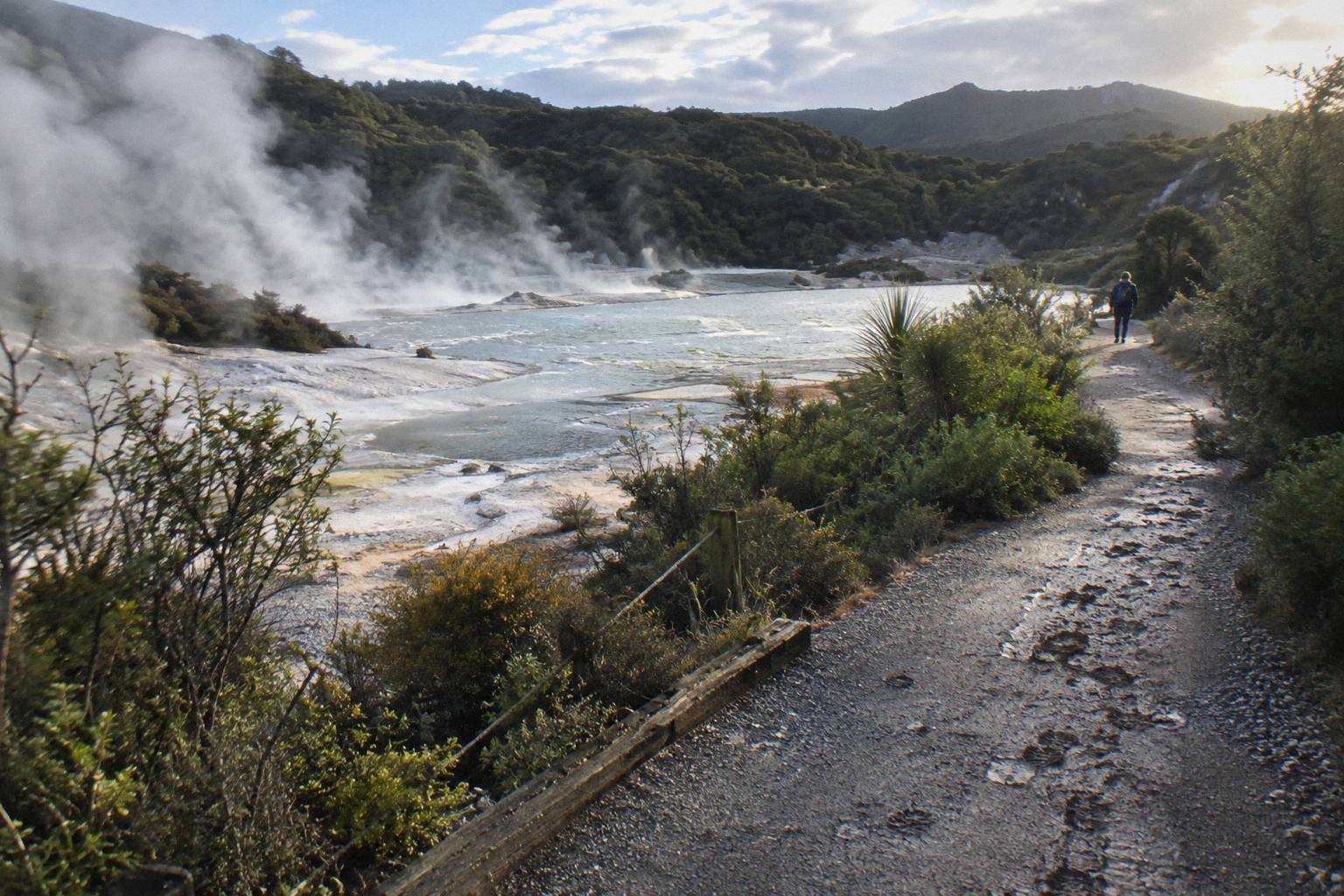
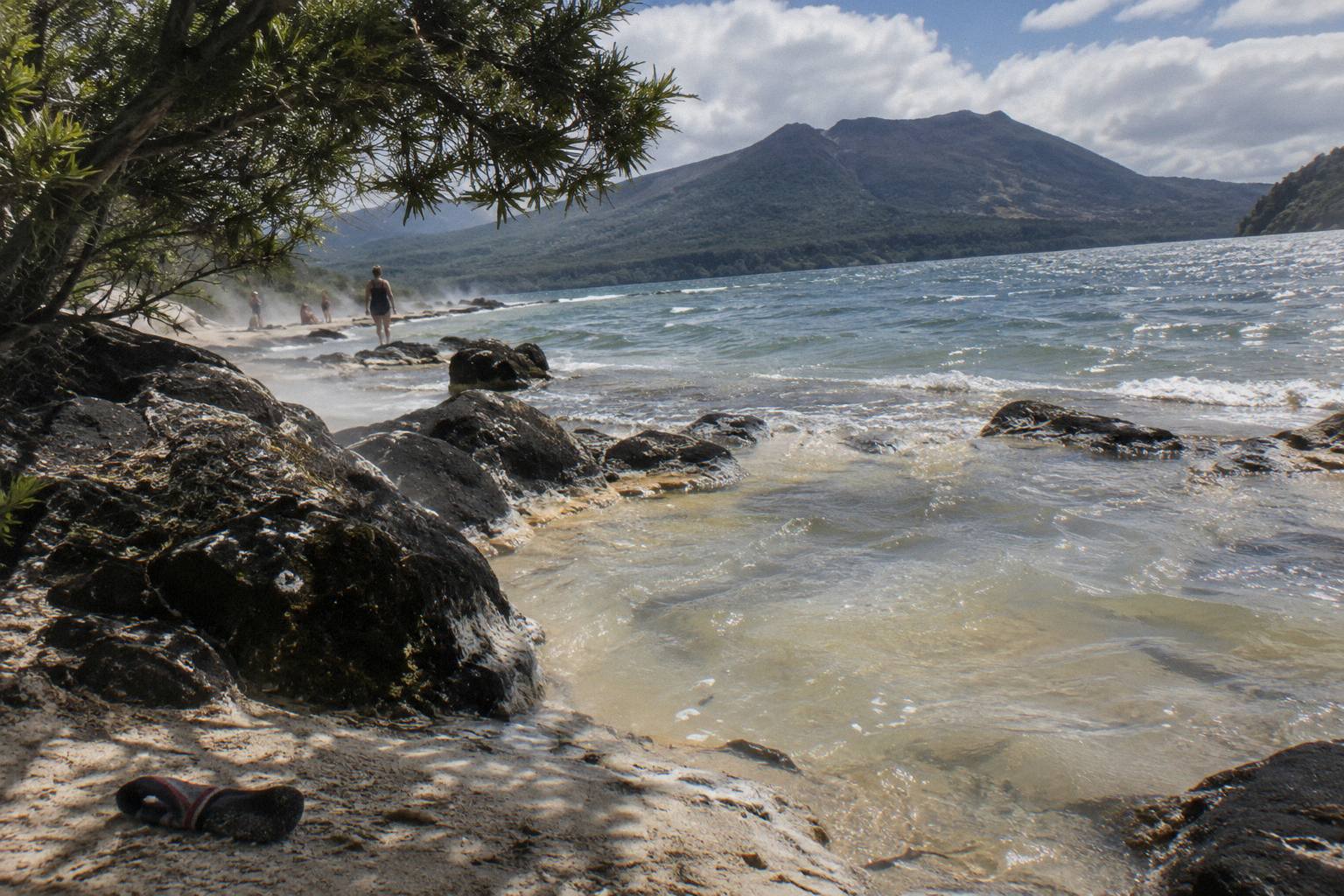
What you get at the end is a genuinely unusual shoreline. Warm water seeps into the lake shallows and, as DOC puts it, localised patches of sand are very hot, hot enough that care with footing and with digging is basic common sense. No temperature figure exists in any verified source, so none appears here. The setting is the payoff: a quiet bay under the same volcanic landscape you will have stood on if you take the crater walk, looking back at the mountain from the water level it once buried in ash and mud on the night of 10 June 1886, when the sound was heard as far as Blenheim and ash fell as far as Christchurch.
For walkers weighing the track itself, the round-up of good walks at Lake Tarawera covers the trail alongside the lake's other options. The essential point for pairing purposes is simple: the beach is a multi-hour commitment on foot, and it never becomes a quick add-on.
How The Mt Tarawera Crater Walk Works
The Kaitiaki Half-Day 4WD And Crater Walk runs about 4 hours 30 minutes in all: a local guide, 4x4 transport up the mountain, and roughly 90 minutes of guided walking on the crater, ending back at the meeting point. It rates 4.9 across 359 reviews, welcomes ages 7 and over, and needs moderate fitness. No price figure appears here; the booking page shows the amount for your date.
The journey breaks into stages, all in the operator's own words. From the Main Carpark on Hemo Road, Whakarewarewa, it is about 30 minutes' drive to the base of the Mt Tarawera 4WD track, then roughly 8.2 km of bumpy off-road driving. There is a base camp stop with a composting toilet where walking sticks are handed out, and the road ends where the walk, the hikoi, begins. Benches line the route, and at the second bench the guide points out the summit trail. Kaitiaki describes the ground as volcanic scoria that can be slippery, with two sections of about 50 m needing four points of contact, and its FAQ calls the scree a 45 degree slope approximately 400 m deep in its own words.
The booking page includes the guided crater experience, the guide, the 4x4 transport up the mountain, and hotel pickup and drop-off from central Rotorua accommodation. Kaitiaki says it provides no snacks, so bring water and snacks yourself, along with sturdy shoes. Ages 7 and over are accepted, low fitness, back problems, heart problems and serious medical conditions are described as not suitable, and the trip is not wheelchair accessible. Ask about departure times and group sizes when you book.
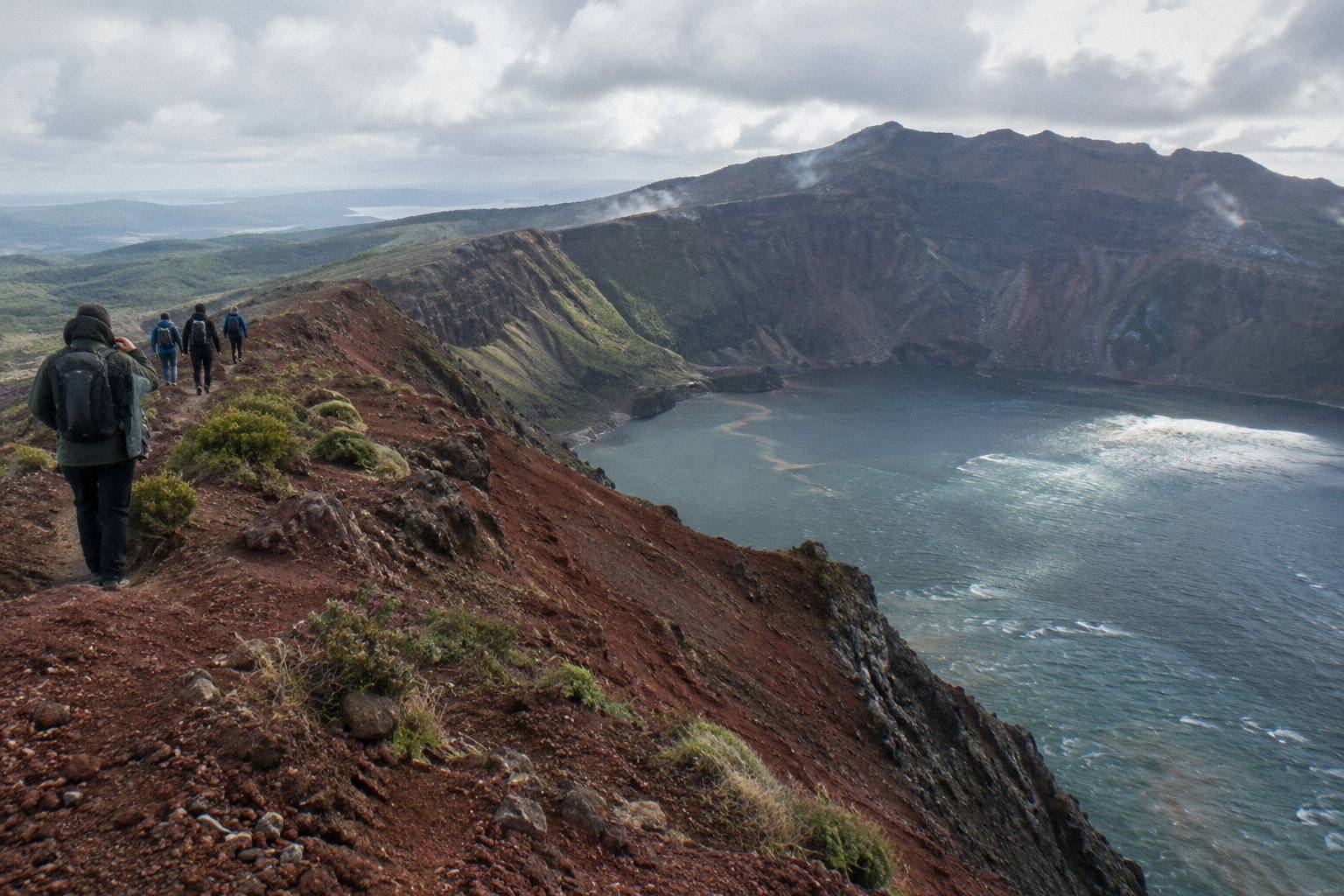
Full details of the route, the difficulty and the timings are in the step-by-step crater walk guide, and the question of what the crater walk costs and includes is handled there in depth. For day-pairing purposes, the number that matters is the whole-trip length of about 4 hours 30 minutes, which sets the size of the hole you need in your day. Read the tour page for the Kaitiaki half-day summit and crater trip or check availability once the shape of the day is clear.
What DOC Says About The Tarawera Trail To Hot Water Beach
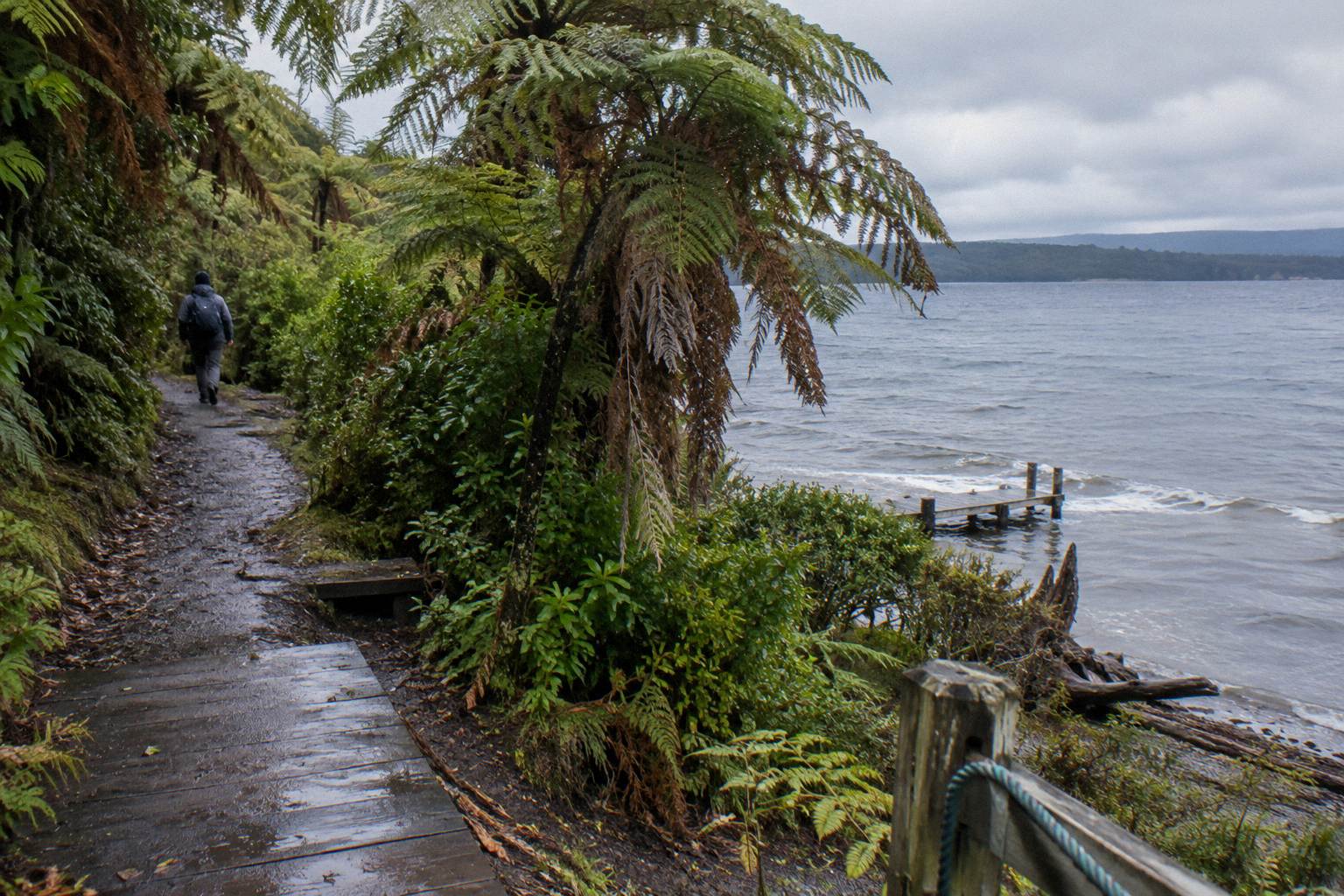
DOC grades the Tarawera Trail as an advanced tramping track, 15 km one way, from the Te Wairoa car park on Tarawera Road to the Hot Water Beach campsite via Te Rata Bay. DOC suggests a water taxi or the campsite over walking both directions in a day. Dogs, bikes and vehicles are not permitted, and occasional rock falls are flagged.
The grading is the fact most visitors skip past. Advanced is one of DOC's higher track classes, and 15 km of it, on ground that includes occasional rock falls, is a serious half of a day for most walkers. That is exactly why DOC's own suggestion is to ride a boat one way or stay overnight at the campsite rather than walk out and back on the same day. Pair that with a 4 hour 30 minute guided summit trip in the morning and the day is already full: a same-day loop covering both on foot simply does not work, so plan them as two separate trips.
Access basics are firm. The trail starts at the Te Wairoa car park on Tarawera Road, about a 15-minute drive from Rotorua. From the same road you can also visit the Buried Village of Te Wairoa, open 10am to 4pm Wednesday to Sunday with last entry at 3.45pm, which sits close to the trailhead and fills a gap in a day built around the lake side. Waimangu Volcanic Valley, which describes its geothermal system as formed as the result of the 1886 eruption, is another nearby stop on the same volcanic thread, reached on Waimangu Road.
Sequencing The Day Around Stated Durations
Plan by sequencing stated durations, never by adding them into a promised total. The crater walk runs about 4 hours 30 minutes, the trail is 15 km one way and graded advanced, and the Kaituna rafting combo fills about 9 hours. Whichever anchor you choose, the other activity must fit the remaining daylight on its own terms, with your own transport between the two start points.
The cleanest way to see the whole day is to lay the stated numbers side by side and let them argue it out.
| Half of the day | Crater walk (Kaitiaki half-day) | Hot Water Beach via Tarawera Trail |
|---|---|---|
| Time commitment | About 4 hours 30 minutes, end to end | 15 km one way, advanced grade; DOC advises against a same-day return walk |
| How you start | Meet at the Main Carpark, Hemo Road; free pickup from central Rotorua accommodation on the booking page | Start at the Te Wairoa car park, Tarawera Road, about 15 minutes' drive from Rotorua |
| Who runs it | Guided, with a local guide, 4x4 transport and about 90 minutes on the crater | Self-guided public tramping track managed by DOC |
| Ages and fitness | Ages 7 and over; moderate fitness; several medical exclusions apply | Advanced track; dogs, bikes and vehicles prohibited |
| Ends | Back at the meeting point | At the Hot Water Beach campsite, Te Rata Bay |
| Cancellation | Free up to 24 hours on the booking page | No booking involved; check conditions with DOC |
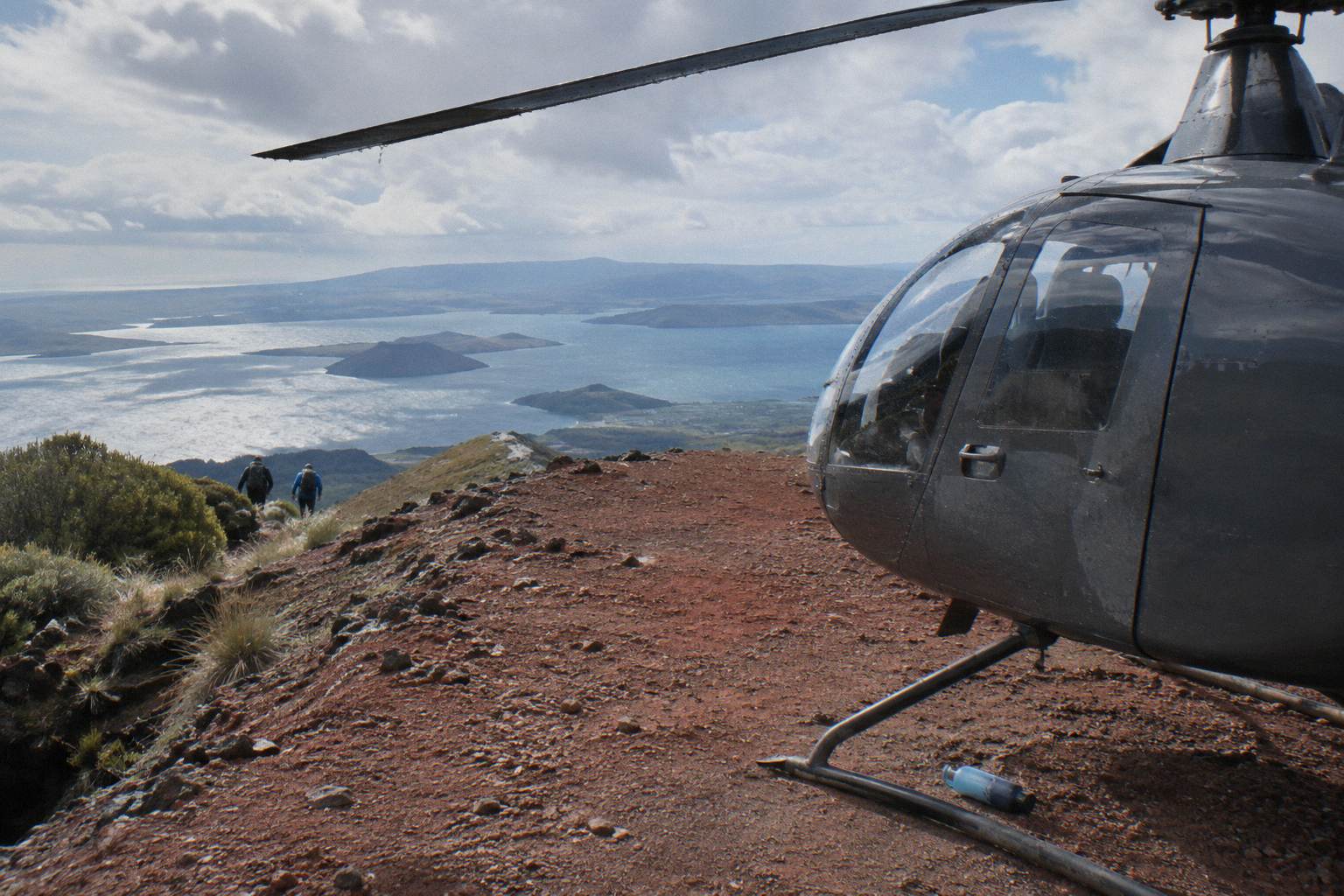
Three realistic shapes emerge. The first anchors on the crater walk and saves the beach for a separate day, or for a boat-based visit you arrange yourself. The second anchors on the lake, walking or boating to Hot Water Beach and treating the summit as a following-day activity. The third is the strongest same-day pairing of all: swap the walking summit for a flight. Volcanic Air's 40-minute summit landing flight runs from the Rotorua City Lakefront helipad, passes over lakes Okareka, Okataina and Tarawera, and lands on the summit for a short guided walk of about 15 minutes by the operator's description, about 20 minutes by the booking page wording, from NZ$675 per person and rated 4.9 across 43 reviews. A 40-minute flight plus a lake walk is a day that genuinely fits, with the caveat that the landing is at the pilot's sole discretion and depends on weather, volcanic activity and passenger loadings, in Volcanic Air's own words. All amounts in New Zealand dollars.
Helicopter And Floatplane Ways To See Both In One Day
Four Volcanic Air products cover the mountain from above: the 40-minute summit landing flight, the 1-hour mountain landing flight, the 3-hour Tarawera and Orakei Korako dual landing, and the 30-minute floatplane flyover from NZ$395 per person, which overflies the mountain without landing. Landings are always at the pilot's sole discretion, and every product carries free cancellation up to 24 hours on the booking page.
If the pairing is proving too tight on foot, the air options redraw the day. The 1-Hour Mountain Landing Flight gives a longer airborne circuit with a mountain landing of about 20 minutes on Mt Tarawera, pilot-guide commentary and headsets, from the Lakefront Drive helipad; no price or rating figure is available, so ask the operator for the current amount. The dual landing flight is the one that changes the shape of a day most: 3 hours in all, from NZ$1,490 per person, pairing a landing and guided walk on Mt Tarawera with a ferry transfer to Orakei Korako and a 1-hour self-guided visit there, admission included. It suits a traveller who wants the volcanic theme carried across two locations without a second activity slot.
Because the air options change the arithmetic so much, they are worth comparing side by side before any booking.
| Flight | Duration | From price (NZ$) | Rating and reviews | Landing |
|---|---|---|---|---|
| Volcanic Air 40-Minute Summit Landing Flight | 40 minutes | 675 per person | 4.9 across 43 reviews | Yes, at the pilot's sole discretion |
| Volcanic Air 1-Hour Mountain Landing Flight | 1 hour | Ask the operator | No rating published | Yes, at the pilot's sole discretion |
| Tarawera And Orakei Korako Dual Landing Flight | 3 hours | 1,490 per person | No rating published | Yes, at the pilot's sole discretion |
| Tarawera Scenic Floatplane Flyover | 30 minutes | 395 per person | 4.8 across 48 reviews | No, flyover only |
The floatplane deserves its own careful sentence, because it is the option most often misbooked. The Tarawera Scenic Floatplane Flyover, which carries a from-price of NZ$395 per person and is rated 4.8 across 48 reviews, is a flyover with no landing: you see Mt Tarawera and the volcanic landscape from a floatplane off the Rotorua lakefront, with pilot commentary, and you never set foot on the mountain. For a day built around Hot Water Beach, that is arguably a feature rather than a flaw, since the walking half of your day is already spoken for. Infants sit on laps, weight limits vary by product, from 110 kg to 135 kg per passenger on the booking pages, and none of the flights is wheelchair accessible. Ask Volcanic Air about age rules when you book.
A middle path also exists for walkers who want two guided halves without the mountain: the Kaituna Rafting And Tarawera Crater Walk Combo, about 9 hours in total, combining Kaituna River whitewater rafting of about 1.5 hours with the 4x4 ascent and a 90-minute crater walk, for ages 13 and over, with complimentary transport from central Rotorua accommodation and the Rotorua Information Centre among 22 pickup options. The two activities are separately timed, with a return after the first and a collection for the second, which makes it a full day in itself rather than a pairing partner for the trail. Ask for the price when you book.
Which Months Suit A Hot Water Beach And Crater Walk Day
Rotorua's warmest mean daily maximum is 23.1 °C in February and its coldest is 12.0 °C in July; July is also the wettest month at 137.4 mm, while November is driest at 86.8 mm. These are town figures at about 280 m elevation: the summit at 1,111 m is colder and windier in every month, and no month is called the best one here.
The climate table for the town, based on 1991 to 2020 normals, tells the planning story at a glance. A day with a long lake-side element wants the drier, longer end of the year, but a crater walk runs year-round and the mountain is its own microclimate regardless of what Rotorua is doing.
| Month | Mean max C | Mean min C | Rainfall mm |
|---|---|---|---|
| January | 22.9 | 12.6 | 93.8 |
| February | 23.1 | 13.1 | 100.4 |
| March | 21.1 | 11.1 | 100.3 |
| April | 18.1 | 8.7 | 133.0 |
| May | 15.2 | 6.6 | 130.2 |
| June | 12.7 | 4.4 | 131.9 |
| July | 12.0 | 3.7 | 137.4 |
| August | 12.8 | 4.1 | 125.2 |
| September | 14.5 | 5.8 | 106.6 |
| October | 16.4 | 7.4 | 92.9 |
| November | 18.6 | 9.0 | 86.8 |
| December | 20.8 | 11.5 | 117.1 |
About 1,355.6 mm falls over a typical year across about 118.6 rainy days, so rain is part of the deal in any month, not an exception. The month-by-month trade-offs, including what the shoulder seasons mean for the trail, are worked through in which months suit a crater walk. For the air half of the day, remember that Volcanic Air landings depend on weather at the pilot's discretion, and volcanic status is published by GeoNet's volcano monitoring pages. Those pages carry the current alert level for the Okataina Volcanic Centre, the caldera that includes Tarawera; check it before you travel.
Mistakes To Avoid When Planning The Day
The common planning failures are treating the 15 km Tarawera Trail as a quick add-on, assuming the two activities share a start point, expecting a water taxi or timetable that no verified source confirms, and forgetting that helicopter landings are discretionary. Each mistake is avoidable with one fact: the trail is a separate advanced lake track, and the crater walk is a guided 4 hour 30 minute trip from a different location.
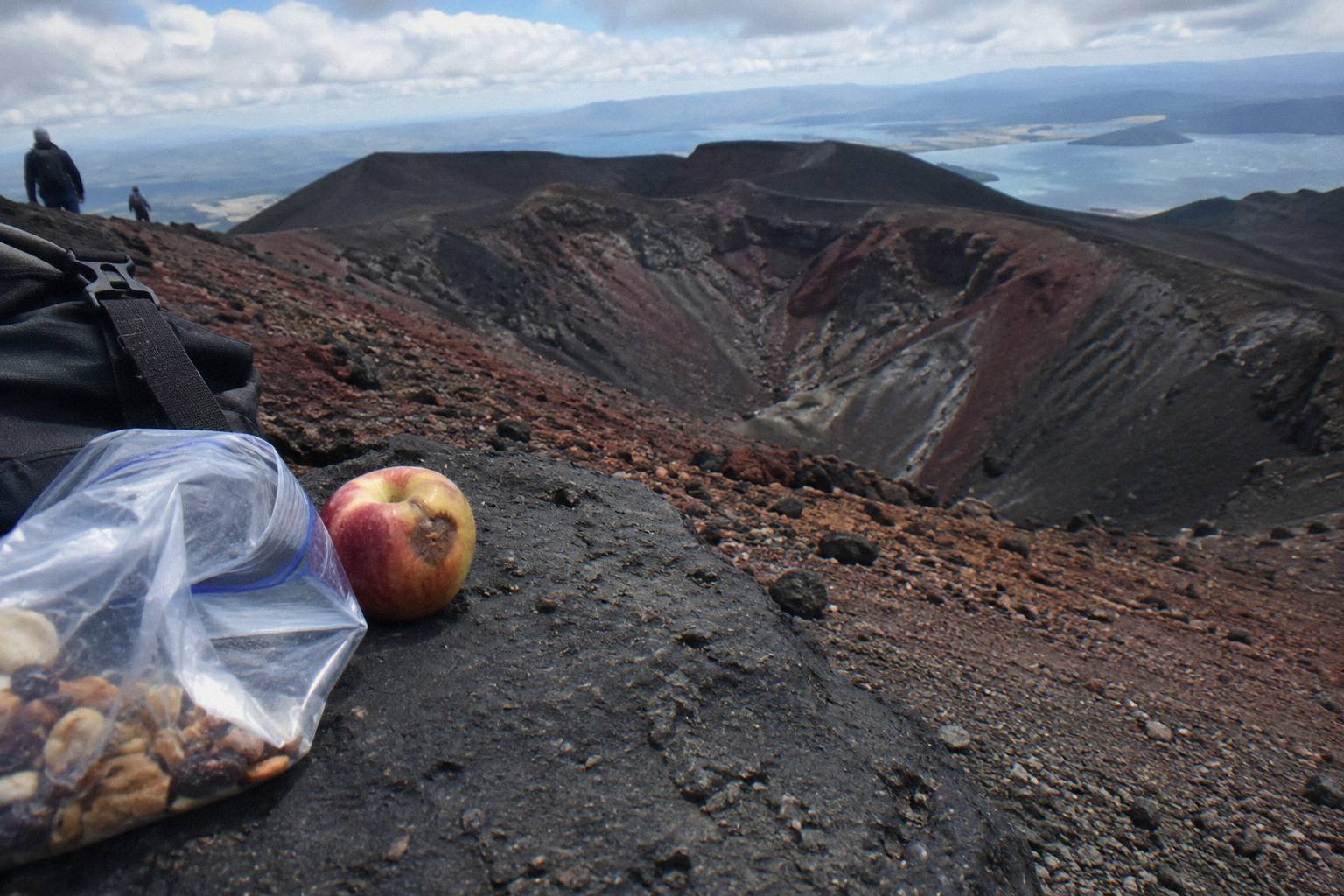
First, do not build the day as a double walk. DOC's own advice against walking the trail in both directions in one day exists precisely because visitors try it, and a summit trip on top of it guarantees a miserable afternoon. Second, map the start points before booking anything: Hemo Road for the crater walk, Tarawera Road for the trail, Lakefront Drive for every flight. Third, never assume a connection between them; no pickup, shuttle or boat link between the trailhead and the mountain is verified, so arrange your own travel between them. Fourth, read the inclusions before you pack: Kaitiaki provides no snacks, the flights provide commentary rather than meals, and the trail provides nothing but track.
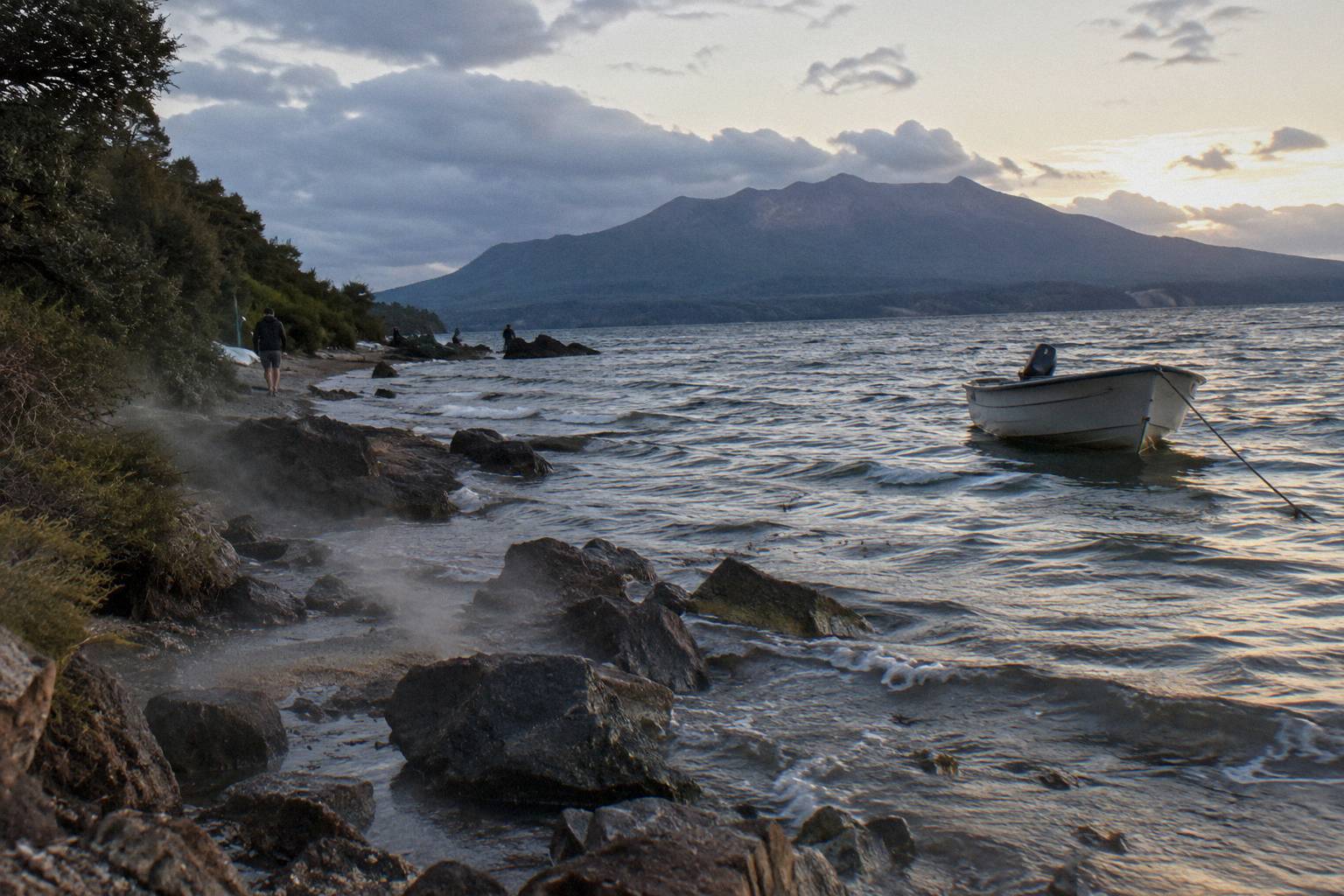
Fifth, respect the medical and age rules rather than discovering them at the meeting point: 7 and over for the half-day crater walk, 13 and over for the Kaituna combo, weight limits of 110 kg to 135 kg per passenger depending on the flight, and explicit exclusions for back and heart problems on the walk. Sixth, if the day starts with a dawn pickup, think about the evening before you commit: an early crater walk plus a lake afternoon makes for a long day on your feet, and a relaxed Rotorua evening of cultural food and performance, as suggested at rotoruaculturaldinner.com, is a sensible wind-down after an early alarm.
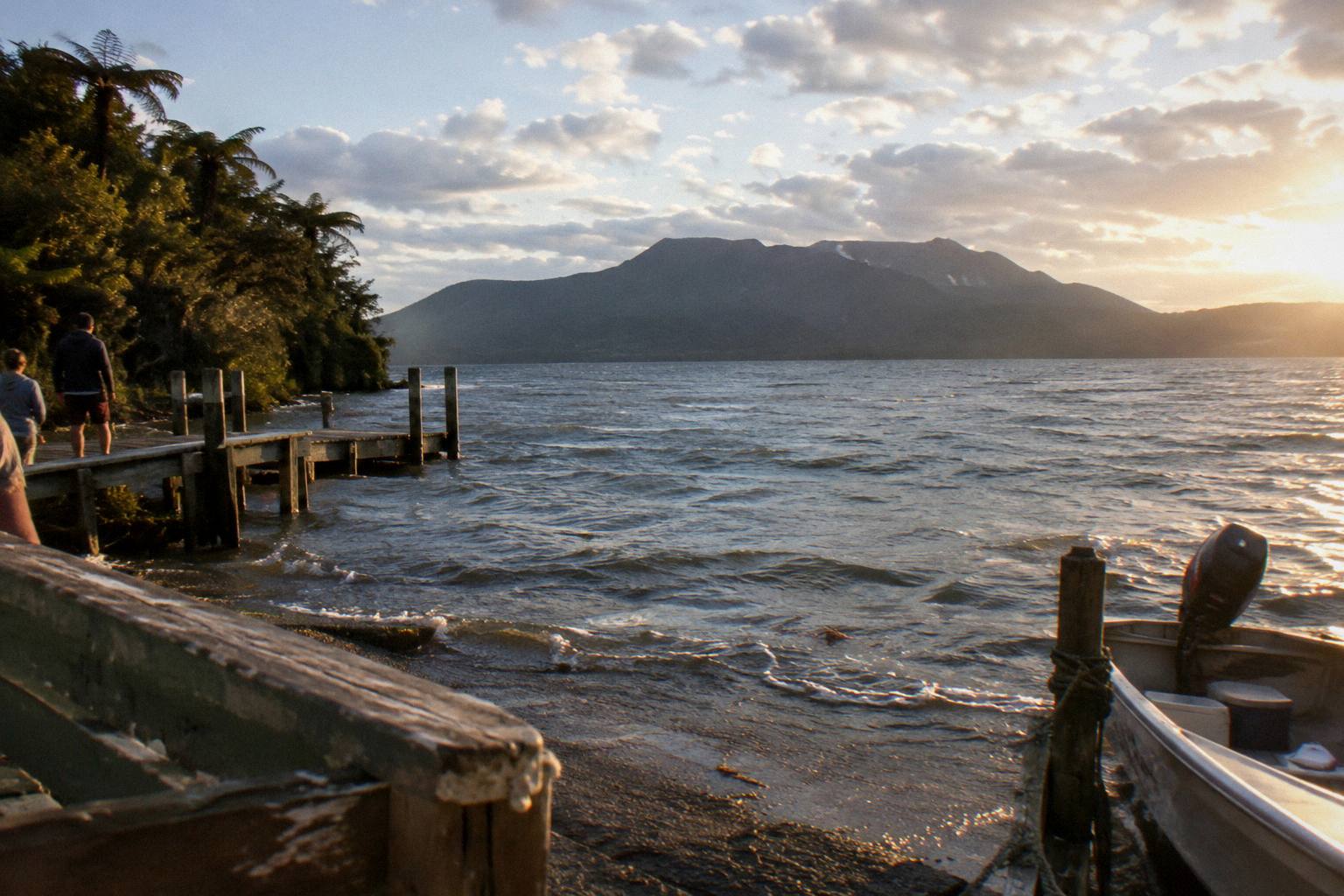
Finally, keep the two conservation stories straight, because they are both worth knowing. The mountain side operates under Ngati Rangitihi's guardianship, with tourism revenue reinvested in conservation work described on Kaitiaki's conservation page, and the lake side is public conservation land. Two land tenures, two booking realities, one volcano; the day works when you plan it as two halves that happen to share a view. More on the access question is in who owns Mt Tarawera and why access is guided.
Common Questions About Pairing Hot Water Beach With A Mt Tarawera Crater Walk Day
Can You Do Hot Water Beach And The Mt Tarawera Crater Walk In One Day?
Yes, if the beach half is reached by boat or as a campsite stay rather than a return walk. The crater walk runs about 4 hours 30 minutes, and DOC advises against walking the 15 km Tarawera Trail in both directions in a single day.
How Long Is The Walk To Hot Water Beach At Lake Tarawera?
The Tarawera Trail is 15 km one way from the Te Wairoa car park to the Hot Water Beach campsite via Te Rata Bay, graded advanced by DOC. Dogs, bikes and vehicles are not permitted.
Is Hot Water Beach At Lake Tarawera The Same As The Coromandel One?
No. The Tarawera version sits at Te Rata Bay at the end of a remote DOC tramping track, reached on foot or by boat across the lake. No water taxi name, time or price is given here, because none is verified.
How Long Does The Guided Mt Tarawera Crater Walk Take?
About 4 hours 30 minutes in all, including the drive to the 4WD track base, roughly 8.2 km of off-road ascent and about 90 minutes of guided walking on the crater. The trip ends back at the Hemo Road meeting point.
Can A Helicopter Flight Replace The Crater Walk On A Beach Day?
It can. The Volcanic Air 40-minute summit landing flight runs from the Rotorua lakefront from NZ$675 per person, with a short guided summit walk, though the landing is at the pilot's sole discretion. The floatplane flyover from NZ$395 per person does not land at all.
Is The Sand At Hot Water Beach Actually Hot?
DOC warns that localised patches of sand are very hot. No verified temperature figure exists, so treat every patch with care and keep children under close watch near the warm seeps.