Mt Tarawera Half Day Or Full Day Guided Hike
The half day and the full day on Mt Tarawera share the same 4WD road, the same summit track and the same age rule of 7 and over. The real difference is about 1.5 hours of extra walking and the addition of Tarawera Dome.
Short answer
Kaitiaki's half day runs about 4.5 hours and reaches the summit of Ruawahia, with 4x4 transport up the mountain and about 90 minutes of guided crater walking. The full day runs about 6.5 hours, adds Tarawera Dome and about 1.5 hours more walking. Both are for ages 7 and over and both need a moderate fitness level.
Mount Tarawera offers exactly two guided walking formats with Kaitiaki Adventures: a half day of about 4.5 hours and a full day of about 6.5 hours. Both use the same 4WD access road, both are for ages 7 and over, and both are described by the operator as needing a medium to moderate fitness level. The choice comes down to how much walking you want, whether Tarawera Dome matters to you, and what else you have planned around Rotorua.
The two durations are close enough that many travellers agonise over the decision and then book whichever one still has space for their date. That is not a bad instinct, but a little foreknowledge helps: the extra time on the full day is not rest time, it is walking time, on the same volcanic scoria, at the same altitude. On Mt Tarawera Volcano Hike the decision is really about legs and hours, not scenery quality, because the half day already reaches the summit at 1,111 m and the views Kaitiaki describes as "360 degree views" from Ruawahia.
What Actually Differs Between The Two Hikes
The stated difference is about 1.5 hours of additional walking and one extra destination, Tarawera Dome. Kaitiaki calls the half day its "Mt Tarawera Volcanic Crater Experience" at about 4.5 hours, and the Full Day Hike about 6.5 hours. Both carry the same age rule of 7 and over and the same moderate fitness wording. Check the booking page for your date for the current price.
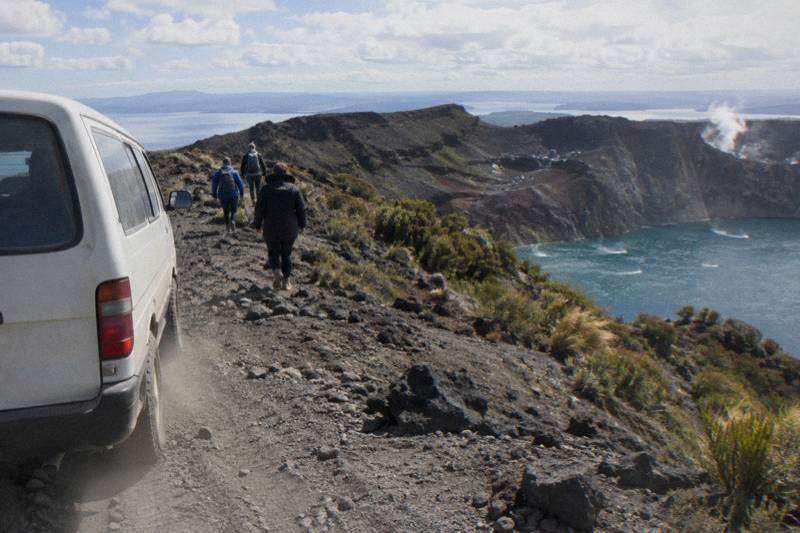
Everything else about the two trips is shared. Both begin at the Main Carpark on Hemo Road in Whakarewarewa, Rotorua. Both involve about 30 minutes of driving from Rotorua to the base of the 4WD track, then roughly 8.2 km of off-road climbing in a 4WD vehicle, per Kaitiaki's own FAQ. There is a base camp stop with a composting toilet where walking sticks are handed out, and the road ends where the walk begins. From there the route climbs the summit track past benches, with the guide pointing out the summit trail at the second bench.
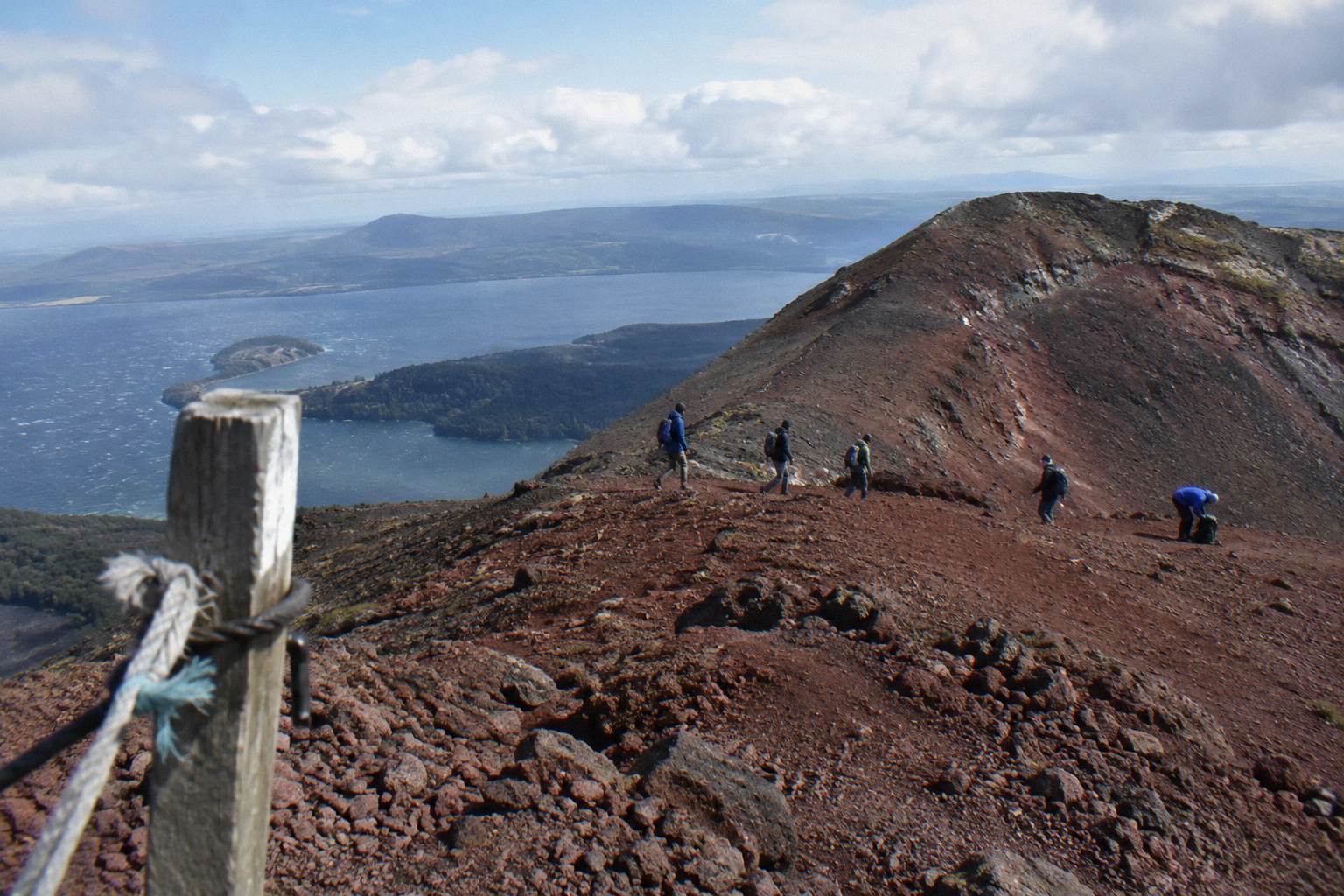
The shared ground is worth understanding because it explains why the full day costs more time but not dramatically more variety. The scoria underfoot "can be slippery" in Kaitiaki's words, and the operator describes two sections of about 50 m that need four points of contact. Those sections exist on both trips. The optional run down into the crater, which Kaitiaki's half-day description mentions, is part of the summit experience either way. If a detailed breakdown of the walk itself would help, the step-by-step crater walk account covers the sequence from base camp to summit.
The mountain's own story is the same backdrop on both durations. Tarawera is one of the dome volcanoes of the Okataina Volcanic Centre, and GNS Science calls its 10 June 1886 eruption New Zealand's largest in the last 500 years, an event heard as far as Blenheim with ash falling as far as Christchurch. A longer day gives more time for the guide to tell that story, but the summit and the crater are the same on both. The 1886 eruption and the crater walk page carries the history in full.
| Fact | Half Day (Kaitiaki's own wording) | Full Day Hike (Kaitiaki's own wording) |
|---|---|---|
| Total duration | about 4.5 hours | about 6.5 hours |
| Walking beyond the half day | none | about 1.5 hours more |
| Extra destination | none | Tarawera Dome |
| Age rule | 7 and over | 7 and over |
| Fitness wording | medium to moderate for the summit track | medium to moderate for the summit track |
| Summit reached | Ruawahia, 1,111 m (GNS Science) | Ruawahia, 1,111 m (GNS Science) |
| 4WD access | yes, about 8.2 km off-road | yes, about 8.2 km off-road |
| Meeting point | Main Carpark, Hemo Road | Main Carpark, Hemo Road |
| Amount | check the booking page for your date | confirm at booking |
| Bookable here | yes, one tour page | no, Kaitiaki's own site only |
The Half Day In Detail
Kaitiaki's half day, the "Mt Tarawera Volcanic Crater Experience", runs about 4 hours 30 minutes in all and is rated 4.9 across 359 reviews. The booking page lists a local guide, 4x4 transport up the mountain, hotel pickup and drop-off from central Rotorua, and a 90-minute guided crater walk. Kaitiaki provides no snacks, so bring water and snacks. Free cancellation applies up to 24 hours before.
The shape of the half day suits most visitors to Rotorua. You meet at Hemo Road, get collected or arrive, ride up the mountain, walk the summit track with your guide, take in Ruawahia and the crater, then descend and finish back at the meeting point with roughly half a day still ahead of you. The booking page offers free pickup from central Rotorua accommodation; never count on a specific pickup time, and confirm arrangements when you book.
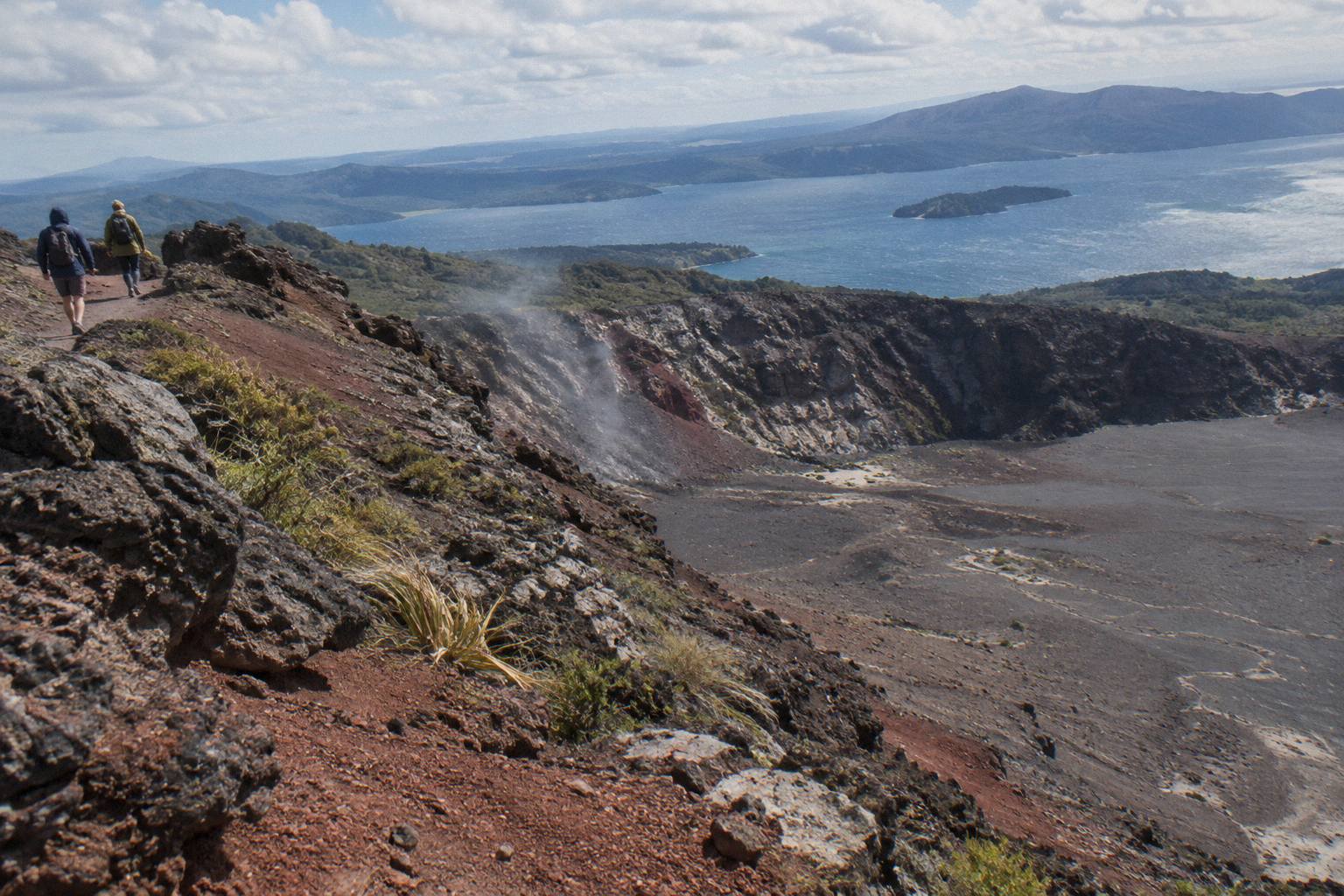
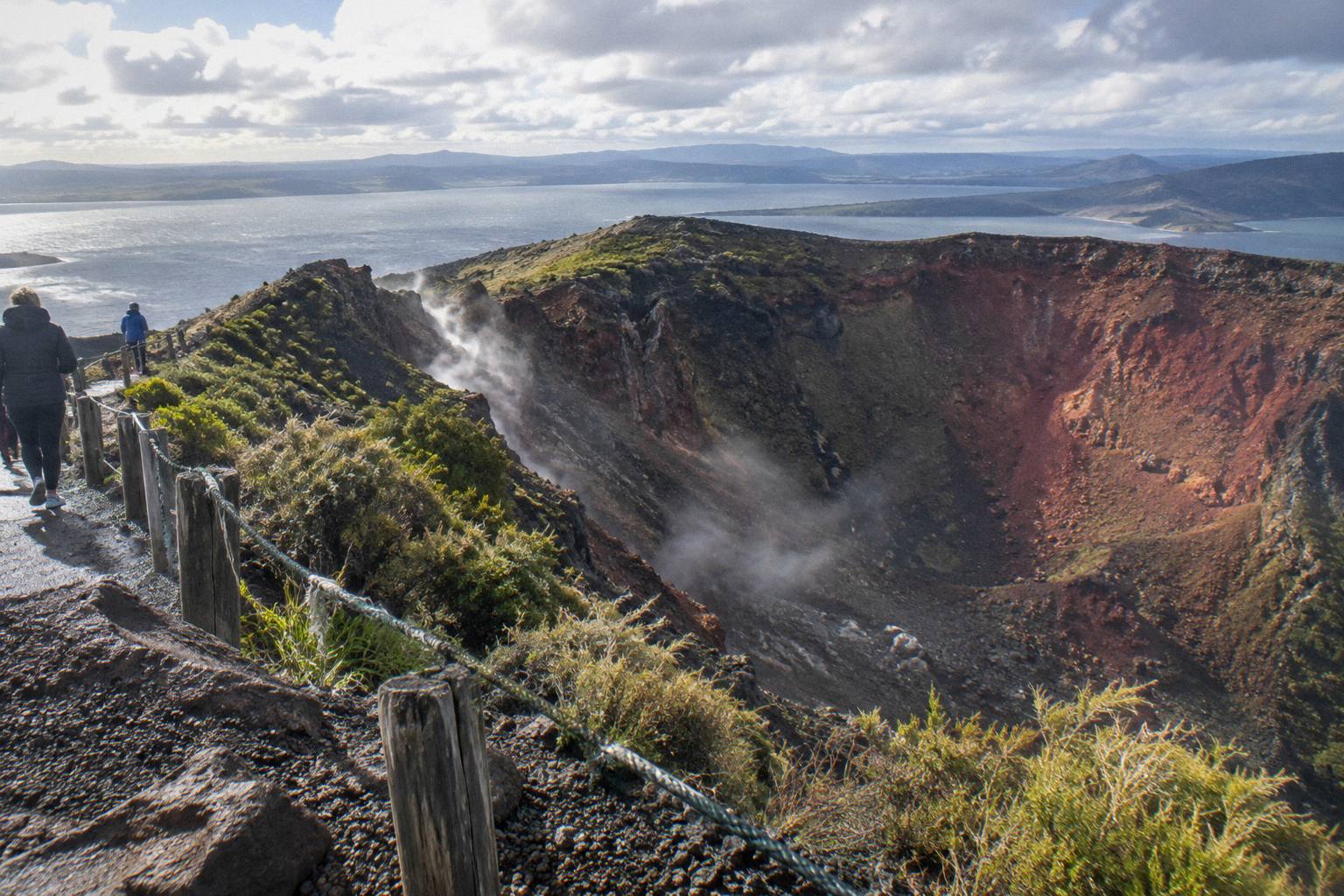
The walking itself is genuine but contained. The booking page describes about 90 minutes of guided crater walking, which is the heart of the trip: the summit track, the crater rim views across to Lake Tarawera, and the optional scree run down into the crater that Kaitiaki's page mentions. The scree is described in Kaitiaki's FAQ as "a 45 degree slope approximately 400m deep", and that is the operator's own wording rather than a survey measurement. The fitness demands are what the operator calls moderate: guests with lower fitness may take lighter walking options instead of the summit, which is a real and useful escape valve for mixed groups.
Who suits the half day? Anyone with an afternoon plan, families with children aged 7 and up whose legs are reliable but young, and anyone unsure about volcanic scoria underfoot. It is also the only one of the two durations you can check live availability for here: see the Kaitiaki half-day tour page for the full rundown, or go straight to the operator's live listing: Check availability.
One planning note that trips people up: the booking page lists children under 7, low fitness, back problems, heart problems and other serious medical conditions as not suitable, and the trip is not wheelchair accessible. If your group includes anyone in those categories, raise it before booking rather than on the day. Motion sickness on the 8.2 km of off-road climbing is another one Kaitiaki's FAQ flags: tell the guide if the drive bothers you, because it comes before any walking and sets the tone for the morning.
Choosing By Time, Fitness And Budget
Choose the half day if you have a packed Rotorua schedule, mixed fitness in your group, or children whose stamina is a question mark. Choose the full day if you want Tarawera Dome specifically, you enjoy walking for its own sake, and you have no competing plans for the afternoon. The cleanest discriminator is time: 4.5 hours versus 6.5 hours, with about 1.5 of the difference on foot.
Money is harder to use as a discriminator here. The half-day booking page shows the amount for your date; the full day is sold on Kaitiaki's own site, so confirm pricing at booking. All amounts in New Zealand dollars where they do appear refer to booking-page from-prices per person.
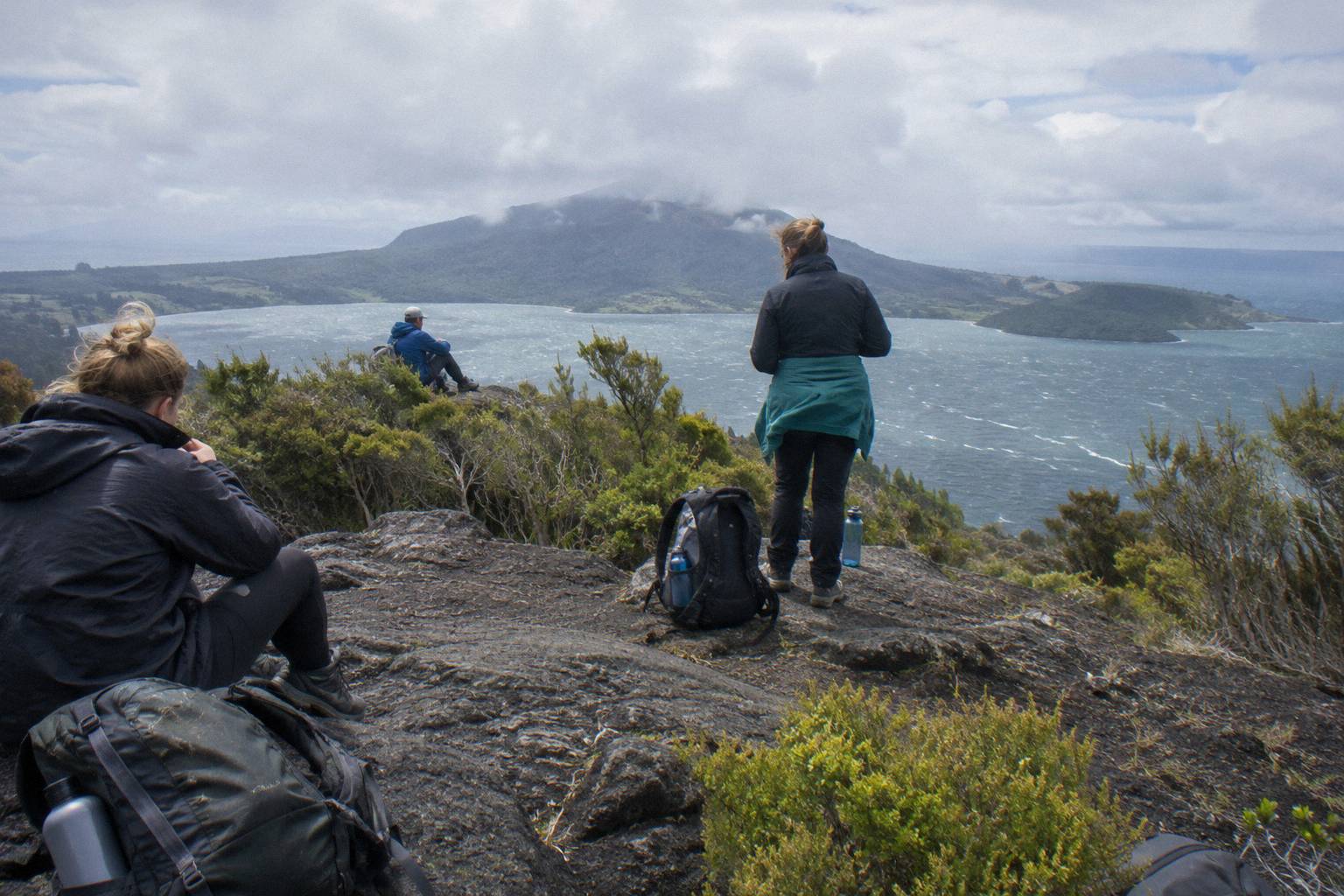
You'll need a reasonable level of fitness. Both durations use the word moderate, but moderate for 90 minutes of crater walking is a different proposition from moderate plus another 1.5 hours on the same terrain. Kaitiaki's FAQ notes that guests may take lighter walking options instead of the summit, which softens the half day considerably. Whether that flexibility extends to the full day's dome section is something to confirm at booking. For a fuller treatment of the physical demands, see crater walk difficulty and fitness.
The decision table below compresses the choice into the situations travellers actually face. Read your row, then read the row below it, because plans change and the half day is easier to move around a schedule than a full day.
| Your situation | Better fit | Why |
|---|---|---|
| Only one free morning in Rotorua | Half day | Finishes with the afternoon intact for Waimangu or the lake |
| Travelling with children aged 7 to 12 | Half day | Shorter total exposure, lighter walking options if needed |
| Keen walkers who hike weekly | Full day | Tarawera Dome and about 1.5 extra hours on the mountain |
| Photographers chasing summit light | Full day | More time at more points along the rim |
| Unsure about fitness or scoria | Half day | Easier to take the lighter walking options |
| Want Tarawera plus a second activity same day | Half day, or the Kaituna combo | The combo stacks rafting and the crater walk into one 9-hour day |
| Cruise or short-stay schedule | Half day | The 4.5-hour window is easier to place |
| Want the summit without the walk | Helicopter landing | A 40-minute flight with a short guided walk on top |
The Full Day Hike: What The Extra Time Buys
The full day runs about 6.5 hours and, per Kaitiaki's own tour description, adds Tarawera Dome and about 1.5 hours more walking than the half day. It shares the same age rule of 7 and over, the same meeting point and the same 4WD ride up. The full day is sold on Kaitiaki's own site, so check there for current pricing.
Tarawera Dome is the reason to pick the full day. The mountain has three domes, Ruawahia, Tarawera and Wahanga, with Ruawahia the highest at 1,111 m according to GNS Science. The half day gives you Ruawahia's summit and the crater; the full day adds another dome and the ridge walking between. If the anatomy of the volcano is what draws you, rather than one summit photo, the extra hours deliver something the half day cannot.
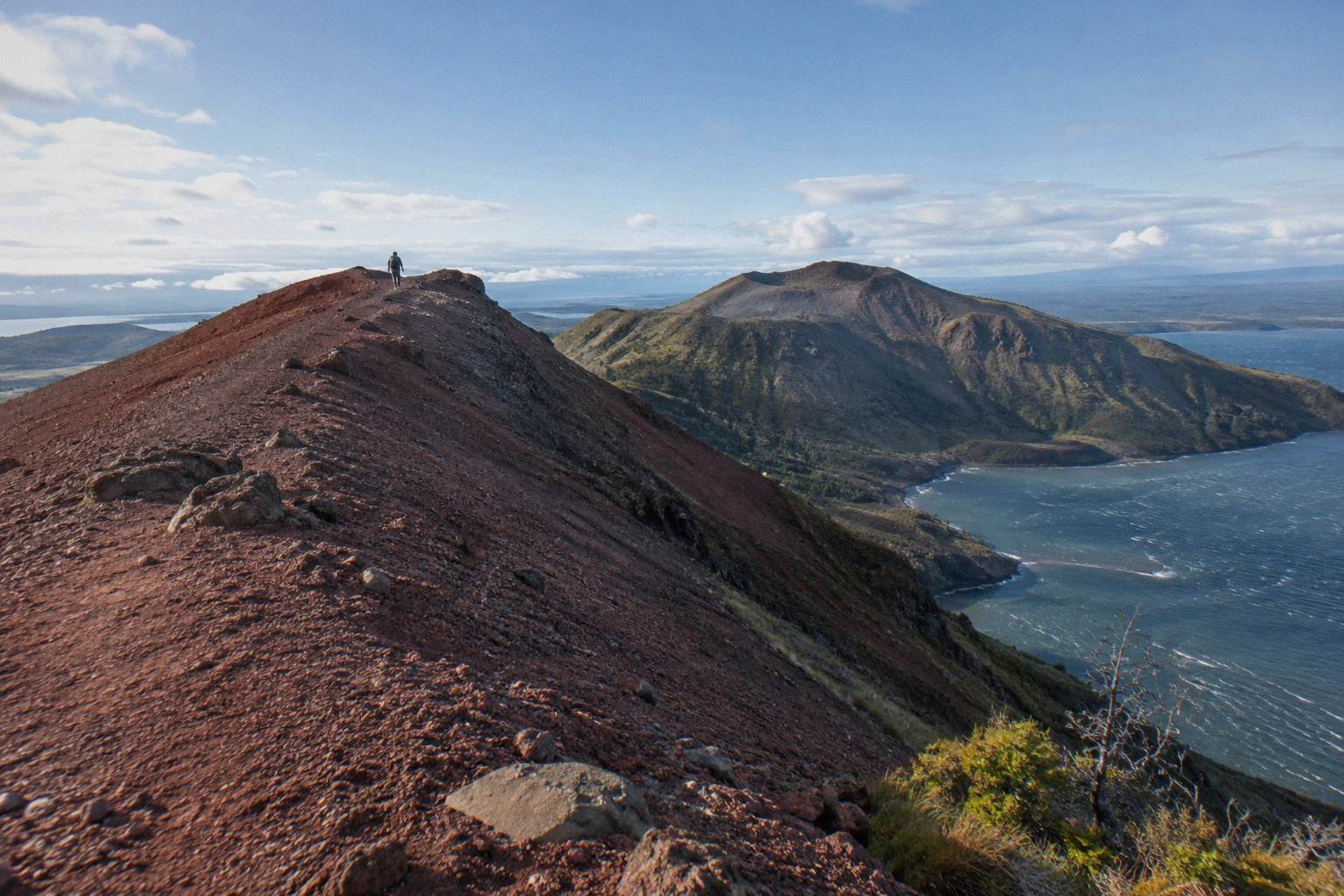
The full day also changes the rhythm of your Rotorua plans. At 6.5 hours it consumes most of a daylight day, particularly in winter when Rotorua's mean daily maximum sits at 12.0 °C in July. Add the drive and you have committed the whole outing. That is a fine trade if the mountain is the point of your trip and less fine if you also want the lake, a geothermal park or the Buried Village of Te Wairoa, which opens only 10am to 4pm Wednesday to Sunday with last entry at 3.45pm.
If a longer, fuller day appeals but you would rather trade the second dome for whitewater, the Kaituna combo exists: about 9 hours in all, ages 13 and over, pairing roughly 1.5 hours of Kaituna River rafting with the 4x4 ride up Tarawera and a 90-minute guided crater walk, with river gear and complimentary central-Rotorua transport on the booking page. Its reviews and amount are not published here, so judge it on what the booking page shows for your date.
For depth on what the summit area itself holds on foot, the Ruawahia summit and crater route walks through the terrain the full day spends its extra hours on.
Half Day Versus A Helicopter Landing
If walking is the barrier rather than the draw, the real comparison is foot versus rotor. Volcanic Air's 40-Minute Summit Landing Flight runs 40 minutes from the Rotorua lakefront, from NZ$675 per person, rated 4.9 across 43 reviews, and includes a short guided walk on the summit, about 20 minutes by the booking page's wording. Landing is at the pilot's sole discretion depending on weather, volcanic activity and passenger loadings.
The trade is blunt. The flight gives you the aerial view of the 1886 rift and lakes Okareka, Okataina and Tarawera on the way out, plus a brief stand on the mountain, in under an hour. The half day gives you a genuine walk on the mountain, the crater rim, and the option of the scree run, for most of a day. Neither is the better format; they serve different travellers, and Kaitiaki describes Volcanic Air as its partner, both working as concessionaires alongside Ngati Rangitihi, whose people hold kaitiakitanga of the maunga.
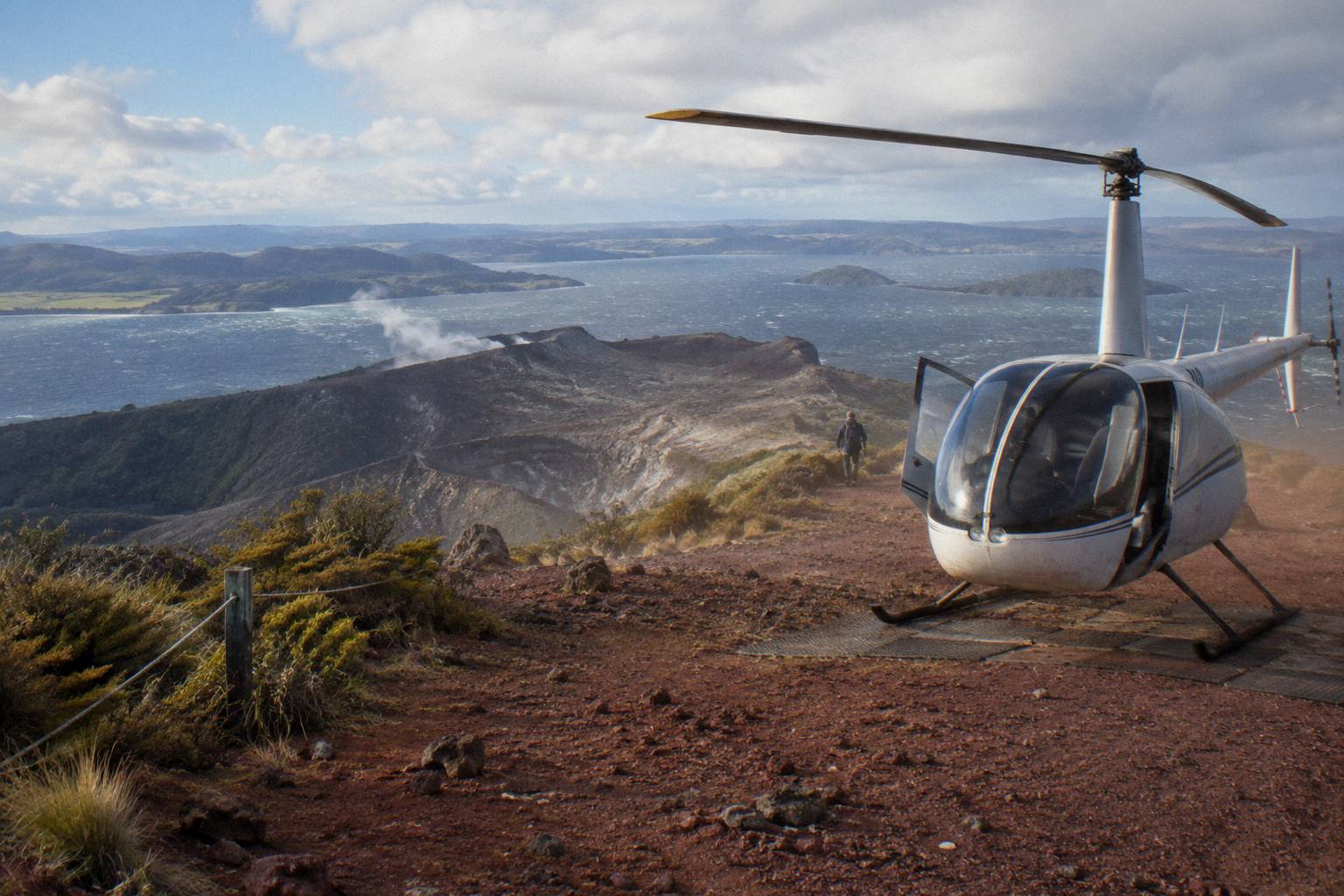
Weight and party size decide some of it for you: the 40-minute flight carries a 135 kg per-seat limit on the booking page, with individual weights taken at booking for passengers over 110 kg, and needs a minimum of two adult fares to operate. Infants sit on laps and the flight is not wheelchair accessible; the age rule is one to ask Volcanic Air about directly. Free cancellation up to 24 hours applies. If a landing is not essential, the Tarawera Scenic Floatplane Flyover, from NZ$395 per person and rated 4.8 across 48 reviews, is a flyover with no landing on the mountain, and it says so in the same breath.
The full spread of ways to stand on or above the summit, stated facts only, sits below. Time on the mountain is the column worth studying, because it is where the two hiking durations and the flights part ways most clearly.
| Experience | Total time | Time spent on foot on the mountain | Age or weight rule |
|---|---|---|---|
| Kaitiaki Half-Day 4WD And Crater Walk | 4 hours 30 minutes | about 90 minutes of guided crater walking | minimum age 7 as the operator states |
| Kaitiaki Full Day Hike (own site only) | about 6.5 hours | about 1.5 hours more walking than the half day | 7 and over |
| Volcanic Air 40-Minute Summit Landing Flight | 40 minutes | about 20 minutes on the booking page, 15 on the operator page | 135 kg per seat; over 110 kg, individual weights at booking |
| Volcanic Air 1-Hour Mountain Landing Flight | 1 hour | about 20 minutes on Mt Tarawera | 110 kg total per passenger |
| Tarawera Scenic Floatplane Flyover | 30 minutes | none, a flyover with no landing | 135 kg per seat |
When To Book Which: Season And Weather Timing
Book the half day in the shoulder months, when daylight and weather windows are tighter, and take the full day in summer's longer days. Rotorua's town climate records a mean daily maximum of 23.1 °C in February against 12.0 °C in July, with July the wettest month at 137.4 mm and November the driest at 86.8 mm, though the 1,111 m summit sits colder and windier than these roughly 280 m town figures.
Weather moves the needle more than duration does. A windy, wet day makes the full day's extra 1.5 hours feel much longer than they sound, while the half day, with its lighter walking options, flexes better with conditions. Operators watch the forecast: landings for Volcanic Air are at the pilot's sole discretion, and Kaitiaki's departure and cancellation terms for any given date are not published in the material here, so ask when you book. The dedicated weather and the crater walk page carries the full picture.
The seasonal numbers, town-level as they are, still sketch the year. Rain falls on about 118.6 days a year in Rotorua, so the odds of a dry window never swing wildly from month to month; what changes is temperature and daylight length, both of which matter more for the full day than the half day. A 6.5-hour outing that starts mid-morning in June finishes near dusk; the same start in January leaves hours of light to spare.
| Month | Mean daily max (C) | Mean rainfall (mm) |
|---|---|---|
| February | 23.1 | 100.4 |
| May | 15.2 | 130.2 |
| July | 12.0 | 137.4 |
| October | 16.4 | 92.9 |
| November | 18.6 | 86.8 |
A wildcard for families: children must be 7 or over for both walking durations, but age alone does not tell you how a child will handle the scoria. The booking page's suitability list, which names low fitness, back problems and heart problems as not suitable, is a better checklist than the number alone. The guided hike with kids and age limits page works through that question in detail. If your group wants a flying alternative with a different pace, Volcanic Air's 1-Hour Mountain Landing Flight spends about 20 minutes on the mountain within a 1-hour flight, needs two adult fares, and carries a 110 kg total per-passenger weight figure on its booking page; its reviews and amount are not published here, so check the live listing.
Mistakes To Avoid When Picking A Duration
The most common mistake is treating 6.5 hours as "the same mountain, just longer": the full day adds about 1.5 hours of walking on volcanic scoria, not sitting, plus Tarawera Dome. The second is assuming the lighter walking options cover the whole group on the full day; ask when you book. The third is forgetting transport shape: both durations end back at Hemo Road, and pickup is offered from central Rotorua accommodation without a promised time.
A few more traps are worth naming. Do not book the full day on the strength of summit photos alone, because the half day already delivers Ruawahia and the crater; know that the dome is what you are paying the extra hours for. Do not assume snacks appear anywhere on the mountain: Kaitiaki says plainly that it provides none, on either duration. Do not add the drive, the base camp stop and the walk into your own total-time arithmetic and then blame the schedule; the stated durations are 4.5 and 6.5 hours as the operator gives them.
Do not forget the toilet question either. The composting toilet sits at base camp, where the road ends and the walk starts, and nothing above that point is published here; the toilets on the crater walk post covers what is known. Plan around it rather than discovering it at the trailhead.
And do not leave the decision to the trailhead. The half day is the one duration with live availability here, and free cancellation up to 24 hours before means an early booking carries little risk if your plans shift. For a wider framing of whether the experience earns its day, the is the crater walk worth it post takes the value question head on.
Common Questions About Half Day Or Full Day On Mt Tarawera
What Is The Difference Between The Mt Tarawera Half Day And Full Day?
Kaitiaki describes the half day as about 4.5 hours and the full day as about 6.5 hours. The full day adds Tarawera Dome and about 1.5 hours more walking than the half day. Both are for ages 7 and over, both start at the Main Carpark on Hemo Road, and both use the same 4WD access road and summit track.
Is The Full Day Much Harder Than The Half Day?
Both carry the same operator wording, a medium to moderate fitness level for the summit track. The full day's extra 1.5 hours of walking happen on the same volcanic scoria, so it is more of the same demand rather than different terrain. Kaitiaki's FAQ says guests may take lighter walking options instead of the summit, which applies to the summit track; ask about flexibility on the dome section when you book.
What Does The Mt Tarawera Half Day Cost?
Check the booking page for your date for the current price. The booking page does list what is included: a local guide, 4x4 transport up the mountain, hotel pickup and drop-off from central Rotorua, and a 90-minute guided crater walk within about 4.5 hours in all.
Can Children Do The Full-Day Hike?
Yes, from age 7, the same rule as the half day. The real question is stamina: 6.5 hours with about 1.5 hours more walking than the half day is a long outing on scoria for younger legs. The half day is the safer duration for a first volcanic hike with children.
Is There A Shortcut To The Summit Without The Long Walk?
The walk on both Kaitiaki durations is shortened already by the 4x4 ride up, roughly 8.2 km of off-road after a 30-minute drive. Beyond that, the alternative format is air: Volcanic Air's 40-minute summit landing flight, from NZ$675 per person, with a short guided walk on the summit and landing at the pilot's sole discretion.
Which Duration Should I Book If I Only Have One Day In Rotorua?
The half day. At about 4.5 hours it leaves room for a second experience the same day, whether that is Waimangu Volcanic Valley, the Buried Village of Te Wairoa (open Wednesday to Sunday, 10am to 4pm) or the lake itself. The full day consumes most of your daylight for one destination.