Pink And White Terraces And The Mt Tarawera Crater Walk
The Pink and White Terraces were destroyed on the night of 10 June 1886, and no trip visits their site today. The crater walk, the summit landing flights and Waimangu Volcanic Valley each show a different piece of the same story, and the difference matters when you plan.
Short answer
GNS says the eruption of 10 June 1886 destroyed the terraces; Wikipedia says a small portion of the Pink Terraces was reportedly rediscovered under Lake Rotomahana in 2011, and no tour visits their site. The Kaitiaki half-day crater walk runs 4 hours 30 minutes; the Volcanic Air 40-minute landing flight costs from NZ$675 per person.
The night of 10 June 1886 ended the Pink and White Terraces. GNS Science calls the eruption New Zealand's largest during the last 500 years; the sound was heard as far as Blenheim and ash fell as far as Christchurch, and more than 100 people were killed in villages near the mountain. The terraces, silica formations on the shores of Lake Rotomahana that drew visitors from around the world in the 1800s, did not survive it. GNS says they were destroyed; a small portion of the Pink Terraces was reportedly rediscovered under the lake in 2011, according to Wikipedia, and no tour visits their site.
That last sentence shapes every decision on a terraces-themed trip. The mountain you can walk, the valley the eruption created, and the lake that drowned the terrace site are three different places, reached in different ways, shown by different trips. A visitor who arrives expecting to stand above the terraces will be disappointed by anything; a visitor who understands what each stop actually shows gets a far better day out of Rotorua. The pages below separate the history from the itinerary, so you can match a booking to the part of the story you care about.
What Happened To The Pink And White Terraces
On the night of 10 June 1886, Mt Tarawera erupted and destroyed the Pink and White Terraces, silica formations on the shores of Lake Rotomahana that had been a celebrated visitor attraction. GNS Science calls it New Zealand's largest eruption during the last 500 years, and more than 100 people were killed in villages near the mountain. The eruption site and the walking mountain are neighbours, not the same place.
Tarawera is one of the dome volcanoes of the Okataina Volcanic Centre, east of Rotorua, with Ruawahia Dome the highest of its three domes at 1,111 metres. The 1886 eruption tore through the area around the mountain, and the blast and ash reached a remarkable distance: GNS records the sound being heard as far away as Blenheim, in the top of the South Island, and ash falling on Christchurch. For the villages close to the mountain the outcome was catastrophic, and the exact death toll varies between sources, so the careful figure is simply more than 100 people killed.
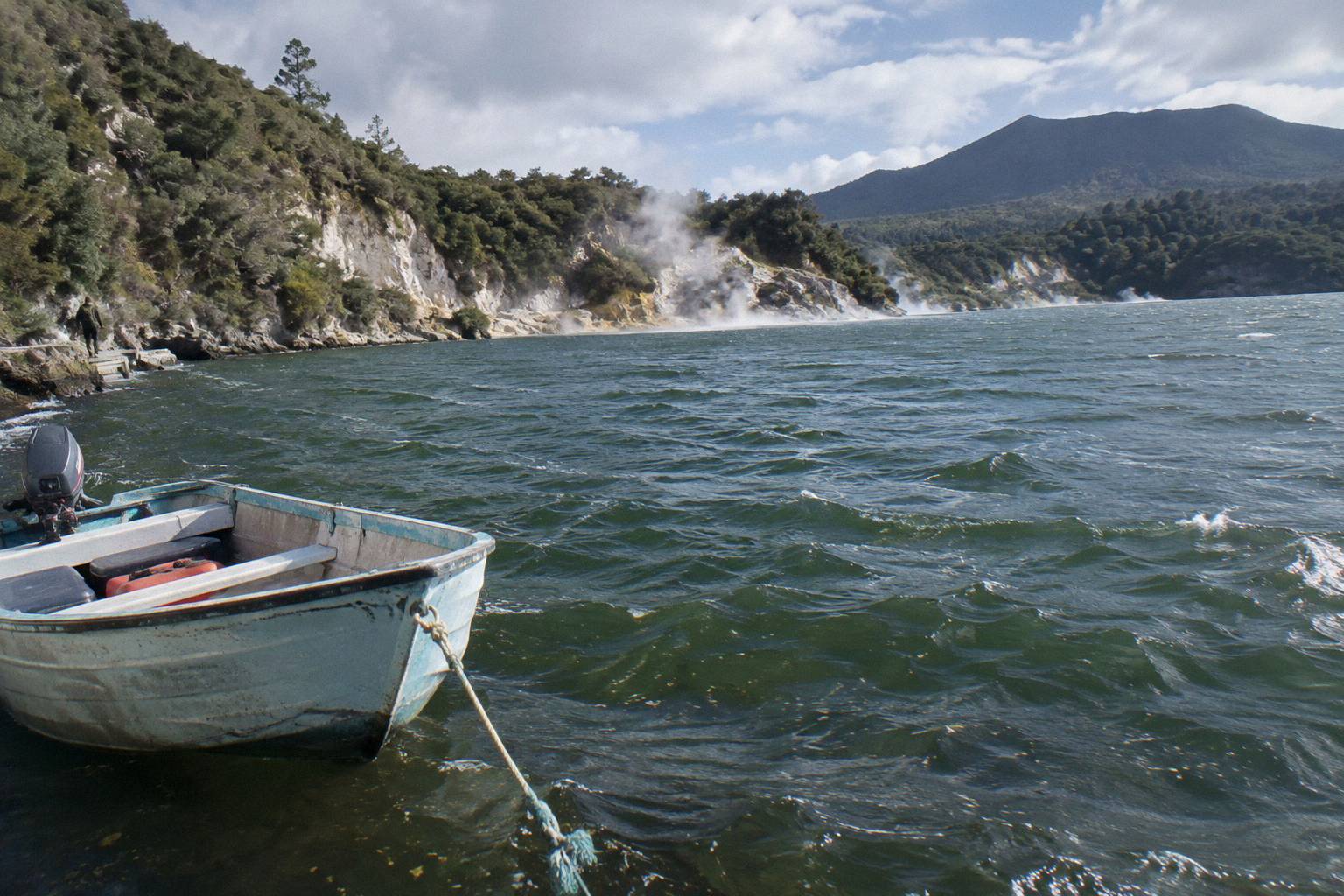
The terraces themselves were geothermal formations at Lake Rotomahana, south of the mountain, and they were famous enough in the 1800s that visitors travelled significant distances to bathe in their warm pools. When the eruption came, the lake basin was transformed and the formations were buried or destroyed. GNS, the official science body, says destroyed outright. Wikipedia adds a wrinkle: sonar work reportedly rediscovered a small portion of the Pink Terraces under Lake Rotomahana in 2011, two-thirds of a century of silence later, though that does not put them within reach of any visitor.
The table below sets out what each body of work actually claims, because the wording matters. A destroyed formation and a reportedly rediscovered portion under a lake are both true at once, and neither means the terraces can be seen today.
| Claim | Who says it | What it means for a visitor |
|---|---|---|
| The 1886 eruption destroyed the terraces | GNS Science | Nothing of the formations is standing or visitable |
| A small portion of the Pink Terraces was reportedly rediscovered under Lake Rotomahana in 2011 | Wikipedia, attributed as a report | Underwater, no tour goes there |
| The eruption is New Zealand's largest in the last 500 years | GNS Science | Context for the scale of the event |
| The sound was heard as far as Blenheim, ash fell on Christchurch | GNS Science | The reach of the blast across the country |
The full eruption story, including what the guides say on the mountain itself, is covered in the 1886 eruption and crater walk guide, and the question of whether any trace can still be visited is answered directly in whether you can still visit the Pink and White Terraces. The short version of both: the story is everywhere in the landscape, the formations are not.
Where The Terraces Stood And What Remains Today
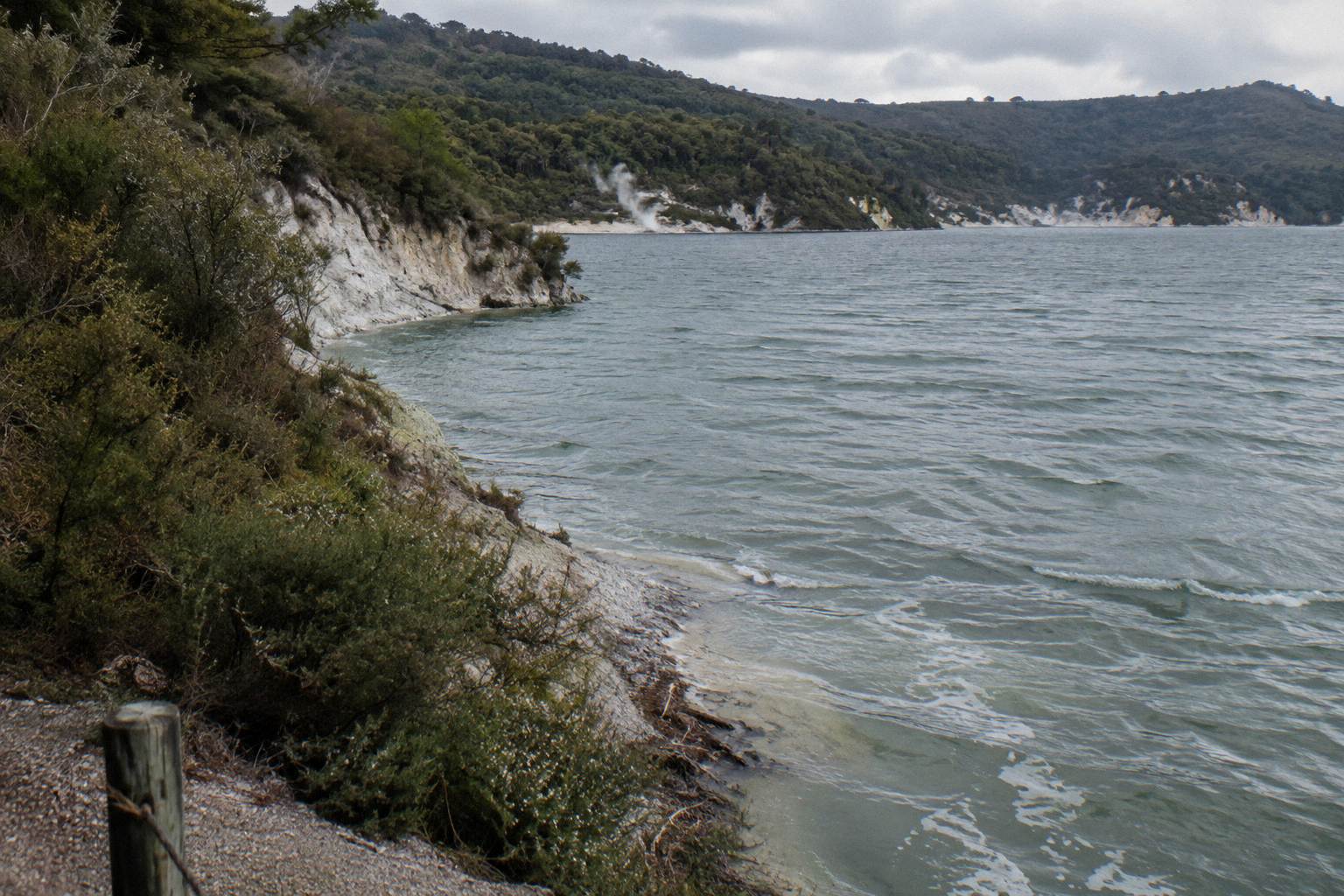
The terraces stood at Lake Rotomahana, south of the mountain, on ground that the 1886 eruption reshaped completely. Today the lake is larger and deeper, a reported portion of the Pink Terraces lies beneath it, and no walking track, flight or boat tour visits the site. What remains visitable is the mountain, the lake landscape and the geothermal valley the eruption created.
Lake Rotomahana sits between Mt Tarawera and the Waimangu Valley, and the eruption rearranged the entire basin. The lake that existed in 1886 was destroyed along with the terraces; the lake that exists now filled the blasted ground afterwards. That distinction is why the terraces cannot simply be walked to: there is no shore where they stood, because their shore no longer exists in its 1886 form.
What a visitor can do is see the landscape the eruption left. From the summit of Ruawahia Dome, at 1,111 metres, the view takes in the rifted mountain, the lakes and the valley systems to the south. Lake Tarawera, a separate and much larger lake north-east of the mountain, is the base for the DOC Tarawera Trail, a 15 km advanced tramping track from the Te Wairoa car park to the Hot Water Beach campsite via Te Rata Bay; dogs, bikes and vehicles are not permitted on it, and DOC warns that patches of sand at Hot Water Beach are very hot. That is a lake-edge experience of the wider landscape, not the mountain and not the terrace site.
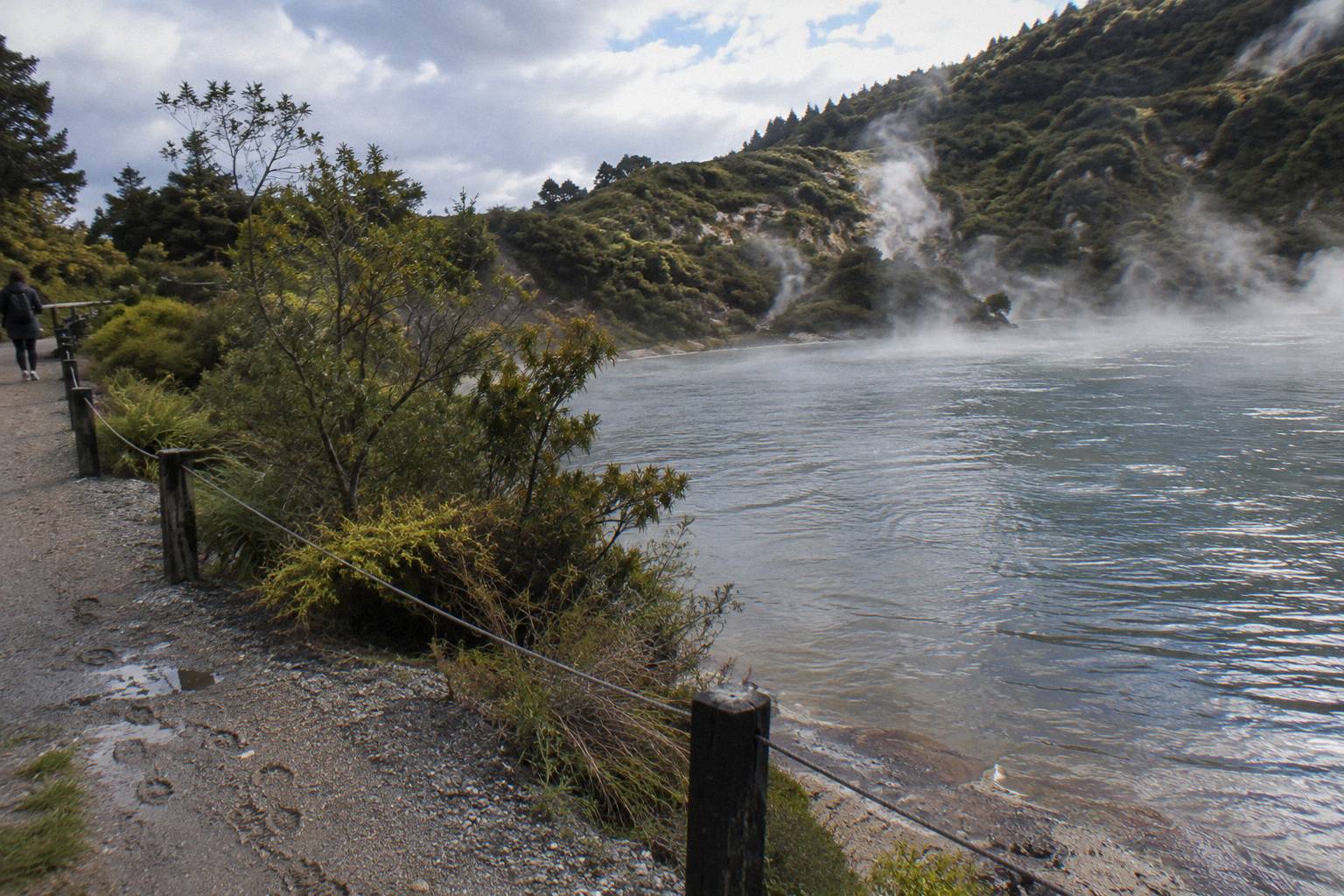
If the history is what draws you, three trips covered on Mt Tarawera Volcano Hike carry the 1886 story well, in three different formats: a guided walk to the crater, a full day that adds rafting, and a helicopter landing on the summit. The amounts shown are New Zealand dollars, per person.
Each of those three reaches the mountain itself, which is the part of the 1886 landscape a visitor can actually stand on. The Kaitiaki Half-Day 4WD And Crater Walk, rated 4.9 across 359 reviews, runs 4 hours 30 minutes from the Main Carpark on Hemo Road in Rotorua, with free pickup from central Rotorua accommodation offered on the booking page; the price for your date shows during booking. The Volcanic Air 40-Minute Summit Landing Flight, from NZ$675 per person and rated 4.9 across 43 reviews, overflies lakes Okareka, Okataina and Tarawera before its summit walk, with the landing at the pilot's sole discretion.
How The Crater Walk Tells The 1886 Story
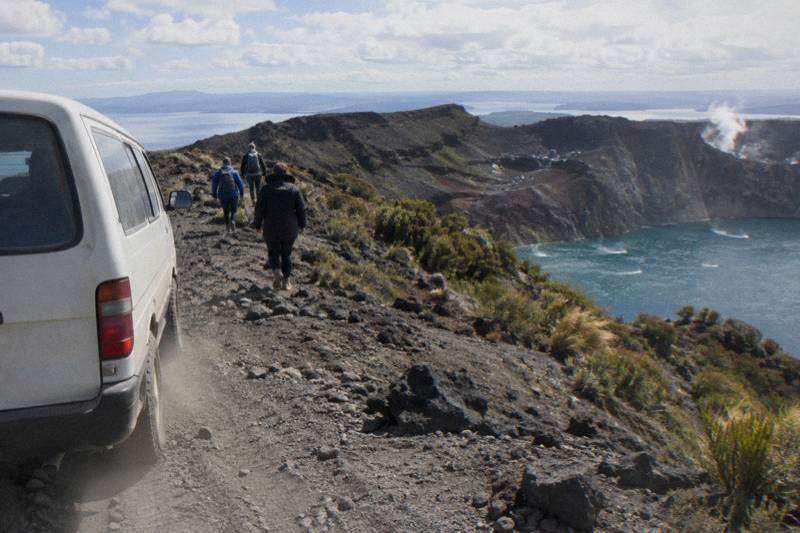
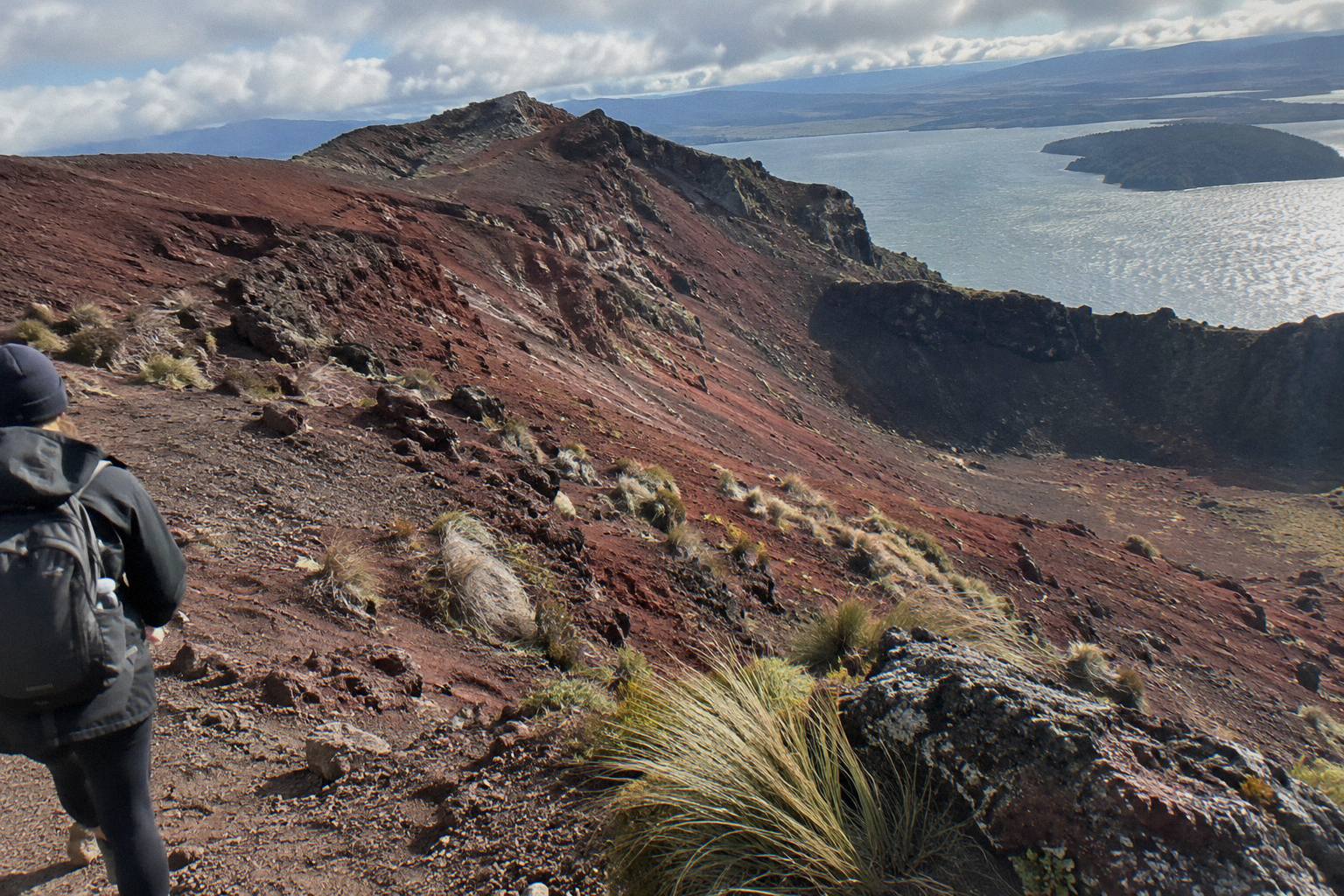
The crater walk puts you inside the eruption's footprint: the 4x4 climbs roughly 8.2 km of off-road track to where the walking starts, and the guided route crosses volcanic scoria to the rim above Ruawahia crater, with the 1886 events explained by a local guide. It shows the torn mountain, not the terrace site. The half-day version runs 4 hours 30 minutes.
Kaitiaki Adventures runs the half-day trip, described on its pages as the Mt Tarawera Volcanic Crater Experience. The meeting point is the Main Carpark, Hemo Road, Whakarewarewa; from there it is about 30 minutes' drive to the base of the 4WD track, then the off-road climb to base camp, where there is a composting toilet and walking sticks are handed out. The walk needs moderate fitness: the scree is described in the operator's FAQ as a 45 degree slope approximately 400 m deep, the ground is volcanic scoria that can be slippery, and two sections of about 50 m need four points of contact. The minimum age is 7, as the operator states, and low fitness, back problems, heart problems and serious medical conditions are listed as not suitable.
The historical payoff is real. Standing on the rim of a mountain that split open in 1886, with a guide who can name the domes and point to where the villages stood, gives the eruption a physical scale that no museum panel carries. Kaitiaki says it provides no snacks, so bring water and food; sturdy trainers are fine as footwear. Confirm departure and any pickup timing for your date when you book.
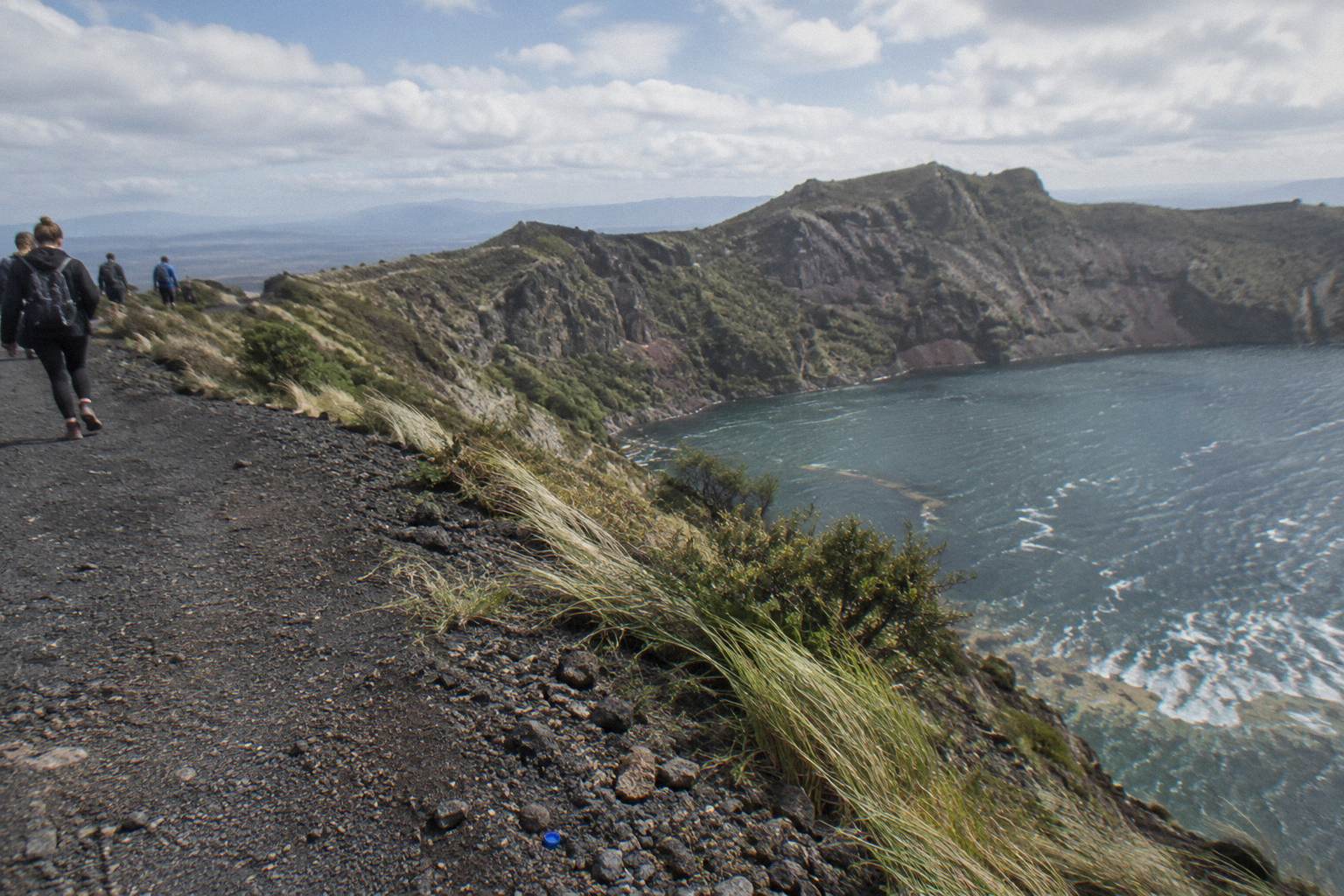
The mountain itself is private land, governed by the Ruawahia 2B Trust, which reinvests most tourism concession revenue in conservation, wilding pine removal first, and Ngati Rangitihi hold kaitiakitanga; Kaitiaki and Volcanic Air describe themselves as concessionaires working alongside Ngati Rangitihi, per the operator's conservation page. That is why guided access exists in the form it does, and it is covered more fully in who owns Mt Tarawera and why access is guided.
The half-day format suits most terraces-motivated visitors: it delivers the summit, the crater and the story inside 4 hours 30 minutes, leaving the afternoon free. If that sounds right, the Kaitiaki half-day crater walk has the full details, and check availability for your date.
Free cancellation up to 24 hours applies on the booking page, which matters in a region where weather can turn; the crater walk and landing weather guide explains how conditions affect both formats.
What The Helicopter Flights Show Of The Eruption
The helicopter flights show the 1886 story from above: the Volcanic Air 40-Minute Summit Landing Flight, from NZ$675 per person, crosses lakes Okareka, Okataina and Tarawera, lands on the summit for a guided walk of about 15 to 20 minutes, and returns to the Rotorua lakefront. The landing sits at the pilot's sole discretion, so the flight itself is the guaranteed half.
Seeing the mountain from the air is the fastest way to read the eruption's geography. The rifted line of domes, the lakes filling old volcanic ground, and the valley systems running south toward Waimangu all sit in one view, and the pilot-guide commentary ties them together during the crossing. Volcanic Air's own page says the guided summit walk lasts 15 minutes, while the booking page says about 20 minutes; either way it is a short stand on the summit rather than a hike, and the weight rules are per seat: the booking page gives 135 kg per seat, and a second booking page says passengers over 110 kg may get specific seating, with individual weights taken at booking. Infants sit on laps and a minimum of two adult fares applies.
The helicopter format answers a different question than the walk does. The walk gives you time on the rock and a long telling of the story; the flight gives you the map of it. For a visitor whose main interest is the terraces and the scale of what the eruption changed, the aerial view of Lake Rotomahana's basin and the valley beyond is arguably the clearest single image of the event available anywhere, taken in under an hour from the Lakefront Drive helipad.
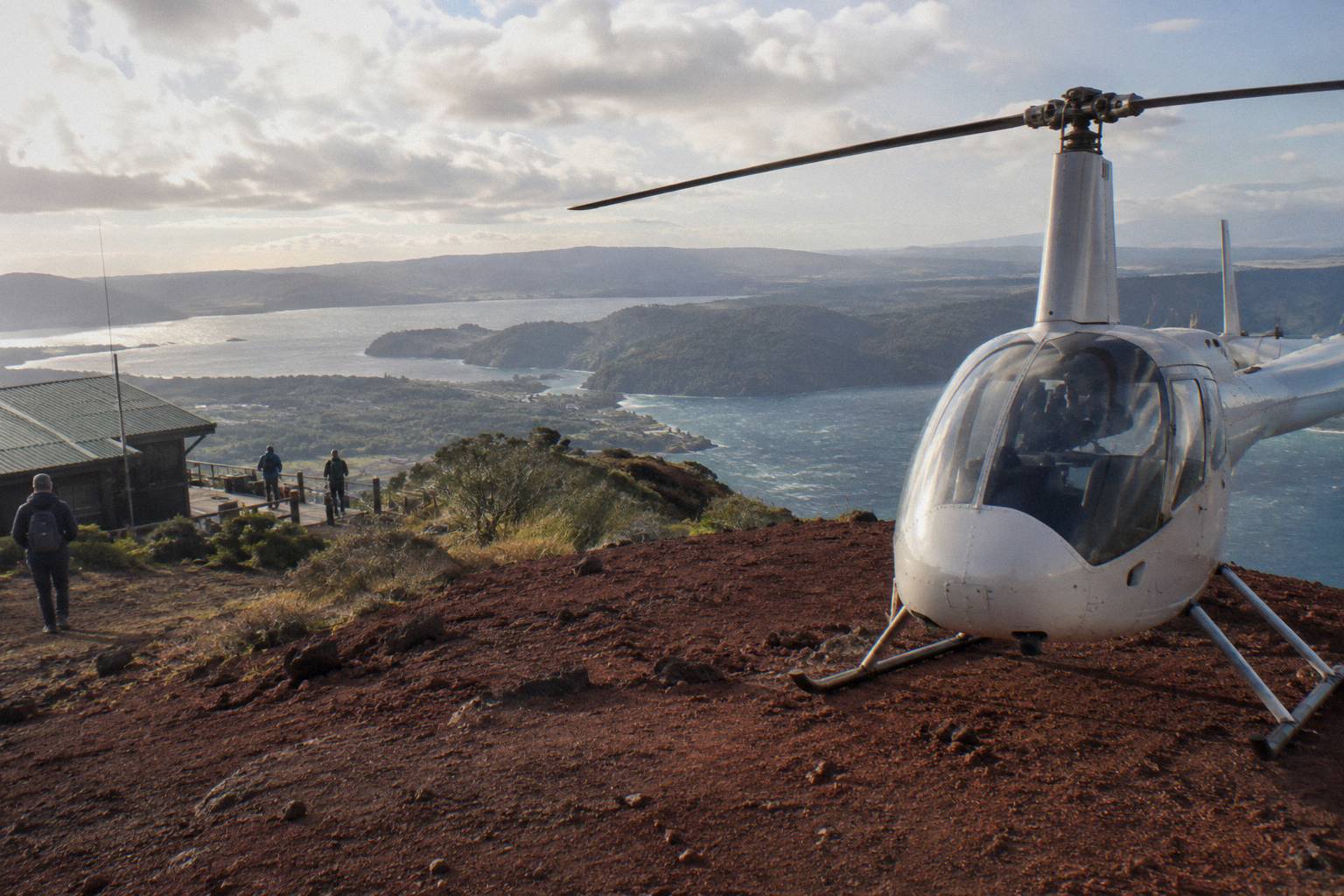
Two sister flights extend the idea. The Volcanic Air 1-Hour Mountain Landing Flight runs a full hour with a mountain landing of about 20 minutes on Tarawera, headsets to hear the guide, and a weight rule of 110 kg total per passenger on the booking page; the amount for your date shows during booking. The Tarawera And Orakei Korako Dual Landing Flight, from NZ$1,490 per person over 3 hours, adds a ferry transfer to Orakei Korako and a 1-hour self-guided visit there, with admission included. The floatplane option, from NZ$395 per person and rated 4.8 across 48 reviews, is a flyover only with no landing, and it should always be read that way.
| Trip | Format | Time on the mountain | Amount | Landing |
|---|---|---|---|---|
| Kaitiaki Half-Day 4WD And Crater Walk | 4x4 and guided walk | about 90 minutes of crater walk | shown during booking | on foot, no flight |
| Volcanic Air 40-Minute Summit Landing Flight | helicopter | guided walk, about 15 to 20 minutes | from NZ$675 per person | at the pilot's sole discretion |
| Volcanic Air 1-Hour Mountain Landing Flight | helicopter | about 20 minutes | shown during booking | at the pilot's sole discretion |
| Tarawera And Orakei Korako Dual Landing Flight | helicopter plus Orakei Korako | guided walk, length unlisted | from NZ$1,490 per person | at the pilot's sole discretion |
| Tarawera Scenic Floatplane Flyover | floatplane | none, flyover only | from NZ$395 per person | no landing |
| Kaituna Rafting And Tarawera Crater Walk Combo | rafting plus 4x4 walk | 90-minute guided crater walk | shown during booking | on foot, no flight |
Every flight in that table operates from the Rotorua City Lakefront, and all six trips on the page carry free cancellation up to 24 hours on the booking page. The trade-off the table cannot show is narrative depth: a 15-minute summit walk tells less of the 1886 story than 90 minutes with a guide on the crater rim, which is why many visitors book the flight and the walk for different days.
Waimangu Volcanic Valley As The Eruption's Legacy
Waimangu Volcanic Valley, at 587 Waimangu Road, is the geothermal system its operator describes as formed as a result of the eruption of 10 June 1886. It is an adjacent attraction rather than the terrace site itself, and it is the closest a visitor can come to walking through ground the 1886 eruption created.
The valley sits directly along the line the eruption travelled, and its geothermal features are, in the operator's own description, a consequence of that night. Where the terraces took centuries of silica deposition to build, Waimangu's features began in the eruption's aftermath, which makes it the inverse of the terraces story: one place destroyed by 1886, one place begun by it. No price or walk length is published here for the valley, so check directly before visiting.
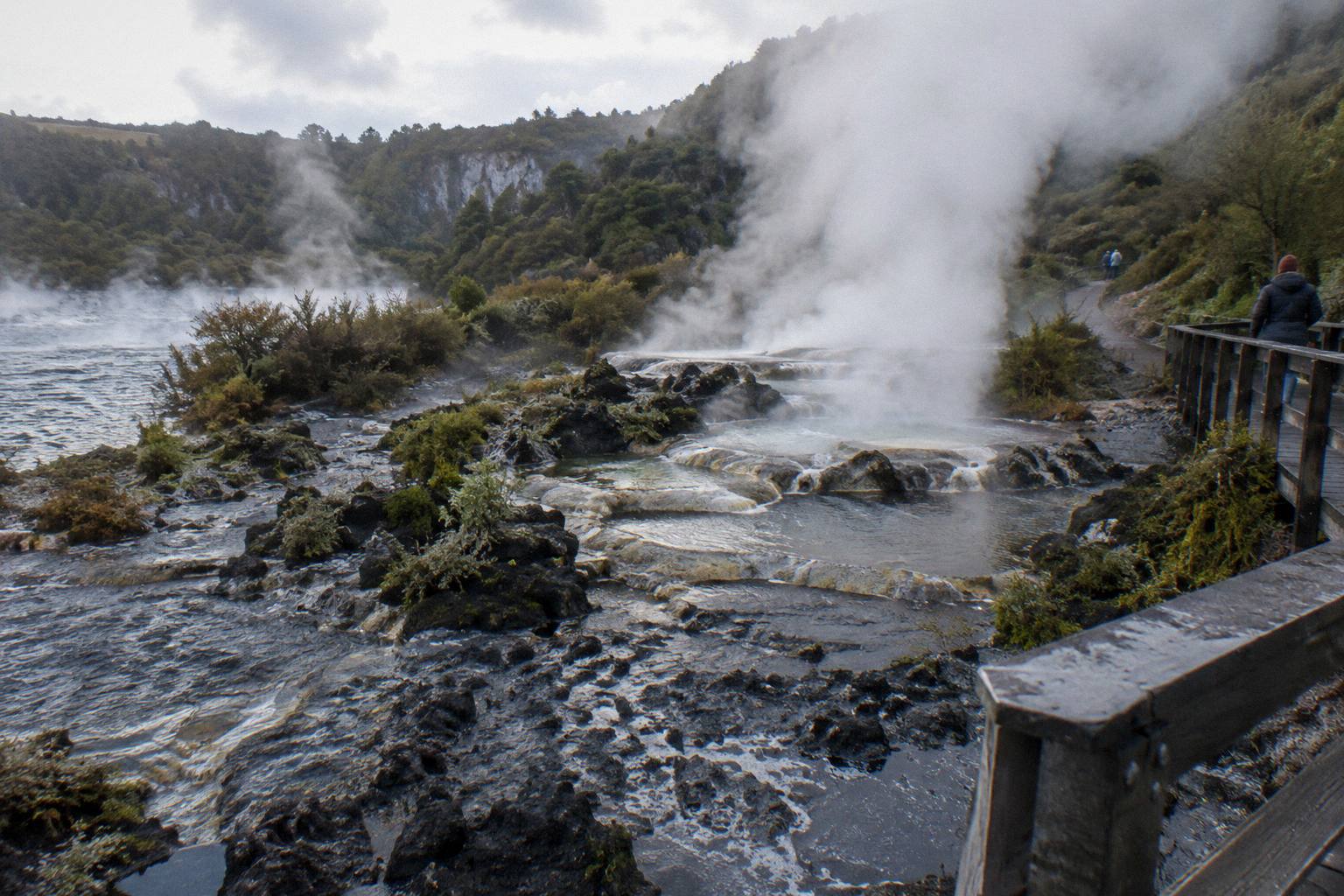
Pairing Waimangu with the crater walk makes a coherent two-stop day built entirely around 1886: the mountain in the morning, the valley it fed in the afternoon. The practicalities of that combination, including timing and the Buried Village of Te Wairoa (open 10am to 4pm Wednesday to Sunday, last entry 3.45pm), are worked through in the Waimangu Volcanic Valley and crater walk guide, and the valley's own account of its formation is on waimangu.co.nz.
A note on expectations: the pale terraces and steaming pools of Waimangu photograph like descendants of the Pink and White Terraces, and in a geological sense they are relatives, silica-depositing springs in the same volcanic system. They are not the terraces, they do not stand where the terraces stood, and no operator claims they do. Read them as the eruption's afterlife rather than its survivor.
Can You Visit Where The Terraces Were
No. The terrace site lies under Lake Rotomahana, Wikipedia reports a portion of the Pink Terraces was found there by sonar in 2011, and no tour, track or flight lands at or visits the site. What you can visit are the mountain the eruption split, the valley it created, and the shores of Lake Tarawera on the DOC Tarawera Trail.
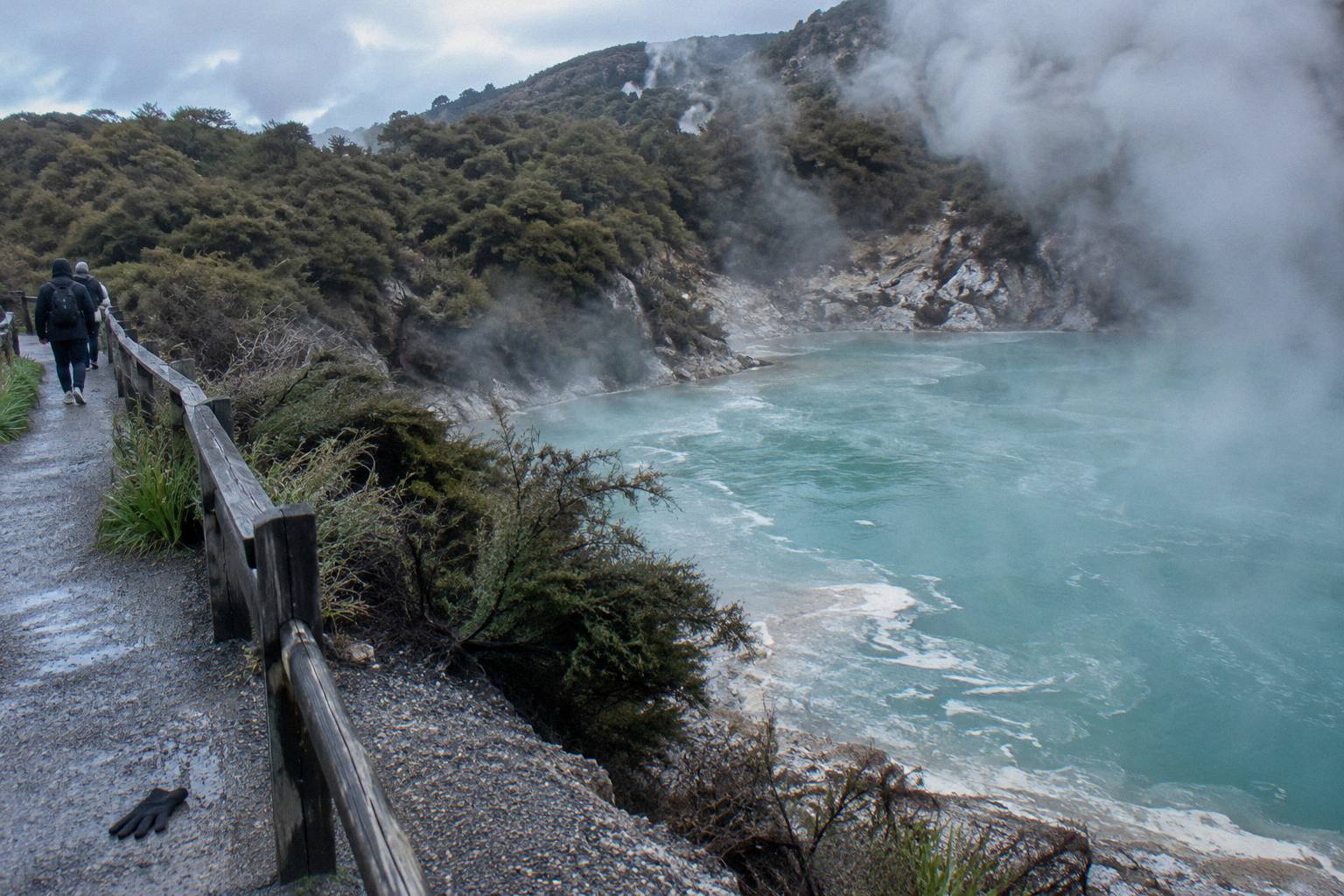
So the real planning question is not where the terraces are but which piece of their story you want to stand inside. If it is the violence of the night itself, choose the crater walk or a summit landing flight. If it is what the landscape did afterwards, choose Waimangu and the lake-edge trail. If it is the human story of the villages, the Buried Village of Te Wairoa covers the archaeology of the settlement buried by ash, open Wednesday to Sunday.
The DOC Tarawera Trail deserves a specific mention because it is the one long walk in the area that needs no concessionaire: 15 km, advanced grade, from the Te Wairoa car park on Tarawera Road to the Hot Water Beach campsite via Te Rata Bay, about 15 minutes' drive from Rotorua. DOC suggests the water taxi or an overnight stay rather than walking both directions in a day, notes occasional rock falls, and warns that localised patches of sand at Hot Water Beach are very hot. The full track detail sits on the DOC website, and a comparison with the crater walk is in Tarawera Trail or the Mt Tarawera crater walk.
One trip deserves a second look from history-minded families with teenagers: the Kaituna Rafting And Tarawera Crater Walk Combo, a 9-hour day that pairs about 1.5 hours of Kaituna River whitewater (about an hour on the water) with the 4x4 ascent and a 90-minute guided crater walk. The minimum age is 13, moderate fitness is needed, and complimentary transport from central Rotorua accommodation and the Rotorua Information Centre, with 22 pickup options, is on the booking page. It tells the 1886 story exactly once, on the mountain, and fills the rest of the day with the river landscape the same volcanic region feeds.
Choosing A Trip Around The 1886 Story
Match the format to the part of the story you want: the half-day crater walk (4 hours 30 minutes) for time on the eruption ground with a guide, the 40-minute landing flight (from NZ$675 per person) for the aerial map of the rift and lakes, and the 9-hour Kaituna combo if the day needs a river as well as a volcano. All three include the summit story and free cancellation up to 24 hours.
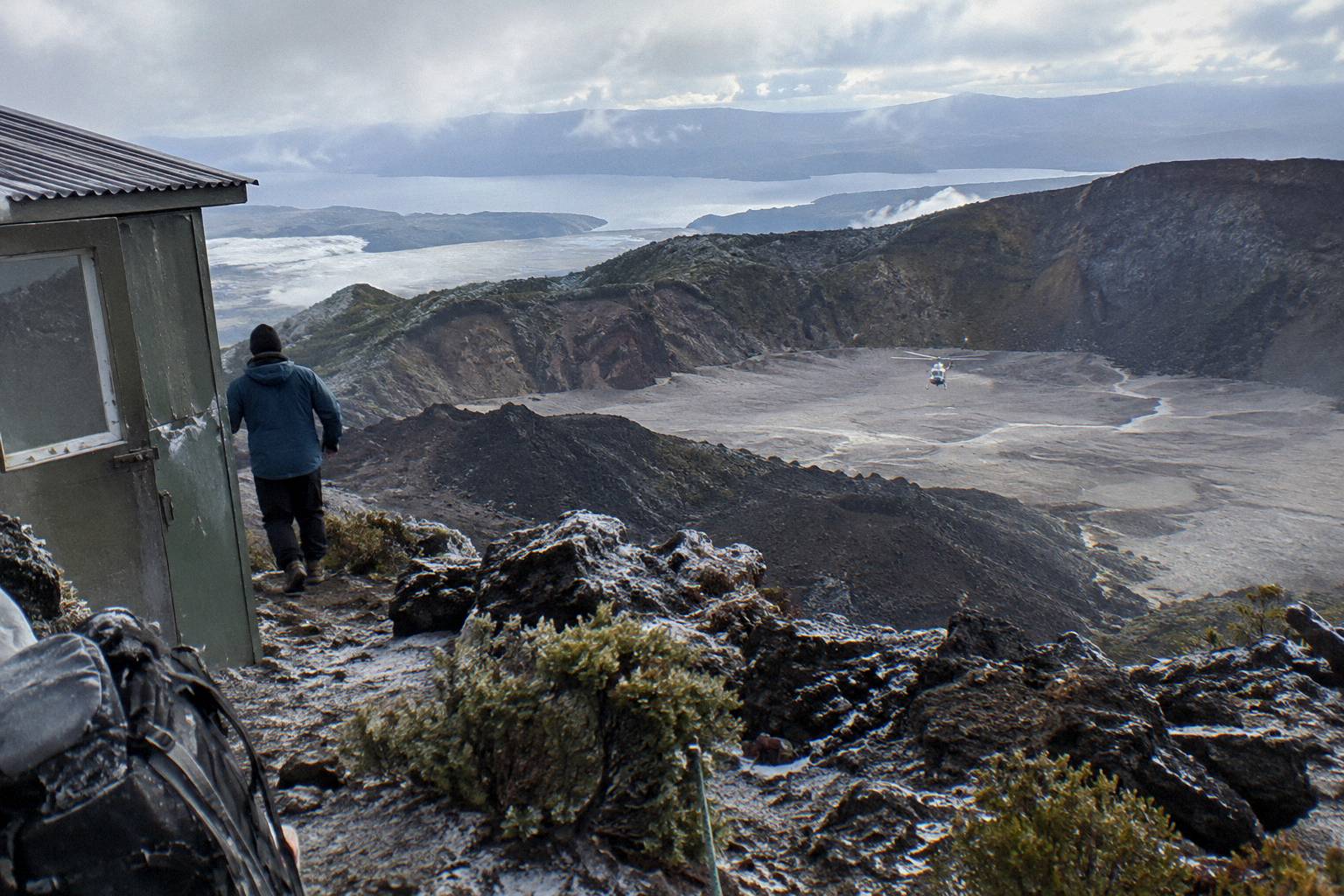
Budget is the first fork. The walk and the Kaituna combo show their amounts during booking rather than in advance, while the 40-minute landing flight is from NZ$675 per person and the dual landing from NZ$1,490 per person; the floatplane flyover, from NZ$395 per person, rated 4.8 across 48 reviews, is the lower-cost aerial option but never lands on the mountain. Deciding whether standing on the summit matters to you, or seeing it from above is enough, does most of the work before any money is committed.
Time is the second fork. The flight is 40 minutes door to door from the lakefront; the walk is 4 hours 30 minutes including the drive and the 8.2 km of off-road; the combo is a 9-hour day with two separately timed activities and a return to your accommodation in between. Season matters too: Rotorua's mean daily maximum runs from 12.0 °C in July to 23.1 °C in February, with July the wettest month at 137.4 mm and November the driest at 86.8 mm, and those are town figures at about 280 m, with the 1,111 m summit colder and windier. The month-by-month detail is in which months suit a Mt Tarawera crater walk.
| Month | Mean daily max (C) | Mean rainfall (mm) | Read |
|---|---|---|---|
| February | 23.1 | 100.4 | Warmest, busy |
| May | 15.2 | 130.2 | Cooling, quieter |
| July | 12.0 | 137.4 | Coldest and wettest |
| November | 18.6 | 86.8 | Driest month |
Fitness and party composition are the third fork. The walk lists minimum age 7 and moderate fitness, with low fitness, back problems, heart problems and serious medical conditions named as unsuitable; the Kaituna combo lifts the minimum age to 13. The flights carry per-seat weight rules, infants sit on laps, and every flight needs a minimum of two adult fares to operate. Age limits across all the trips are compared in the guided hike with kids and age limits guide.
Mistakes To Avoid When Planning A Terraces-Themed Visit
The recurring mistakes are expecting to see the terraces, assuming the crater walk visits their site, booking the floatplane expecting a landing, and treating Waimangu, Lake Tarawera and the mountain as one place. None of the six trips visits the terrace site, the floatplane is a flyover only, and the three landscapes need separate planning. Each mistake below is avoidable with one decision made before booking.
The first mistake is itinerary shorthand: telling yourself you are going to see the Pink and White Terraces. You are not, and no operator will claim you are. The correct framing is that you are visiting the landscape that lost them, which is genuinely one of the most dramatic landscapes in the country, and every trip above delivers it.
The second is format confusion. The Tarawera Scenic Floatplane Flyover, from NZ$395 per person, does not land on the mountain; it is a flyover, always. If standing on the summit is the goal, the choice is the walk or a landing flight, and the landing flights land at the pilot's sole discretion depending on weather, volcanic activity and passenger loadings, in Volcanic Air's own wording. Have a mental plan for a flight-only outcome.
The third is underestimating the walk. The scree is a 45 degree slope approximately 400 m deep in the operator's FAQ wording, two short sections need four points of contact, and the ground can be slippery; the crater walk difficulty and fitness guide covers the training question. Bring water and snacks, because none are provided, and sturdy trainers are acceptable footwear, so there is no need to buy boots for one day.
The fourth is logistics drift: the Kaitiaki walk meets at the Main Carpark on Hemo Road (free pickup from central Rotorua accommodation is offered on the booking page, timing to confirm when you book), the flights all leave from Lakefront Drive, and the Buried Village opens only Wednesday to Sunday. A day that assumes Monday availability of everything will fail quietly. The meeting points and pickup guide collects the addresses in one place.
Common Questions About The Pink And White Terraces
Can You Still Visit The Pink And White Terraces?
No. GNS says the 1886 eruption destroyed them, Wikipedia says a small portion of the Pink Terraces was reportedly rediscovered under Lake Rotomahana in 2011, and no tour visits the site. What you can visit are the mountain, Waimangu Volcanic Valley and the shores of Lake Tarawera.
Do Any Mt Tarawera Tours Go To Where The Terraces Were?
None do. The crater walk and the landing flights go to the mountain's summit and crater; the terrace site lies under Lake Rotomahana, a separate body of water south of the mountain, and no track, flight or boat trip covered here lands there.
What Do The Pink And White Terraces Have To Do With The Crater Walk?
The crater walk puts you on the mountain whose 1886 eruption destroyed them. Guides tell the eruption story on the summit, and the view from Ruawahia Dome takes in the lakes and valleys the event reshaped. The terraces themselves are part of the narrative, not the destination.
Is Waimangu Volcanic Valley Connected To The Terraces?
Yes, as a consequence of the same event. Waimangu describes its geothermal system as formed as a result of the eruption of 10 June 1886. The terraces were destroyed by that night; Waimangu began because of it.
How Much Does A Trip To See The 1886 Landscape Cost?
Amounts are in New Zealand dollars per person. The Volcanic Air 40-Minute Summit Landing Flight is from NZ$675, the dual landing from NZ$1,490 and the floatplane flyover from NZ$395. The Kaitiaki half-day walk and the Kaituna combo show the amount for your date during booking.
Which Trip Tells The Eruption Story Best?
Formats differ rather than rank. The half-day walk gives about 90 minutes of guided crater walking with the story told on the ground; the flights give the aerial geography with a short summit walk. Both cover 1886; neither visits the terrace site.